
Qualcomm Enters the Data Center with Dragonfly
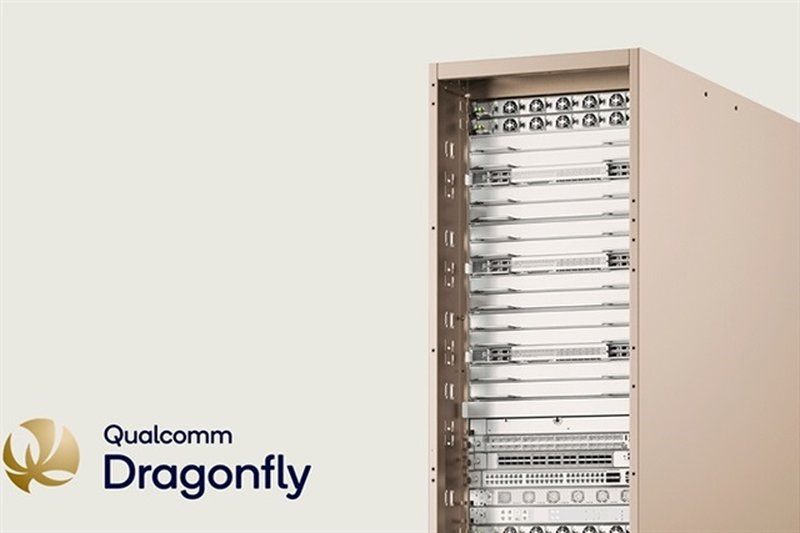
Qualcomm recently announced the launch of "Dragonfly," a new brand that will identify its upcoming generation of products aimed at the data center market. This strategic move positions the company in a rapidly growing segment, where the demand for high-performance hardware solutions for artificial intelligence and Large Language Models (LLM) is constantly increasing. The announcement, though concise, heralds a significant expansion of Qualcomm's portfolio beyond its traditional mobile and automotive sectors.
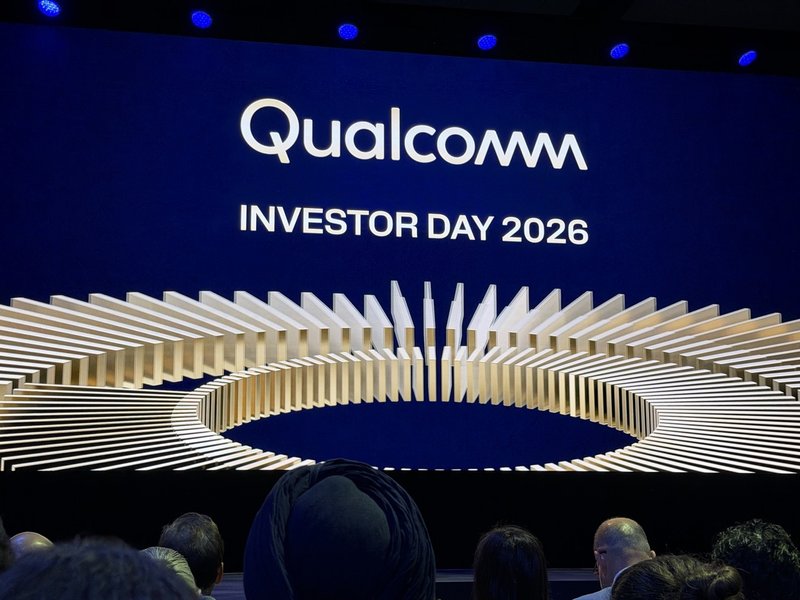
Further information and specific details about Dragonfly products are expected on June 24th, when Qualcomm will hold its 2026 Investor's Day. This event will be an opportunity for the company to illustrate its vision and the technical specifications of the new offerings, providing a clearer picture of Dragonfly's capabilities and market positioning.
Implications for On-Premise AI Workloads
The entry of a player like Qualcomm into the data center market with a dedicated brand like Dragonfly is particularly relevant for companies evaluating LLM and AI workload deployments in self-hosted or hybrid environments. Traditionally, the market has been dominated by a few providers, but the arrival of new architectures and solutions can offer interesting alternatives in terms of TCO, energy efficiency, and flexibility.
For CTOs and infrastructure architects, the availability of new hardware options means being able to explore configurations that better suit specific needs for data sovereignty, regulatory compliance, or air-gapped environment requirements. Choosing the right hardware is crucial for optimizing LLM inference and training performance, balancing factors such as available VRAM, throughput, and latency, aspects that Qualcomm will need to address with its upcoming revelations.
The Competitive Landscape and Trade-offs
The data center market for AI is extremely competitive, with established players offering optimized solutions for various scales and types of workloads. Qualcomm's introduction of Dragonfly suggests an attempt to carve out a niche, likely by focusing on innovative architectures or a particularly advantageous performance-to-power consumption ratio. This is a key aspect for companies that must manage high operational costs and a significant energy footprint.
Evaluating new hardware platforms requires a thorough analysis of trade-offs. It's not just about raw performance, but also compatibility with existing software stacks, availability of frameworks and development tools, and long-term support. For those considering on-premise deployments, AI-RADAR offers analytical frameworks on /llm-onpremise to evaluate these trade-offs, considering aspects such as integration with bare metal or virtualized infrastructures and managing the deployment pipeline.
Future Prospects and Expectations
Qualcomm's Dragonfly announcement creates significant expectations. June 24th will be a crucial moment to understand the direction the company intends to take and what innovations it will bring to the sector. It will be interesting to observe whether Qualcomm will focus on integrated solutions, perhaps combining CPUs and AI accelerators, or on a more modular approach.
The ability to offer competitive solutions for LLM inference and fine-tuning, with an eye on memory requirements (VRAM) and scalability, will be decisive for Dragonfly's success. The market awaits to see how Qualcomm intends to address the technical and commercial challenges of a rapidly evolving sector, providing concrete alternatives for enterprise AI deployment strategies.







💬 Comments (0)
🔒 Log in or register to comment on articles.
No comments yet. Be the first to comment!