Qualcomm Pushes On-Device AI with Snapdragon C Platform
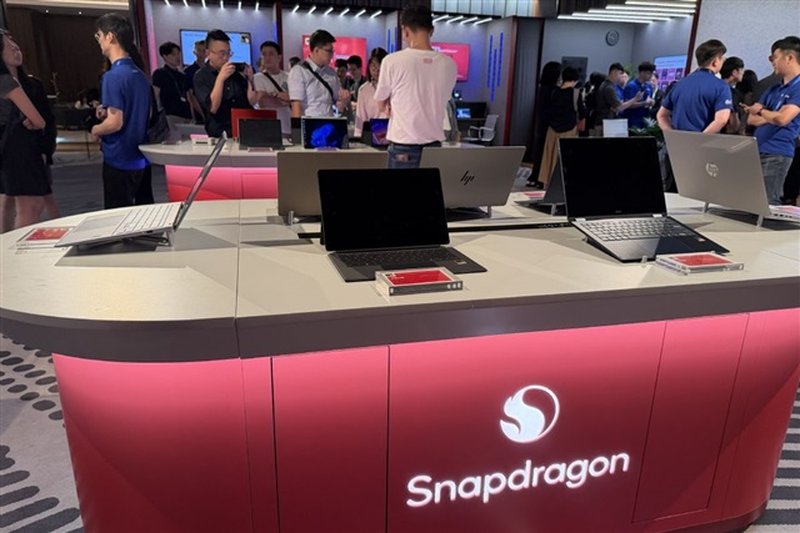
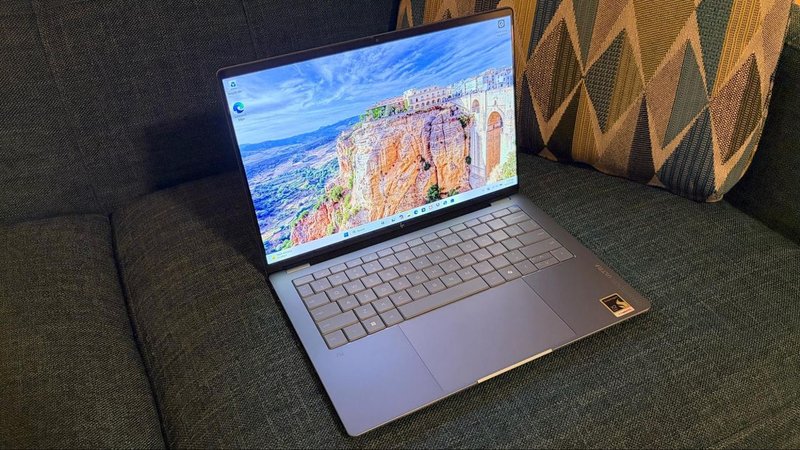
Qualcomm recently unveiled its new Snapdragon C Platform, designed to equip a new generation of Windows on Arm-based laptops. The announcement marks a significant step towards bringing artificial intelligence capabilities directly to client devices, aiming to make AI accessible on machines starting at approximately $300. This move underscores a growing trend in the tech industry: shifting AI processing from the cloud to the edge, closer to the end-user.
The integration of Neural Processing Units (NPUs) within the Snapdragon C Platform is the key element of this strategy. NPUs are specialized coprocessors optimized to accelerate machine learning and inference workloads, which are fundamental for the efficient execution of Large Language Models (LLM) and other AI applications directly on the device. This approach not only promises to improve performance and energy efficiency but also opens new perspectives for developers and businesses seeking more distributed and controlled AI solutions.
Technical Details and Implications for AI Workloads
The Snapdragon C Platform stands out for its architecture, which combines CPU, GPU, and, notably, dedicated NPUs. These NPUs are designed to handle complex tensor computation operations with superior energy efficiency compared to general-purpose CPUs or GPUs. For AI workloads, this means the ability to run inference models with reduced latency and higher throughput, even for smaller or quantized LLMs, directly on the laptop.
The adoption of Windows on Arm is another crucial aspect. This hardware-software combination allows devices to benefit from longer battery life and a thinner, lighter form factor, while maintaining compatibility with the Windows ecosystem. For businesses, this translates into the ability to deploy AI applications that operate locally, reducing reliance on network connectivity and cloud services for certain functions, such as natural language processing or real-time computer vision. This is particularly relevant for scenarios where data sovereignty and privacy are paramount.
Deployment Context and Data Sovereignty
The emergence of platforms like Snapdragon C strengthens the paradigm of on-premise AI and edge computing. Running AI inference directly on the user's device offers significant advantages in terms of data sovereignty, as sensitive information does not need to leave the corporate or personal perimeter to be processed in the cloud. This is a critical factor for sectors such as finance, healthcare, or public administration, where privacy regulations (like GDPR) impose stringent requirements on data management.
From a Total Cost of Ownership (TCO) perspective, on-device processing can contribute to reducing long-term operational costs. While the initial hardware investment may be a factor, the decrease in network traffic expenses (egress fees) and cloud computing services can generate considerable savings, especially for applications requiring constant and large-scale inference. For those evaluating on-premise deployments, AI-RADAR offers analytical frameworks on /llm-onpremise to assess the trade-offs between initial and operational costs, performance, and security requirements.
Future Prospects for Distributed AI
Qualcomm's Snapdragon C Platform fits into a broader vision of a distributed AI ecosystem, where computing capabilities are present at all levels, from the data center to the edge device. This trend not only improves the resilience and availability of AI applications but also paves the way for new, more personalized and responsive user experiences that do not depend on a constant internet connection or cloud latency.
The accessibility of NPU-equipped laptops starting at $300 is a catalyst for the mass adoption of on-device AI. It allows a wider audience of developers and end-users to experiment and innovate with local artificial intelligence, accelerating the development of new applications and services. For businesses, it means having an installed base of AI-ready devices, facilitating the deployment of solutions that leverage local computing power to enhance productivity and security. The future of AI is increasingly hybrid, and platforms like Snapdragon C are fundamental to enabling this transition.







💬 Comments (0)
🔒 Log in or register to comment on articles.
No comments yet. Be the first to comment!