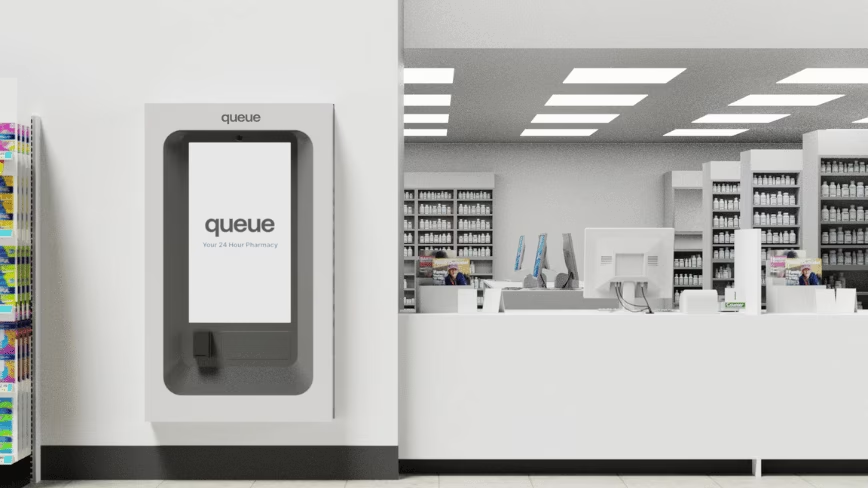
Robotic arms, computer vision, prescription-checking software: Queue has built a pharmacy that runs without a pharmacist. Sealed bottles go in, blister packs and vials come out already verified, all in about sixty seconds. The California startup has skipped the traditional slow ramp-up, emerging from stealth mode with a working machine and a $12.6 million seed round led by investors whose names have not yet been disclosed.
How the machine works
The technical description is sparse: Queue is not revealing internal architecture details, but the operational flow is clear. The system receives a digital prescription, picks the drugs from an automated storage, doses or selects them according to the prescribed quantity, verifies the match with the medical order, and seals everything in a customer-ready package. The entire cycle lasts about a minute, a speed that would make any human pharmacist blink.
Quality control is embedded: the machine does not just count pills. It uses sensors and software to recognize shapes, colors, and codes, reducing the margin of error. It's the pharmaceutical version of the production lines that e-commerce has made common in logistics warehouses, but with far stricter regulatory constraints.
Beyond automation: the data and sovereignty knot
Healthcare automation is often discussed purely in terms of efficiency. But there is a less visible and more thorny aspect: data management. Every prescription is sensitive health data, protected by regulations such as GDPR or HIPAA. If a pharmacy is run by a connected machine, where does that information travel? Who has control over it?
Queue has not specified its software architecture, but scenarios like this highlight the tension between cloud and on-premise infrastructure. Local data processing would guarantee digital sovereignty, ensuring that prescriptions never leave the pharmacy's perimeter. Alternatively, a cloud-centralized architecture would offer continuous updates and simplified maintenance, but at the expense of confidentiality. For those evaluating on-premise deployment in regulated settings, AI-RADAR provides analytical frameworks at /llm-onpremise to weigh these trade-offs.
Context: pharmacies under pressure and service models
Queue enters a trend that is reshaping drug distribution: from automated dispensing cabinets in hospitals to digital prescription apps. The novelty is the complete absence of qualified personnel during the process. This also raises questions about liability in case of errors and the need for human oversight, even if remote.
Another key element is the business model: Queue could sell the machines to individual pharmacies, offer them on lease, or itself become a chain of automated stores. In any case, data control remains central. If the startup were to hold the servers that process prescriptions, a massive centralized archive of pharmacological data would be created, appealing to insurers, pharmaceutical companies, and potential attackers.
Outlook: responsible automation
Queue has turned the spotlight on automation pushed to the point of erasing a professional figure. Beyond corporate battles, the real challenge will be integrating such systems without creating new monopolies on health data. For IT decision-makers, the Queue case suggests considering from the start where data resides and how it is protected, before the machine's speed becomes the only selling point.









💬 Comments (0)
🔒 Log in or register to comment on articles.
No comments yet. Be the first to comment!