
Introduction
Qutwo, a Finnish artificial intelligence startup, recently announced the completion of a €25 million angel funding round, pushing its valuation to €325 million just months after its launch. The Helsinki-based company was co-founded by Peter Sarlin, a figure already prominent in the European tech scene for co-founding Silo AI, a startup acquired by semiconductor giant AMD for $665 million in 2024. This rapid success underscores the growing interest and investment potential in the AI sector, particularly for entities positioned at the intersection with emerging technologies like quantum computing.
The funding was secured from a diverse group of angel investors, including prominent names such as Max Junestrand from Legora, Thomas Wolf from Hugging Face, and co-founders and owners from groups such as Schwarz Group, Index Ventures, and Atomico. This injection of capital and broad strategic support positions Qutwo as a player to watch in the technological innovation landscape.
Qutwo's Vision and the Technological Context
Qutwo's stated ambition is to establish itself as Europe's leading AI lab for the quantum era. The company is developing a software platform called Qutwo OS, designed to help enterprises maximize the value of AI as quantum computing advances. This strategic positioning reflects an awareness of future challenges and opportunities, where the integration of advanced AI algorithms and the exponential computing capabilities offered by quantum systems could redefine entire industries.
For businesses, this implies the need for robust infrastructure and software Frameworks capable of handling complex workloads and evolving with new computational paradigms. This is a crucial aspect for those evaluating on-premise or hybrid deployments, where flexibility, data sovereignty, and control over their technology stack become priorities. Qutwo OS's promise is to provide the tools to navigate this transition, unlocking new capabilities for data analysis, modeling, and optimization in an increasingly data-intensive context.
The Team and Investor Support
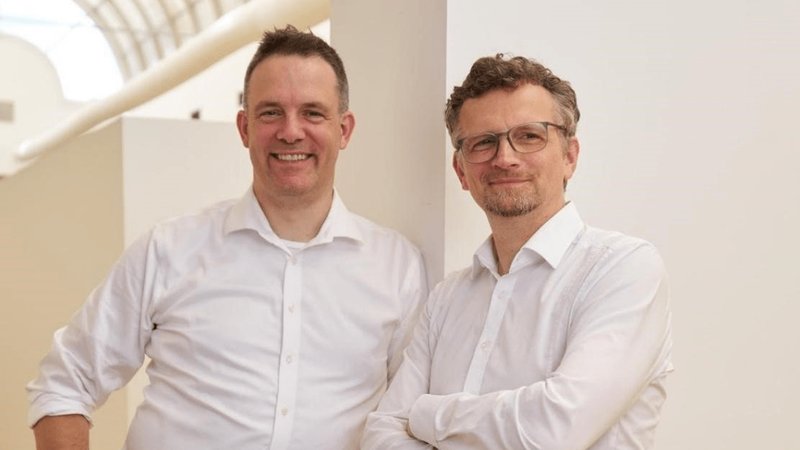
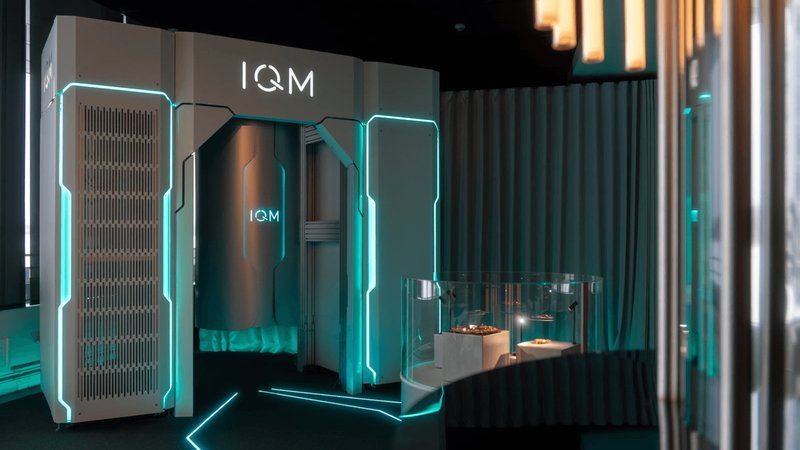
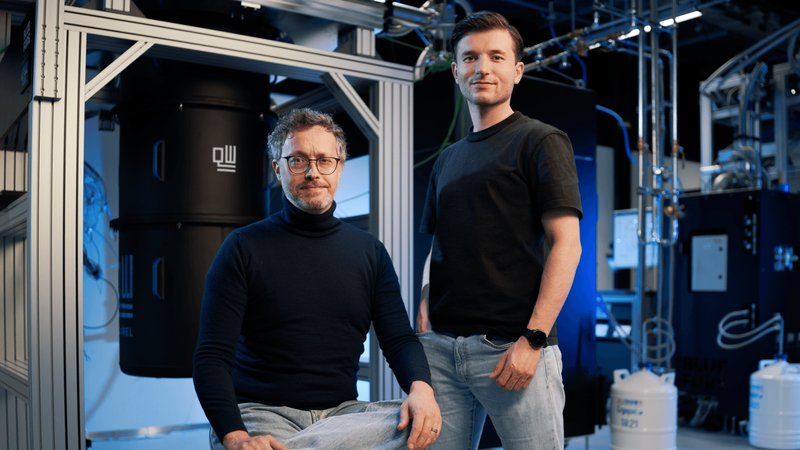
Qutwo's founding team boasts significant industry experience. In addition to Peter Sarlin, co-founders include Kaj-Mikael Björk, who previously worked alongside Sarlin at Silo AI, and Kuan Yen Tan, co-founder of IQM, a Finnish quantum computing company. This combination of expertise in AI and quantum computing provides a solid foundation for the company's ambitious vision.
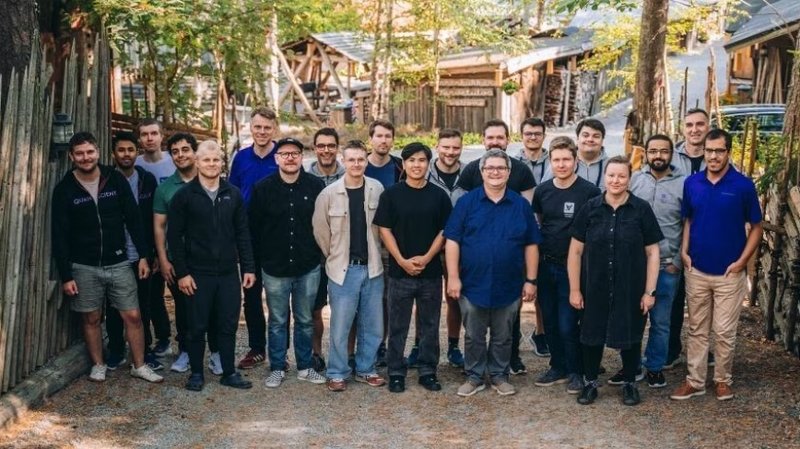
The angel round attracted prominent investors whose experience and network can prove invaluable. Sarlin commented that this round provides not only capital but also strategic support at a moment he described as "once in a generation," emphasizing the importance of being backed by figures who have built or funded category-defining global companies. The company already employs over 50 scientists and engineers from prestigious institutions like Microsoft Research, UC Berkeley, and Cambridge University, demonstrating its ability to attract top-tier talent.
Implications for the Future of Enterprise AI
Qutwo's rapid development, highlighted by over €20 million in contracted revenue since its February launch, signals strong demand for innovative and future-ready AI solutions. For CTOs, DevOps leads, and infrastructure architects, the emergence of platforms like Qutwo OS raises important questions about long-term deployment strategies. The convergence of AI and quantum computing will likely require new considerations in terms of hardware requirements, data sovereignty management, and TCO analysis for on-premise or air-gapped environments.
Although Qutwo does not explicitly position itself as an on-premise solution provider, its emphasis on an enterprise software platform suggests a need for flexibility and control, fundamental aspects for those managing critical AI workloads in complex business contexts. For those evaluating on-premise deployments, AI-RADAR offers analytical Frameworks on /llm-onpremise to assess the trade-offs between different architectures and solutions, considering factors such as latency, throughput, and VRAM requirements, which will become increasingly relevant in the era of AI and quantum computing.





💬 Comments (0)
🔒 Log in or register to comment on articles.
No comments yet. Be the first to comment!