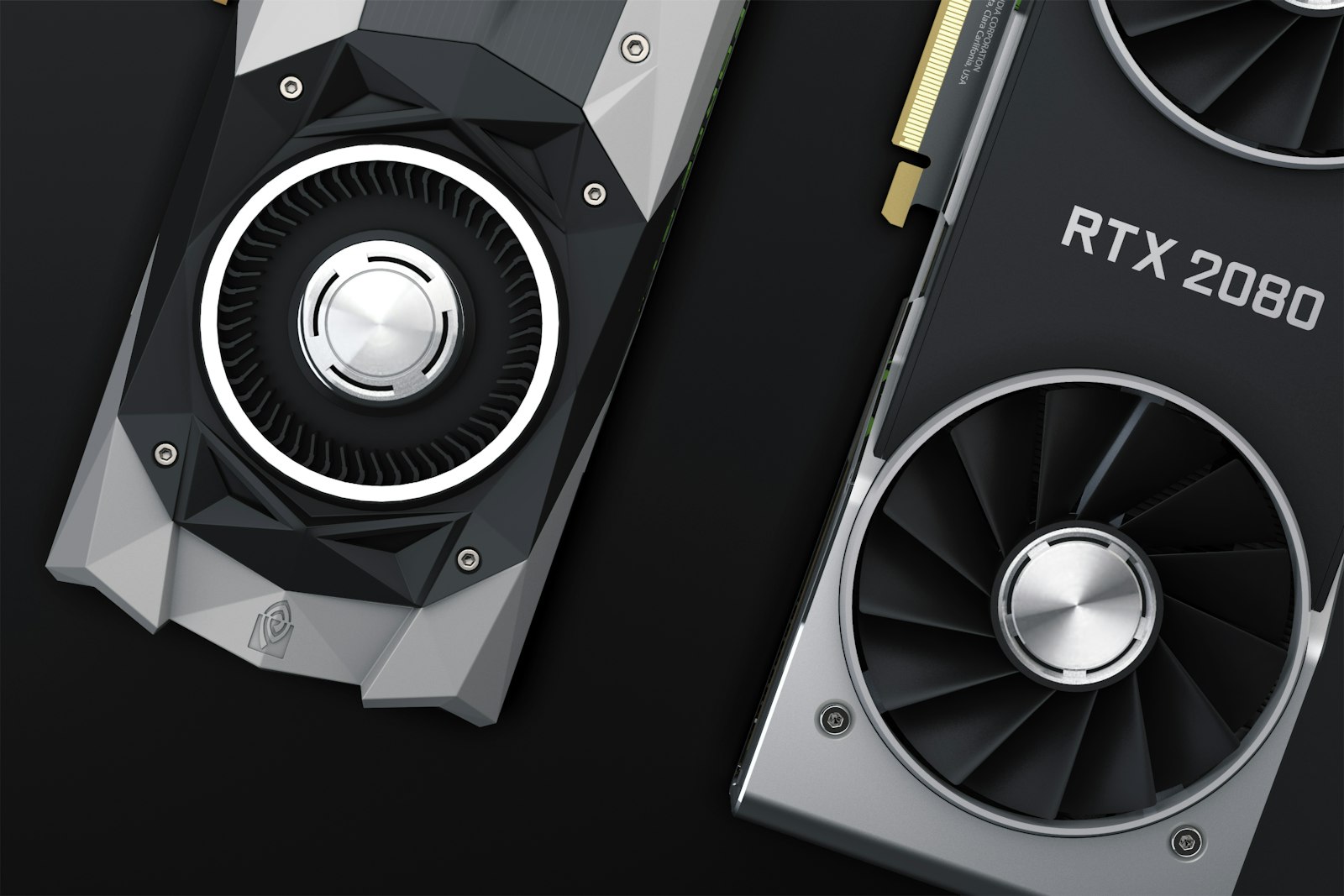
A single developer, a home lab, and a professional GPU priced like a mid-range car: sometimes that's all it takes to shed light on the choices facing on-premise inference teams. Recently, a Reddit user shared detailed performance figures for Qwen 3.6 27B—the latest in the Qwen family—served via vLLM on a system built around a single RTX 6000 Pro Blackwell with 96 GB of VRAM, an Intel 270K Plus CPU, and 96 GB of DDR5 RAM.
The benchmark compared three quantization levels: BF16 (baseline), FP8, and NVFP4, the 4-bit NVIDIA-signed compression exclusive to Blackwell GPUs. The numbers tell a clear story. NVFP4 is a rocket for token generation: 169 tokens per second from a clean context, nearly three times faster than BF16's 59 t/s, and the speedup holds up even at 65k context windows. But when the same model is used in agent mode—for coding assistance, say—odd behaviors surface. The tester reports "looping issues in copilot that I don't get with BF16," along with less thorough answers. Heavy compression seems to hurt semantic fidelity when the model must choose tools and chain actions.
On the other end, BF16 preserves maximum quality but feels sluggish, especially during prefill. Processing 2048 prompt tokens at a 32k context depth clocks in at 1,317 t/s, versus 1,504 t/s for FP8. The gap becomes dramatic when measuring time-to-first-token: at 65k context, FP8 needs 16.4 seconds while BF16 stretches past 21.7 seconds—a nearly 25% advantage.
FP8 emerges as the sweet spot. It exploits native Tensor Core acceleration on Blackwell without dequantization overhead during prefill, yielding ingestion speeds roughly 20% faster than BF16 and roughly 60% higher token generation throughput (well above 100 t/s in testing). Crucially, it avoids the instability seen with NVFP4 during interactive workloads. "FP8 seems to be the right choice," the developer notes, having already ditched llama.cpp in favor of vLLM because paged attention translates into fewer random errors and greater stability in practice.
The test system is a textbook example of modern on-premise deployment: a single professional GPU workstation, ECC memory enabled, and an entirely local software stack (Ubuntu 26.04, CUDA 13.2, vLLM 0.24.0 with FLASHINFER backend and speculative decoding with two tokens). No cloud, no external API dependencies. In this setting, quantization choice isn't merely about speed—it directly affects answer quality, perceived latency, and the robustness of a self-hosted service.
The data confirms that FP8, when natively supported by hardware, is today the most sensible format for sub-30-billion-parameter models used in conversational or coding-assistant roles. The 96 GB of VRAM comfortably accommodates the full model at reduced precision without offloading, keeping time-to-first-token within acceptable bounds even for long contexts. TCO remains predictable: no cloud consumption costs, and the GPU runs in a controlled environment with stable power draw.
For anyone evaluating on-premise LLM deployment, these results serve as a reminder: pushing bits ever lower is not a free lunch. NVFP4 slashes data transfers over PCIe and multiplies tokens per second, but it can introduce behavioral regressions that are hard to diagnose in production. FP8, by contrast, is shaping up as the de facto standard for local inference on Blackwell architectures, combining Tensor Core throughput with response quality that remains indistinguishable from BF16 in most real-world use cases.



💬 Comments (0)
🔒 Log in or register to comment on articles.
No comments yet. Be the first to comment!