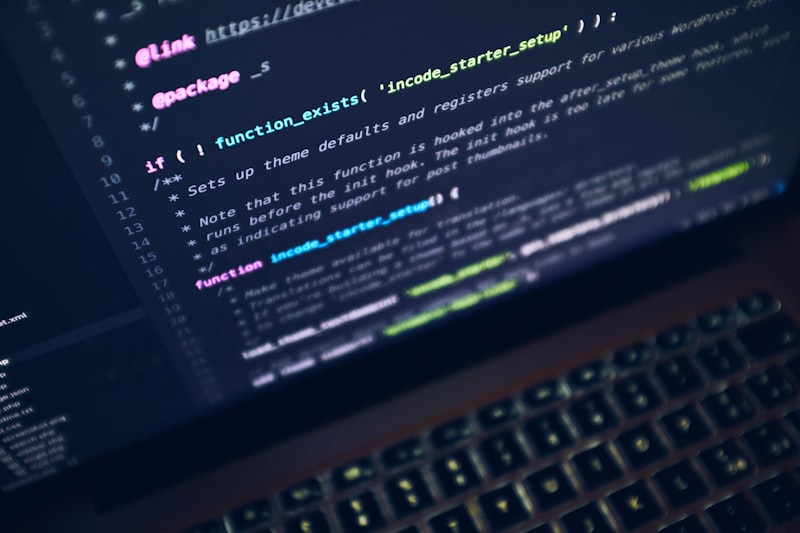
There is no announcement, no spec sheet, no checkpoint to download yet. There is a commit in the ms-swift repository, the framework for LLM fine-tuning and deployment, containing the string Qwen 3.8 35BA3B. For those tracking Alibaba's moves in open-weight model releases, this is the kind of clue that usually precedes a concrete new development.
The name 35BA3B is not neutral. Inside a framework's source code, a string like this exists to register architecture, size, and variant. The 35B suggests a scale of 35 billion total parameters; A3B recalls the convention of mixture-of-experts models, with a fraction of parameters active per token. In practice, the checkpoint could weigh as much as a 35-billion-parameter model, but the computational cost per inference step would be closer to that of a 3-billion-parameter active model.
The point is not whether it arrives, but how it would change the calculus for those bringing models into their own servers. A MoE with many total parameters and few active ones has opposite implications on two fronts: memory and computation. All experts must be loaded into VRAM, so the memory requirement remains tied to the total; each token, however, activates only part of the network, with a direct benefit for latency and throughput on architectures that can exploit routing. In a self-hosted context, this shifts attention from GPU capacity alone to memory bandwidth and serving-layer efficiency, because a poorly served MoE can waste exactly the advantage it promises.
The presence in ms-swift has a different value from a marketing leak. It is not a poster: it is an integration point. The framework is used to train, quantize, and distribute models in different environments, so the commit signals that someone is already preparing technical support, not just the news. For those evaluating on-premise deployment, AI-RADAR offers analytical frameworks at /llm-onpremise to weigh these trade-offs.
The 3.8 label, then, raises a question: is it an intermediate variant of Qwen3 or a parallel branch? The source does not say. And that silence, combined with the string in the code, makes the signal more interesting than many packaged announcements.


💬 Comments (0)
🔒 Log in or register to comment on articles.
No comments yet. Be the first to comment!