
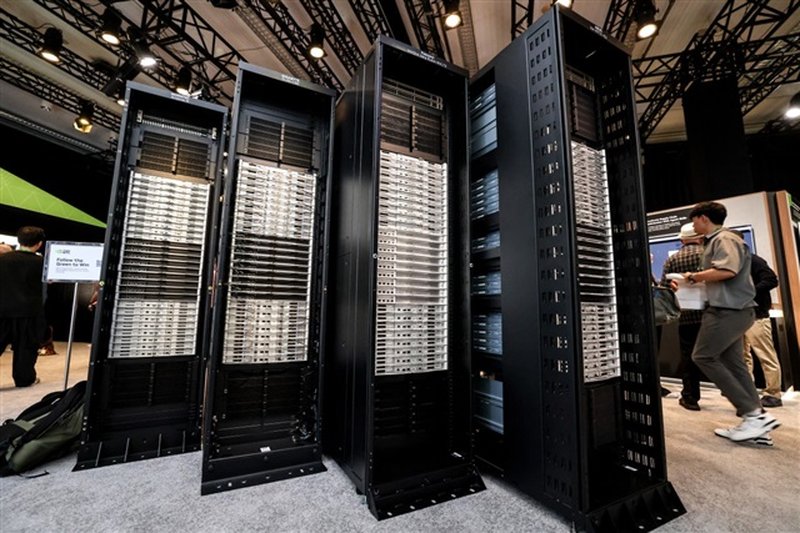
How close are we to the moment when a single AI server rack will draw over a megawatt of power? The question, raised by a DIGITIMES analysis on infrastructure evolution toward 2030, is no longer science fiction but the next bottleneck for anyone designing datacenters, whether in the cloud or on-premise.
The training and inference of ever-larger models is turning energy density into a first-class design variable. Racks hosting the latest GPUs can already reach tens of kilowatts, but chip roadmaps and exponential workload demands point toward rack-level densities in the megawatt range. In this scenario, managing power delivery and cooling becomes as critical as choosing the accelerator itself.
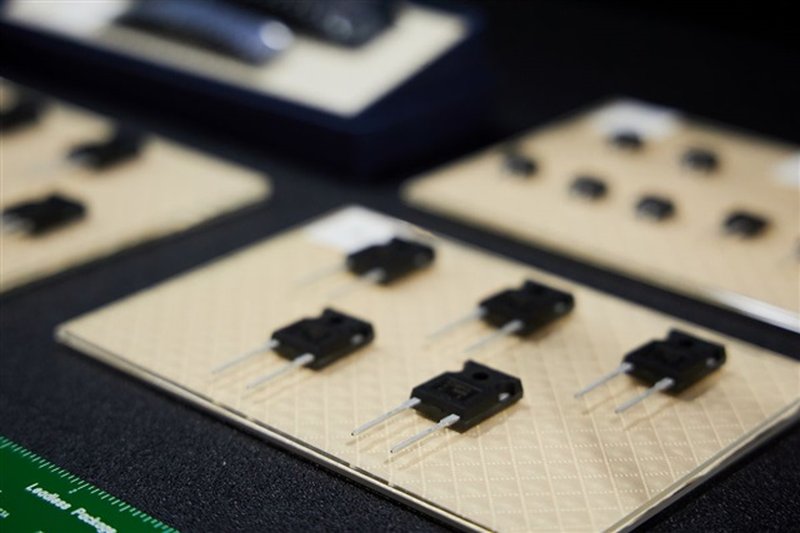
That’s where wide-bandgap semiconductors enter the picture, particularly silicon carbide (SiC) and gallium nitride (GaN) devices. Compared to traditional silicon MOSFETs, these components can switch at higher frequencies, with significantly lower switching losses and greater thermal tolerance. In practice, power supplies and DC-DC converters built with them achieve higher efficiency, reducing dissipated heat and enabling more compact power distribution. For a megawatt AI rack, a few percentage points of efficiency gain save tens of kilowatts of waste heat – with direct consequences on cooling system sizing and operational costs.
For organizations evaluating self-hosted LLM deployments, the issue goes beyond a mere technology refresh. Hosting workloads in-house provides full control over data and latency but also brings the burden of the electrical infrastructure. Uninterruptible power supplies, power distribution lines, and cooling capacity must be rethought from the design stage. Using wide-bandgap semiconductors in power systems can lower TCO over the medium term, offsetting the higher unit cost of the devices with reduced energy bills and cooling infrastructure.
It’s no coincidence that major industrial power supply vendors are accelerating the development of GaN- and SiC-based models specifically targeting AI workloads. While market numbers cannot be predicted here, the direction is clear: energy efficiency is no longer an ancillary requirement but an enabling factor for scaling on-premise clusters. Against a backdrop of growing data sovereignty concerns, where regulations push toward local architectures, the ability to contain the energy bill and thermal complexity becomes a competitive lever.
The real turning point will be integrating these semiconductors directly into the power stages of GPU boards, further reducing on-board conversion losses. In the meantime, for infrastructure managers eyeing the next upgrade of their private datacenter, the question is not only which GPU to buy, but also how to power it without the electricity meter becoming the main growth limit.






💬 Comments (0)
🔒 Log in or register to comment on articles.
No comments yet. Be the first to comment!