The statement that chilled the audience
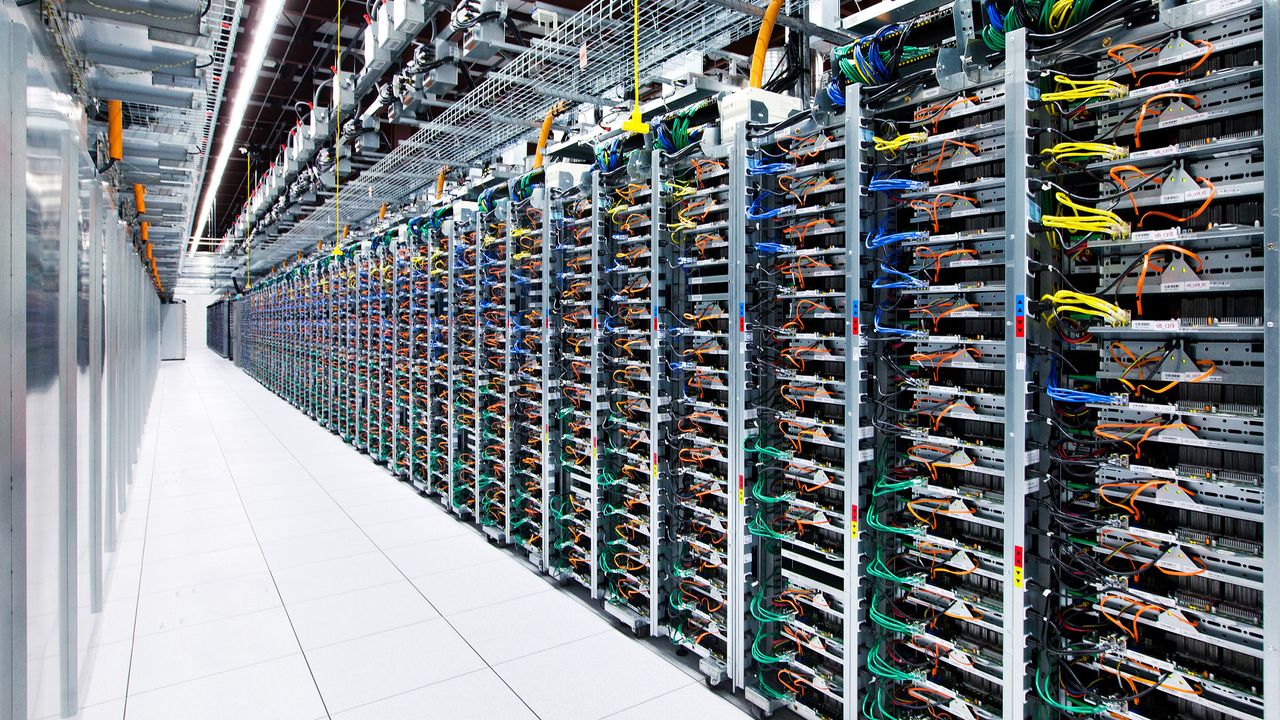
At ISC 2026, the Lenovo executive used a term that perfectly captures the state of the market: RAMageddon. “It will never be like it was last year,” he added, summing up a truth that many providers and enterprise customers are already experiencing: memory, from DRAM modules to GPU VRAM, has become a critical resource, with high prices and uncertain availability.
The speech was no mere outburst, but the prelude to what Lenovo calls a survival guide. For those building on-premise hardware stacks for LLMs, the announcement is both a warning and a call to radically rethink procurement strategies.
Memory as a bottleneck for on-premise inference
When it comes to running large language models on owned hardware, VRAM has long been the limiting factor. Even with aggressive quantization down to INT4, models with 70 billion parameters require tens of gigabytes of fast memory. Increasing throughput requires more GPUs, and therefore more total VRAM.
But pressure on traditional DRAM is no less acute: compute nodes must handle caches, data preprocessing, and often serve multiple models in parallel. Memory scarcity, coupled with rising costs, forces teams to revise scaling plans. It’s no longer just about paying more: sometimes the components simply aren’t available when needed.
Lenovo’s survival guide
Lenovo hasn’t disclosed technical details of its own recipe, but the central message is clear: companies must prepare for a market where memory remains a scarce commodity. Survival rests on three pillars. First, standardizing SKUs to reduce logistical complexity and replace or expand nodes without relying on exotic components. Second, planning purchases far ahead, with framework contracts and buffer stock. Third, rethinking architecture itself: favor modular systems that can adapt to different memory profiles, and invest in efficient serving frameworks that squeeze every available gigabyte.
Beyond cost: sovereignty and control
For those choosing on-premise deployment, memory isn’t just a cost item: it’s a piece of data sovereignty. Self-hosted systems are adopted precisely to keep sensitive data within corporate boundaries and avoid dependencies on external cloud providers. If the necessary hardware is scarce, that sovereignty can become a difficult luxury to maintain. Some projects could be delayed or scaled back, slowing LLM adoption in regulated sectors like finance and healthcare.
In this landscape, AI-RADAR provides analytical frameworks that help evaluate trade-offs between different on-premise configurations, weighing CapEx, energy consumption, and supply guarantees. It’s not about pointing to a single solution, but about offering coordinates for deciding in a landscape that is shifting rapidly.
What it means for those building local stacks
RAMageddon isn’t a temporary crisis: it’s a regime change. Those designing a cluster for LLM inference today must treat memory as a scarce resource, just like electricity or rack space. This means pushing software-side efficiency – from the choice of quantization format to the use of optimized attention – and being prepared to live with long lead times and volatile prices.
At the same time, Lenovo’s message signals that vendors themselves are recalibrating their roadmaps. In the future, we might see more machines optimized for memory bandwidth at the expense of raw compute power, or the proliferation of hybrid solutions combining DRAM and fast storage. The only certainty, for now, is that the memory market will never return to the availability and price levels of the past.







💬 Comments (0)
🔒 Log in or register to comment on articles.
No comments yet. Be the first to comment!