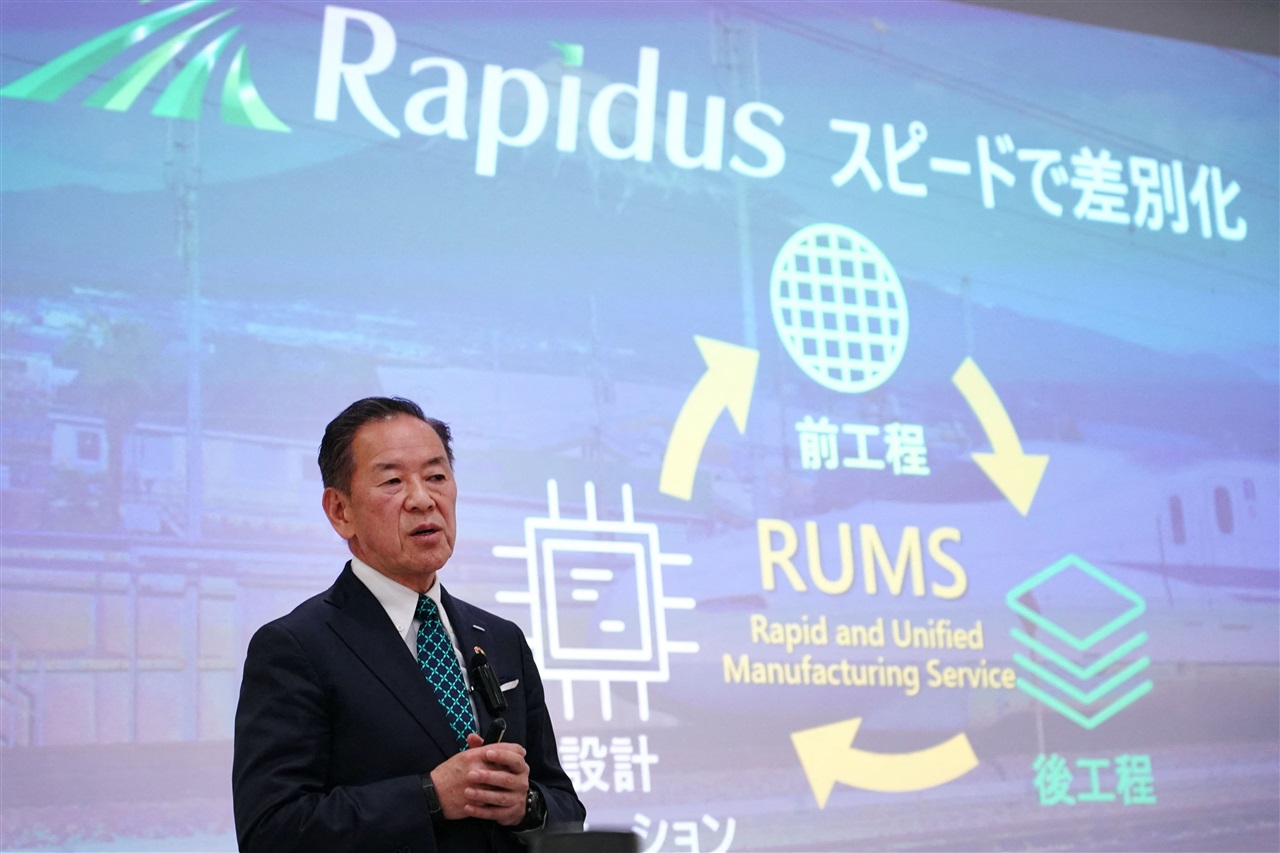
Rapidus, Japan’s ambitious semiconductor manufacturer, has decided to integrate Cadence’s AI agents into the design flow for its 2-nanometer chips. At a glance, it looks like just another tech company claiming innovation. But if you lift the hood, this move says much more about how artificial intelligence is reshaping not only chips themselves but the hardware and organizational foundations of those who invent them.
Designing a cutting-edge processor is a monstrous puzzle: billions of transistors to place, paths to optimize, thermal and electromagnetic checks that demand computing power rivaling a small data center. Adding AI agents to this cycle means delegating to specialized models tasks like placement, routing, or simulation, slashing iterations and idle time. Yet the key word for Rapidus is something else: control. In a market where industrial secrets are worth billions, shipping design IP to public clouds is a risk no one can afford. That’s why the entire pipeline, including incremental agent training, runs on local servers—locked down and managed directly by the company.
This isn’t an isolated case but a structural signal. Companies designing semiconductors, pharmaceuticals, or aerospace components increasingly need brute computational power, but with data residency constraints that rule out generic cloud services. The second-order effect is a surge in demand for on-premise infrastructure optimized for AI workloads: servers with generous RAM, GPUs or custom accelerators, low-latency storage systems capable of holding entire chip layouts in memory. It’s no coincidence that Cadence, Synopsys, and other EDA leaders are partnering with hardware providers to offer certified appliance configurations that reduce integration risks and speak the language of CFOs by turning operational costs into predictable capital investments.
A geopolitical dimension is also hard to miss. Rapidus is a flagship project for Japan, funded with public money to challenge TSMC and Samsung in the most advanced nodes. Using local AI thus becomes a guarantee of technological autonomy: design data remains under national jurisdiction, safe from prying eyes and foreign regulatory pressure. In this sense, adopting Cadence agents works as an enabler of sovereignty, not just efficiency. The beneficiaries are on-premise hardware vendors, who see a high-end enterprise market opening up, while the major hyperscalers—despite their hybrid offerings—struggle to penetrate this ultra-sensitive segment.
Anyone tracking AI deployment decisions should not underestimate this precedent. The Rapidus story shows that the boundary between software and silicon is thinning even in the design phase: AI agents become integral to the production cycle, and demanding they reside on-premise is no longer an ideological choice but an operational prerequisite. The medium-term implications stretch across the entire supply chain: from HBM memory makers, indispensable for handling ever-heavier EDA models, to system integrators specialized in delivering turnkey clusters inside corporate datacenters. For those evaluating similar solutions, known trade-offs exist—compute density, energy consumption, in-house skills—but the direction is clear: the AI that designs the future runs on local rails.








💬 Comments (0)
🔒 Log in or register to comment on articles.
No comments yet. Be the first to comment!