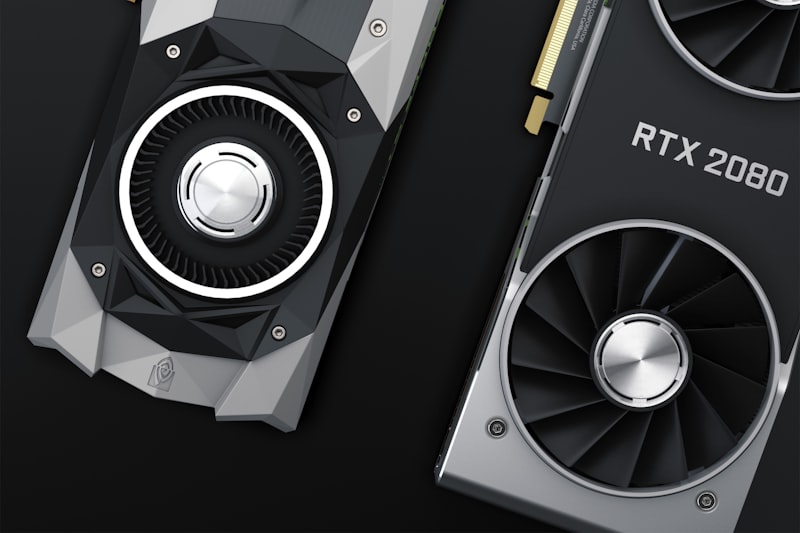
A graphics card that doesn't ship can reveal more than many that do. Reports circulating in recent hours indicate that NVIDIA has cancelled the 24GB variant of the GeForce RTX 5080, leaving only the 16GB model on the table. The claim stems from a Reddit post by user chemist_slime, with links and comments as the only sourced material; it should be treated as a rumor, not an official announcement.
A segmentation choice
If confirmed, the decision isn't just about a product SKU. Memory capacity is one of the tools NVIDIA uses to separate market segments. A 24GB RTX 5080 would have created a dangerous overlap with higher-end cards or professional lines, pulling part of the demand toward a consumer product capable of running larger local models. Keeping the 5080 at 16GB preserves a clear step: those who want more VRAM must pay more or look elsewhere.
The VRAM constraint for local deployments
This has direct effects on on-prem deployment of LLMs. VRAM is the main bottleneck for local inference: it determines which models fit in memory without aggressive quantization or offloading to CPU. A 16GB limit narrows the range of what can run smoothly on a single card, especially with larger architectures or extended context windows. For teams evaluating the 5080 as an affordable option for self-hosted workloads, losing the 24GB variant shifts the TCO calculation: either accept the 16GB constraint or move up to GPUs with more memory, increasing CapEx.
But there is a less visible second effect. Consumer GPUs with ample VRAM have historically been an entry point for experimenters, university labs, and small companies that can't afford data center accelerators. Removing the intermediate step pushes these users toward three paths: buying previous-generation cards that still offer 24GB, building multi-GPU rigs with higher power and cooling costs, or moving part of the workload to the cloud and giving up direct data control. Each choice changes incentives: the used market can heat up, cloud services gain ground for occasional workloads, and inference engine developers must optimize for a lower memory ceiling.
For those evaluating on-prem deployment, these trade-offs are not abstract: available VRAM shapes the feasibility of local models, quantization strategies, and serving architectures. AI-RADAR publishes analyses and frameworks on /llm-onpremise to compare these real-world constraints.
Ultimately, the reported cancellation of the 24GB RTX 5080 is not a minor technical footnote; it signals that memory control remains the lever separating gaming from local AI compute. As long as VRAM stays scarce on consumer products, data sovereignty for on-prem LLM users will carry a higher hardware cost.





💬 Comments (0)
🔒 Log in or register to comment on articles.
No comments yet. Be the first to comment!