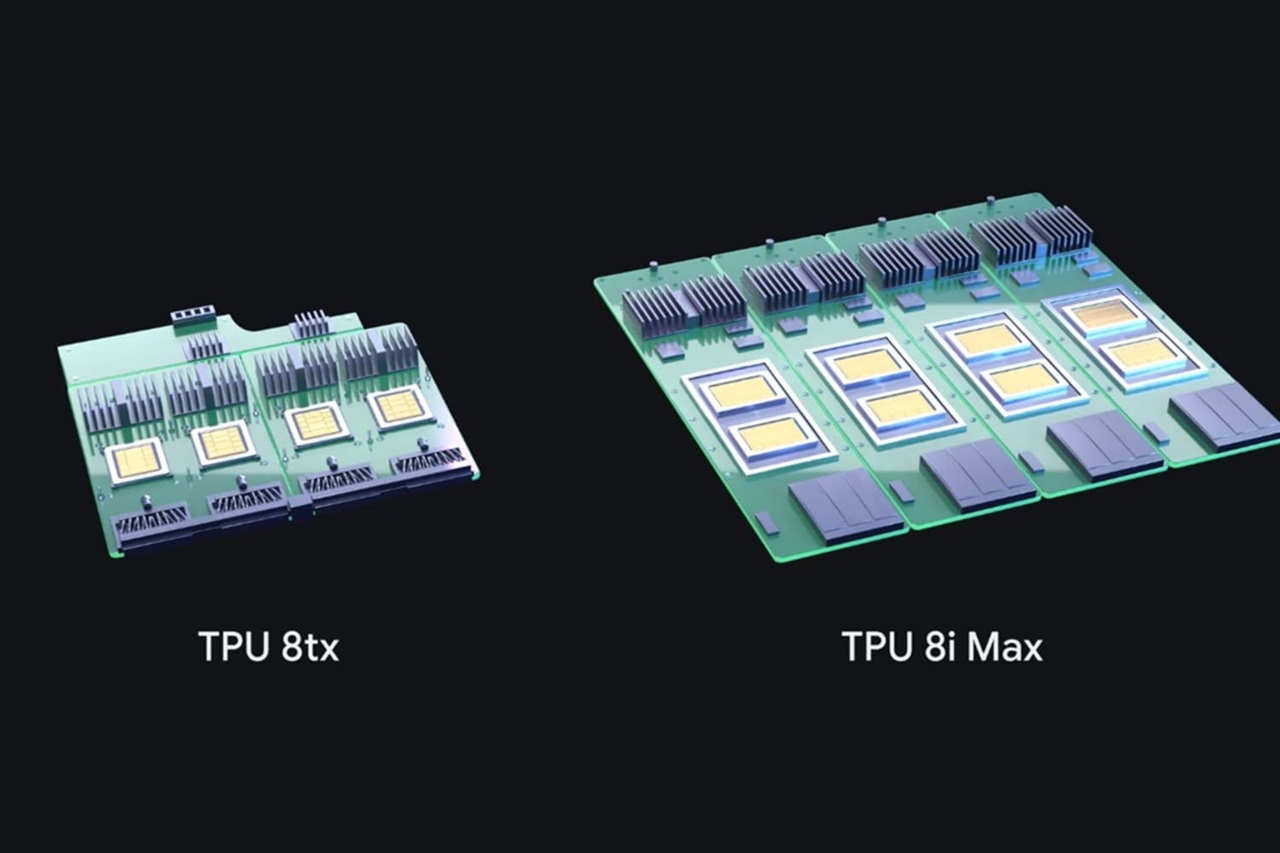
Google's latest expansion of its eighth-generation TPU family is not a simple catalog update. It targets two characteristics that are redefining LLM workloads: the ability to hold a large context and the need for isolation and security when agents act on enterprise systems.
The source does not go into technical detail, but Google's chosen positioning is already a signal. TPUs are accelerators developed internally by the company to run tensor operations at scale and are offered through Google Cloud, not as purchasable components for a private data center. That access constraint matters when the word "secure" sits next to "high-context agentic AI".
An agent that interacts with APIs, databases, and internal processes cannot limit itself to generating a response to a single prompt. It must keep a chain of state, permissions, and intermediate results over longer periods. In this scenario the bottleneck is not only token generation speed: memory management, memory bandwidth, and tenant isolation also count. The portfolio expansion suggests Google is organizing its hardware offering around those constraints, not just around throughput benchmarks.
For those evaluating self-hosted environments, the news signals a structural gap. TPUs remain cloud-native and offer no direct path for teams that must keep data inside their own perimeter. On-premise competitors, typically built around GPUs with high VRAM and third-party accelerators, have to respond not only on performance but also on confidentiality and context continuity. AI-RADAR provides analysis frameworks on /llm-onpremise to map these trade-offs, but the distance between the two deployment models cannot be closed by a simple equivalence of specifications.
The most relevant aspect is that the term "agentic AI" is shifting the technical discussion from raw power to service quality under real operational conditions. A system that manages long contexts and secure actions changes evaluation criteria: less attention to the single generated token, more attention to state stability, memory retrieval latency, and separation between different workloads. This is a shift in incentives that infrastructure teams will have to internalize, regardless of the vendor they choose.







💬 Comments (0)
🔒 Log in or register to comment on articles.
No comments yet. Be the first to comment!