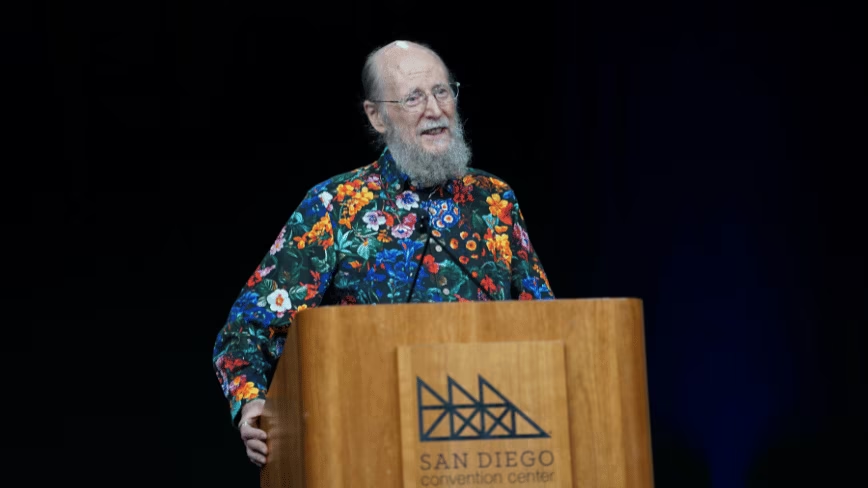
Richard Sutton, the researcher who laid the foundations of reinforcement learning and just shared the 2024 Turing Award, announced on X he is leaving Keen Technologies, the AI startup founded by John Carmack. His next destination is Oak Lab, a still-mysterious project that marks a clean break with the recent past.
Sutton is no ordinary name. His career intertwines with the history of modern AI: from the early reinforcement learning algorithms of the 1980s to contemporary applications spanning video games, robotics, and complex system control. The Turing Award, received alongside Andrew Barto, crowned a journey that began when the idea of an agent learning by interacting with its environment was nearly heretical.
Leaving Keen Technologies, where Carmack is chasing the dream of artificial general intelligence (AGI), is not trivial. Keen is a well-funded startup with an iconic founder and an openly long-term ambition. Yet Sutton decided to start from scratch. This move suggests that even within promising ventures, deep divergences on research direction or operating model can arise. If a researcher of Sutton’s caliber feels compelled to create his own lab, he likely sees opportunities not aligned with Carmack’s vision—perhaps a return to more fundamental research, less bound to commercial roadmaps.
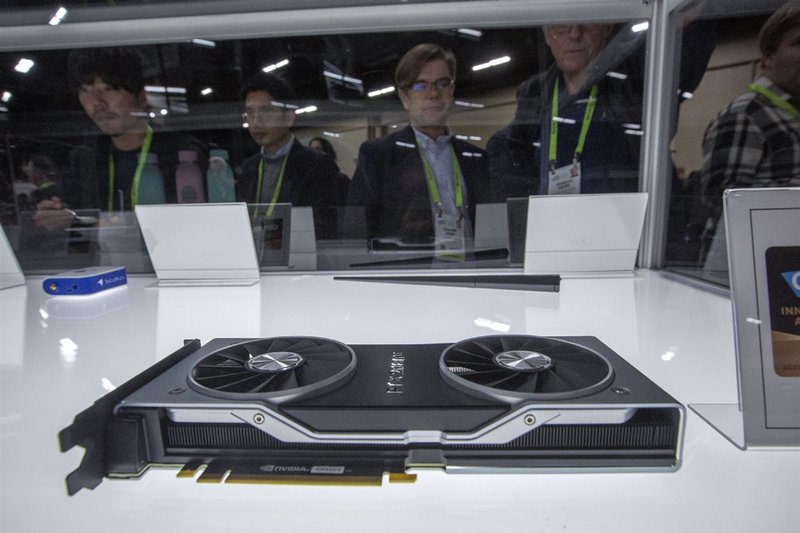
For the on-premise AI landscape, the news is a signal worth noting. Training reinforcement learning models, especially in complex simulated environments or real-world robotics scenarios, demands powerful, low-latency compute infrastructure. Cutting-edge researchers often prefer on-premise clusters to control costs, minimize iteration time, and retain data ownership—particularly when building agents that interact with physical systems or sensitive data. If Oak Lab ventures in this direction, it could fuel demand for dedicated GPU servers, high-speed storage, and hybrid architectures combining public cloud training with local inference.
It’s not just a technical matter. Sutton’s decision shines a light on a broader phenomenon: the diaspora of top talent from large labs to self-funded or VC-backed startups. In recent years, we’ve seen prominent departures from DeepMind, OpenAI, and Meta; each separation gave birth to new independent initiatives. This fragments the ecosystem but also multiplies research centers. For infrastructure designers, it means the demand for flexible solutions—capable of scaling from a single node to hundreds of GPUs—is set to grow, along with the relevance of software stacks that can orchestrate RL workloads efficiently.
If the trend consolidates, the main winners could be specialized hardware vendors (NVIDIA, AMD, but also chip startups) and platforms that simplify on-premise deployment. Conversely, large cloud providers risk seeing a reduced share of wallet from the most innovative labs, which might prefer the full control of self-hosting. It’s a delicate balance, where data sovereignty and cost predictability play an increasingly central role.
Sutton praised Carmack and the Keen team but gave no details on Oak Lab. What’s certain is that the father of reinforcement learning isn’t resting on his laurels. His new venture could redefine the frontiers of autonomous learning—and, with them, the hardware requirements for those who will follow.



💬 Comments (0)
🔒 Log in or register to comment on articles.
No comments yet. Be the first to comment!