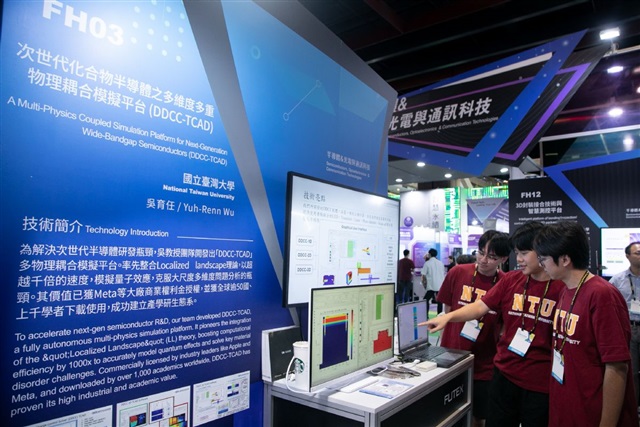
Riken and Taiwan Academia Join Forces on Advanced Semiconductors
Research into materials is a fundamental pillar for the evolution of hardware powering modern artificial intelligence applications. In this context, Riken, the prestigious Japanese research institute, has announced a strategic collaboration with Taiwanese academic institutions. The objective is the joint development of next-generation compound semiconductors, an area that promises to redefine the limits of performance and energy efficiency in future chips.
The Potential of Compound Semiconductors
Compound semiconductors, such as gallium nitride (GaN) or silicon carbide (SiC), represent an advanced alternative to traditional silicon. These materials offer superior properties in terms of electron mobility, wider bandgap, and better thermal management. Such characteristics make them particularly suitable for applications requiring high frequency, high power, and resistance to extreme temperatures – sectors where silicon reaches its physical limits. For AI-dedicated hardware, this translates into the potential for faster, more efficient, and less energy-intensive processors, capable of handling intensive inference and training workloads more effectively.
Implications for On-Premise Deployments
For organizations evaluating the deployment of Large Language Models (LLM) and other AI workloads in self-hosted or air-gapped environments, the evolution of compound semiconductors is of primary importance. Energy efficiency is a critical factor in calculating the Total Cost of Ownership (TCO) for on-premise infrastructures. Chips based on these advanced materials could significantly reduce the energy consumption and cooling requirements of local data centers, making large-scale deployments more sustainable and less costly in the long run.
Furthermore, the increased performance per watt offered by these semiconductors can enable greater local computing capacity, strengthening data sovereignty and control over the entire AI pipeline, without the need to excessively rely on external cloud resources. The ability to run complex models with reduced latency and high throughput directly on-site is a significant competitive advantage.
Towards the Future of AI Hardware
The collaboration between Riken and Taiwanese academic institutions underscores the importance of fundamental research and the development of innovative materials for technological progress. As the industry continues to push the boundaries of AI software and algorithms, the underlying hardware must evolve in parallel. Investing in next-generation semiconductor materials is crucial for unlocking the next waves of performance and sustainability, especially in an era where the demand for AI computing capacity is constantly growing. This partnership could lay the groundwork for the chips that will power future data centers and edge devices, offering new opportunities to optimize AI deployments in every context.





💬 Comments (0)
🔒 Log in or register to comment on articles.
No comments yet. Be the first to comment!