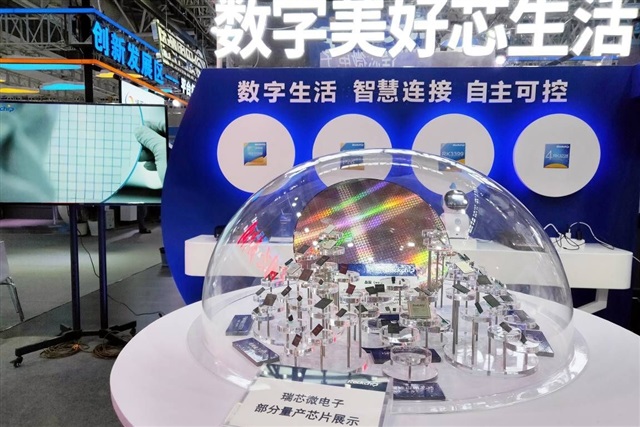
Rockchip has communicated a clear market expectation: the first half of 2026 will bring a significant rise in both revenue and profit, driven by demand for AIoT—the Internet of Things augmented by artificial intelligence. The news, on its surface financial, is actually a symptom of a deeper transformation. It’s not merely a vendor celebrating a good quarter; it’s an early indicator of how inference hardware is shifting from centralized cloud to the devices that generate data.
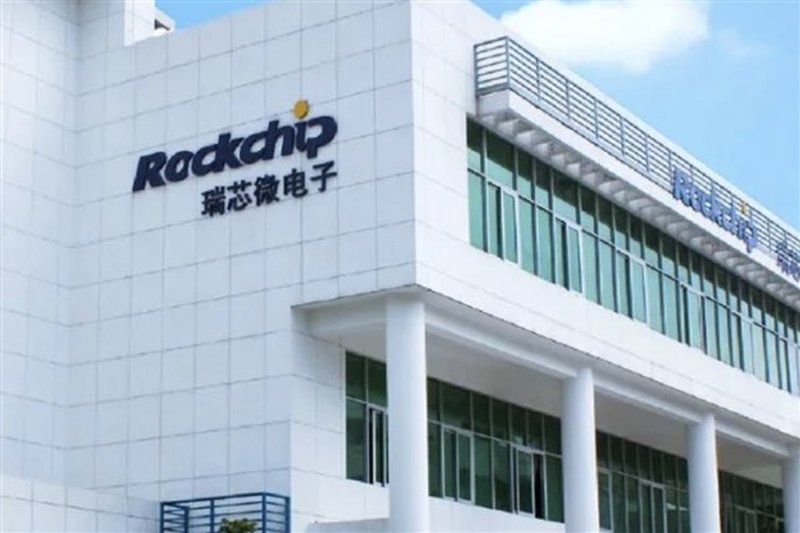
Rockchip’s offering revolves around low-power System-on-Chips (SoCs), often integrating neural processing units (NPU) designed precisely for running AI models directly on-device. This class of chips powers smart cameras, industrial sensors, voice assistants, and countless endpoints that require minimal latency and, for bandwidth or privacy reasons, cannot afford to send every bit to the cloud. The announcement from the Fuzhou-based company essentially says that the edge AI path is no longer a theoretical bet: it is generating real profits, and will do so at an increasing scale.
For those evaluating on-premise or self-hosted deployments, the signal is twofold. First, the silicon ecosystem for local inference is expanding and specializing, reducing dependence on a handful of data center GPU vendors and creating economically viable alternatives for workloads where billion-parameter LLMs are unnecessary, but compact models optimized through quantization and specific fine-tuning are the norm. Second, the growth of AIoT reinforces the principle of data sovereignty, because Rockchip’s chips—and those of its competitors—make on-device processing technically practical and cost-effective, aligning with GDPR compliance requirements and corporate policies demanding local data residency.
From a cost perspective, the Total Cost of Ownership (TCO) of a fleet of smart sensors drops when inference happens locally: continuous transmission costs are eliminated, the cloud bill shrinks, and reliability improves even without stable connectivity. It’s no accident that Rockchip, along with other Chinese chip designers, is capturing this demand. Their ability to supply specialized silicon at competitive prices may accelerate a virtuous fragmentation of the AI hardware market, where not only the most powerful training chip wins, but also the one that enables widespread, low-cost inference.
Behind the revenue forecast, then, one can discern a reorganization of industry incentives: device manufacturers increasingly find it worthwhile to process data at the source, and the component supply adapts accordingly. For decision-makers who follow AI-RADAR’s assessments of local stacks and TCO, this trajectory represents an important piece of the puzzle: the AI that matters is not only the one running in a hyperscaler, but also the one that turns on an LED on an anonymous factory sensor, without ever phoning home.






💬 Comments (0)
🔒 Log in or register to comment on articles.
No comments yet. Be the first to comment!