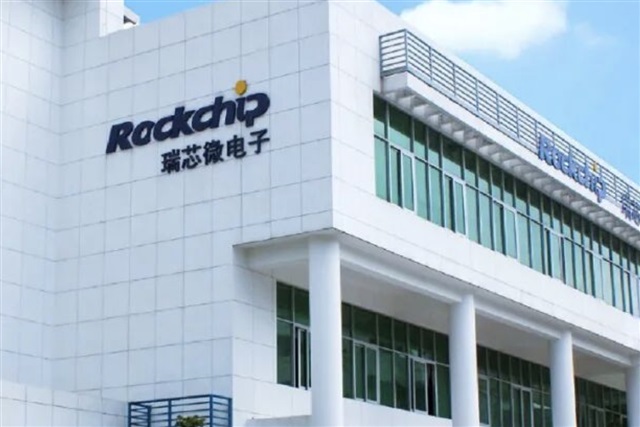
The Rise of AIoT and Rockchip's Achievements
Rockchip, an established player in the semiconductor landscape, recently announced record financial results, signaling its growing influence in the sector. This success is closely linked to its expansion strategy in the field of AIoT (Artificial Intelligence of Things) chips, which are finding application across a wide range of industrial sectors. The integration of artificial intelligence directly into IoT devices represents a crucial frontier for innovation, enabling advanced processing capabilities directly at the network edge.
The adoption of AIoT solutions reflects a broader trend towards distributed processing, where the ability to execute artificial intelligence tasks locally on devices offers significant advantages. These include reduced latency, enhanced data security, and improved operational efficiency. Rockchip's growth in this segment highlights the maturation of the market for embedded AI solutions, capable of transforming industrial and commercial operations.
The Technological Core of AIoT Chips
Rockchip's AIoT chips, like those from other vendors, are designed to integrate AI inference engines with the connectivity and management capabilities typical of IoT devices. This means they can execute lightweight artificial intelligence models, such as those for image recognition, audio analysis, or anomaly detection, directly on the device, without the need to send all data to a central cloud for processing. This approach is fundamental for applications requiring real-time responses or operating in environments with limited or no connectivity.
These processors are optimized for energy efficiency and compact size, essential characteristics for embedded devices. Their architecture often includes dedicated Neural Processing Units (NPUs), which accelerate AI inference workloads. The ability to perform inference locally not only improves performance but also contributes to reducing the overall Total Cost of Ownership (TCO) by minimizing reliance on expensive cloud resources and bandwidth consumption.
Implications for On-Premise Deployment and Data Sovereignty
The expansion of AIoT chips has profound implications for deployment strategies, particularly for companies that prioritize on-premise or edge solutions. Local data processing, enabled by these chips, is a key factor in ensuring data sovereignty and regulatory compliance, increasingly critical aspects in sectors such as finance, healthcare, and public administration. Organizations can maintain complete control over their sensitive data, reducing the risks associated with transferring and processing data in external cloud environments.
For companies evaluating self-hosted alternatives to cloud services for AI/LLM workloads, AIoT offers a scalable model for distributing artificial intelligence widely. This trend aligns with AI-RADAR's philosophy, which focuses on on-premise LLMs, local stacks, and hardware for inference/training, emphasizing deployment decisions that prioritize data sovereignty, control, and TCO. For those evaluating on-premise deployment, there are significant trade-offs to consider, and analytical frameworks like those discussed on /llm-onpremise can help navigate these complexities.
Future Prospects for Edge Artificial Intelligence
Rockchip's success in the AIoT chip market is indicative of a clear direction for the evolution of artificial intelligence: greater decentralization and direct integration into devices. As AI models become more efficient and edge hardware capabilities improve, we will witness a proliferation of intelligent applications in previously inaccessible contexts. This will not only open new opportunities for automation and optimization but also reinforce the need for robust and secure architectures for managing distributed data and inference.
Continuous innovation in AI-dedicated silicio, coupled with advancements in quantization and model optimization, will enable AIoT chips to handle increasingly complex workloads. The ability to effectively and securely deploy artificial intelligence at the edge will be a key differentiator for businesses seeking to fully leverage the potential of their real-time data.










💬 Comments (0)
🔒 Log in or register to comment on articles.
No comments yet. Be the first to comment!