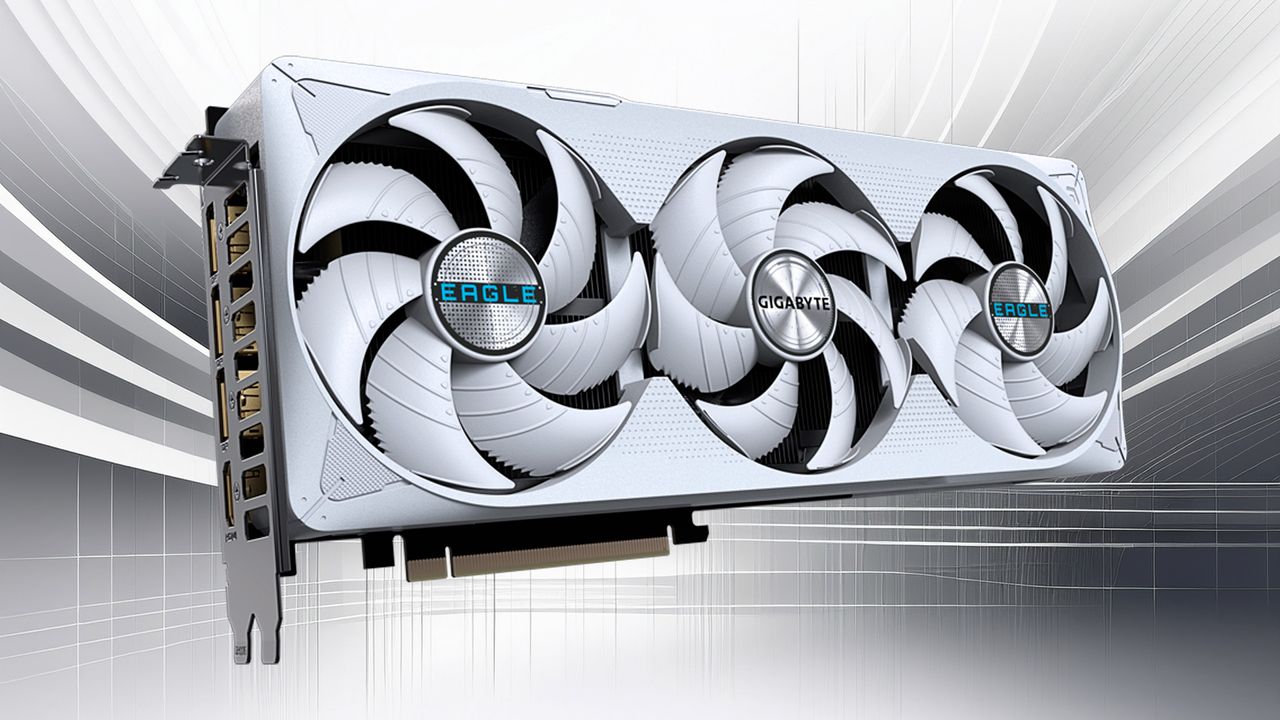
Only hours after launch, the first discounts on the RTX 5070 Ti appeared. The $1,119 list price can already be trimmed by $220: a $899 tag that shifts what you can place under your desk without a loan. For those working with language models, this isn’t just a price comparison entry.
The RTX 5070 Ti carries the Blackwell architecture and a VRAM buffer that, though designed for 4K gaming and ray tracing, becomes a strategic asset for local inference. With 16GB of GDDR7 — ample for hosting 7–8 billion parameter models quantized to 4 or 8 bits — the card can power a home LLM server or a company test node, bypassing prohibitively expensive datacenter GPUs.
The thin line between consumer and pro
The real divide is no longer in raw specs but in the software ecosystem. Tools like Ollama, llama.cpp, and vLLM have lowered technical barriers, making inference on consumer GPUs an everyday reality. Quantization at FP16, INT8, or even Q4_K_M is managed from a command line, not only by engineers with AWS clusters. The RTX 5070 Ti, at a price close to a mid-range laptop, further democratizes access.
But there’s a drawback. On-premise environments demand more than benchmark peaks: reliability, silence, predictable power draw. A consumer card suffers from thermal limits and drivers not certified for 24/7 workloads. Anyone evaluating a continuous deployment must factor in cooling costs and potential wear. Those initial $220 saved must be weighed against TCO over two or three years.
Why data sovereignty outweighs a benchmark
Not every organization can send prompts to a hyperscaler. Banks, law firms, biomedical companies have data residency constraints that the cloud can’t satisfy without expensive hybrid architectures. A GPU like the RTX 5070 Ti, plugged into an on-premise server, keeps data behind the firewall with low latency and clear governance.
The question isn’t “how fast versus an A100,” but “how much does the risk of not being able to run inference at all cost.” A self-hosted LLM on consumer hardware can process hundreds of tokens per second with quantized models — enough for internal chatbots, document summarization, and basic semantic analysis.
The AI-RADAR perspective
A modern GPU under $900 marks a turning point for those who have postponed the shift to local AI. The graphics card market is becoming, almost inadvertently, a market for entry-level AI accelerators. This doesn’t eliminate the need for structured evaluation: for those taking their first steps with on-premise deployments, trade-offs between consumer silicon and enterprise hardware must be measured rigorously — a path AI-RADAR follows closely, providing analytical frameworks that help avoid turning a bargain into a dead end.
Ultimately, the RTX 5070 Ti’s price isn’t just gamer news. It signals how thin the hardware barrier to on-premise AI is becoming. And $899 might be less a cost than the trigger for an investment in technological autonomy.




💬 Comments (0)
🔒 Log in or register to comment on articles.
No comments yet. Be the first to comment!