
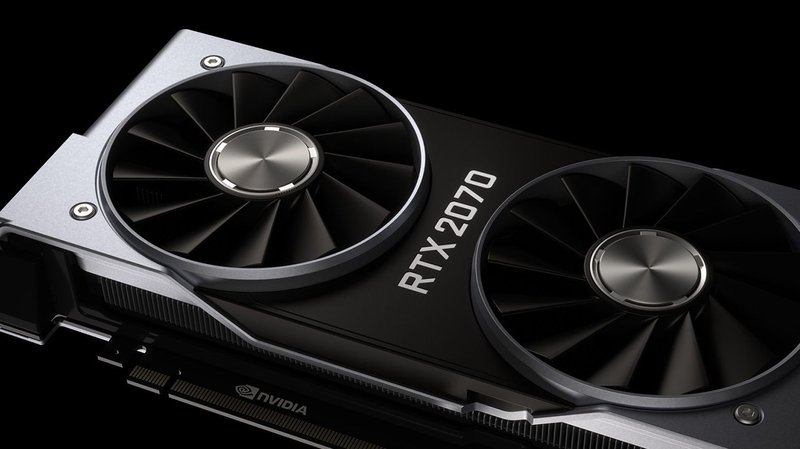
The headline circulating on Reddit is blunt: a US-based GPU repair technician has reportedly indicated the existence of GeForce RTX 5090 cards with 64 and 96 GB of VRAM. The conditional is mandatory because the source is limited to a post and a linked discussion. Yet the mere possibility touches the most sensitive point for anyone running LLMs locally: video memory remains the main bottleneck for loading larger models, handling long context windows, and reducing reliance on quantization.
A consumer card with 64 or 96 GB would change the equation for self-hosted setups. It would not only mean running mid-sized models: it would open room for less aggressive quantization, wider context windows, and light fine-tuning on a single GPU, without necessarily moving to professional platforms or the cloud. The point is not the card itself, but the cost per gigabyte of VRAM actually usable after drivers, system overhead, and context.
If the rumor were accurate, NVIDIA would extend the workstation logic into the consumer segment, but with a structural limit: VRAM alone is not enough. Memory bandwidth and compute power remain decisive for inference throughput. A card with more VRAM but the same architecture does not magically increase tokens per second; it does, however, avoid swapping and keep the model resident in memory, a concrete advantage for sustained workloads.
The first side effect would hit the professional GPU market. Those who currently buy a workstation card mainly for VRAM might see a cheaper path, but without ECC, vGPU, and enterprise contracts. Companies with data sovereignty requirements could evaluate local servers with multiple consumer cards, only to face support, warranty, and reliability issues that a single purchase does not solve.
For data sovereignty, the hypothesis matters: cheaper high-capacity VRAM reduces the need to send prompts and documents to cloud services. The TCO of a local node improves if the cost per gigabyte of VRAM drops enough to make an internal inference pipeline sustainable. But TCO does not end with hardware: power, cooling, maintenance, and driver updates become critical variables.
The story remains an unverified rumor. Even so, the fact that it keeps circulating is itself a signal: consumer VRAM demand for AI workloads is no longer a niche segment. For those evaluating on-premise deployments, AI-RADAR offers analytical frameworks at /llm-onpremise to weigh these trade-offs.





💬 Comments (0)
🔒 Log in or register to comment on articles.
No comments yet. Be the first to comment!