
Samsung Ramps Up HBM4 Production for AI
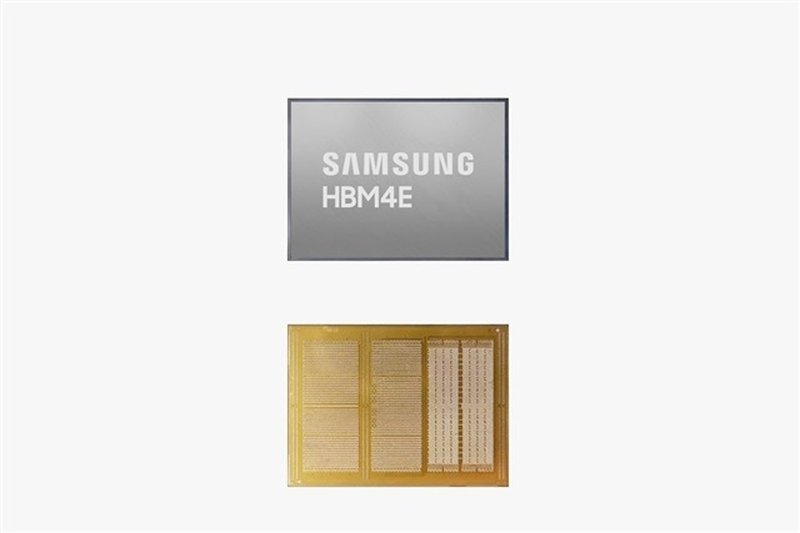
Samsung, a leading player in the semiconductor industry, is significantly accelerating its production plans. The company has announced the intensification of work at its fabrication complexes in Pyeongtaek, South Korea. This strategy is directly linked to the need to boost the production capacity of High Bandwidth Memory (HBM), particularly the upcoming HBM4 generation.
This move reflects the increasing demand for specialized hardware components, essential for powering intensive artificial intelligence workloads, from Large Language Models (LLMs) to the training of complex neural networks. The large-scale availability of HBM4 memory is seen as a critical factor for the evolution and widespread adoption of AI technologies, especially for applications requiring high performance and low latency.
The Crucial Role of HBM4 Memory in AI
High Bandwidth Memory (HBM) has become an indispensable component for the latest generation of GPUs and AI accelerators. Unlike traditional DRAM, HBM is designed to offer significantly higher bandwidth, reducing data transfer bottlenecks between the processor and memory. This is crucial for LLM training and inference operations, which require rapid access to massive datasets and models with billions of parameters.
The transition to HBM4 promises further improvements in terms of density, speed, and energy efficiency. These advancements are vital for on-premise deployments, where TCO (Total Cost of Ownership) and resource efficiency are priorities. Higher memory density per HBM stack means GPUs can host larger models or bigger batch sizes, improving throughput and reducing latency—critical aspects for enterprise AI applications.
Implications for On-Premise Deployments and Data Sovereignty
Samsung's acceleration of HBM4 production has direct implications for companies considering self-hosted AI deployments. The availability of HBM4 memory in larger volumes can help mitigate supply chain challenges and costs, making high-end hardware solutions more accessible. For CTOs and infrastructure architects, access to HBM4-equipped GPUs means being able to design more performant and scalable systems for LLM inference and fine-tuning in controlled and air-gapped environments.
The choice between on-premise and cloud deployment for AI workloads is often driven by considerations of data sovereignty, compliance, and long-term TCO. The evolution of HBM4 technology supports the argument for on-premise, offering the possibility to build robust and competitive AI infrastructures while maintaining full control over data and operations. For those evaluating on-premise deployments, analytical frameworks are available at /llm-onpremise to assess the trade-offs between initial costs, operational expenses, and performance.
Future Prospects and Challenges in the AI Market
Samsung's commitment to HBM4 production underscores the global race to dominate the AI memory market. As the demand for AI computing and memory capacity continues to grow exponentially, the ability to produce advanced components like HBM4 at scale becomes a key differentiator. However, the technological complexity and costs associated with manufacturing these memories represent significant challenges, requiring massive investments in research and development.
The success of this strategy will depend not only on Samsung's ability to increase production but also on the efficient integration of HBM4 into future generations of AI accelerators. This development is an important indicator of the direction AI hardware is taking, with an increasing emphasis on memory performance to unlock the full potential of Large Language Models and more advanced artificial intelligence applications, directly influencing global deployment strategies.





💬 Comments (0)
🔒 Log in or register to comment on articles.
No comments yet. Be the first to comment!