
Disparate Bonuses and Union Alarm
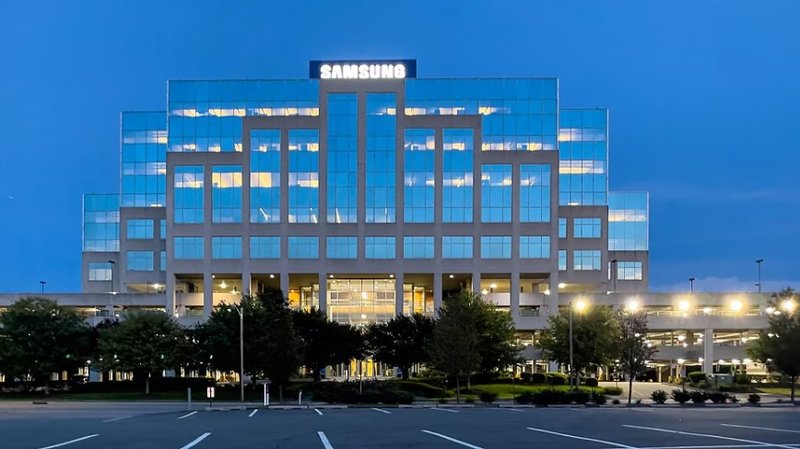
Internal Samsung transcripts have revealed a significant disparity in bonuses offered to employees, raising considerable concerns about talent retention. Staff involved in memory production received extraordinary bonuses, reaching an incredible 607% of their salary, with a value that could amount to $477,000. In contrast, employees working on logic chips received much more modest bonuses, in some cases as low as 50% of their salary.
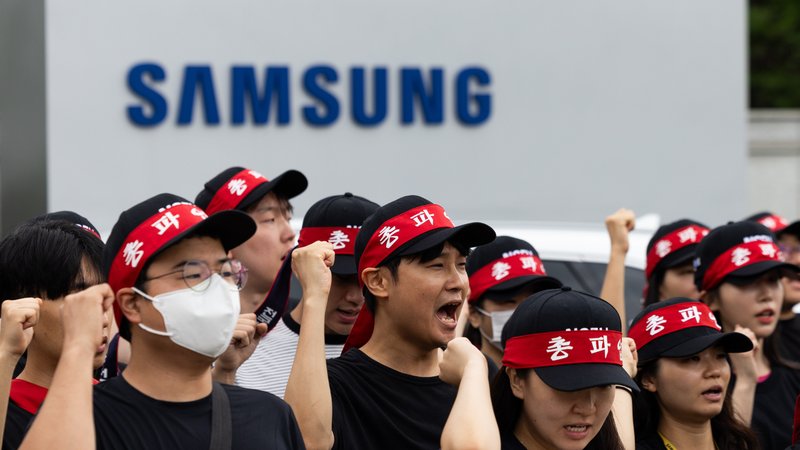
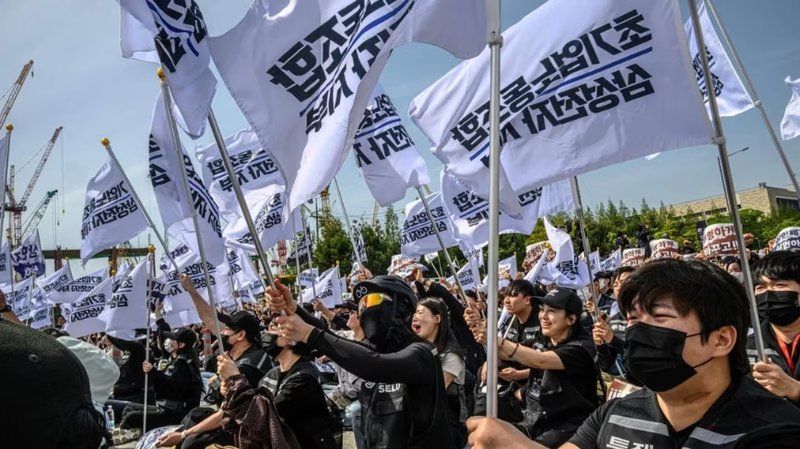
This marked difference has raised an alarm among unions, who stated that such an imbalance is creating a "retention crisis the company cannot afford." The situation was further highlighted by a public apology from Samsung Chairman Lee Jae-yong, a gesture that underscores the seriousness of the issue within the tech giant.
Samsung's Role in the AI Ecosystem
Samsung is a fundamental player in the semiconductor industry, with a crucial role in supplying essential components for the advancement of artificial intelligence. The company is a leading producer of High Bandwidth Memory (HBM) and advanced logic chips, including processors and GPUs, which are the beating heart of the infrastructure required for training and Inference of Large Language Models (LLM). The availability and reliability of these components are vital for organizations aiming to build and scale their AI capabilities.
Therefore, workforce stability in such strategic sectors is of paramount importance. A talent retention crisis, as feared by the unions, could have direct repercussions on Samsung's production capacity, affecting the entire global silicon supply chain. This scenario, in turn, could lead to delivery delays, increased costs, and reduced availability of critical hardware for the AI sector.
Implications for On-Premise Deployment
For organizations evaluating an on-premise deployment of LLMs, supply chain stability and the availability of critical components are decisive factors for the Total Cost of Ownership (TCO) and strategic planning. Dependence on key suppliers like Samsung for VRAM memory and logic chips means that any disruptions or inefficiencies in their production can have a direct impact on the ability to implement and maintain self-hosted AI infrastructures.
Instability in hardware availability can lead to unforeseen costs, prolonged waiting times for procurement, and the need to revise system architectures. This is particularly relevant for environments requiring data sovereignty or air-gapped configurations, where procurement flexibility is limited. AI-RADAR offers analytical frameworks on /llm-onpremise to support the evaluation of these trade-offs, helping companies navigate the complexities of the hardware market and mitigate supply chain risks.
Future Outlook and the Retention Challenge
The challenge of talent retention in the semiconductor sector is complex and multifaceted. In a highly competitive global market, where the demand for experts in chip design and production is constantly growing, compensation policies and benefits play a crucial role. The salary disparity highlighted at Samsung could not only demotivate lower-paid staff but also make the company less attractive to new talent.
To maintain its leadership and ensure the continuous production of vital AI components, Samsung will need to address this issue urgently. The ability to attract and retain the best engineers and technicians is as important as investments in research and development. Resolving these internal tensions will be fundamental not only for the company's financial health but also for the stability of the entire technology industry, with significant repercussions for all who depend on a constant flow of silicon innovation and production.



💬 Comments (0)
🔒 Log in or register to comment on articles.
No comments yet. Be the first to comment!