
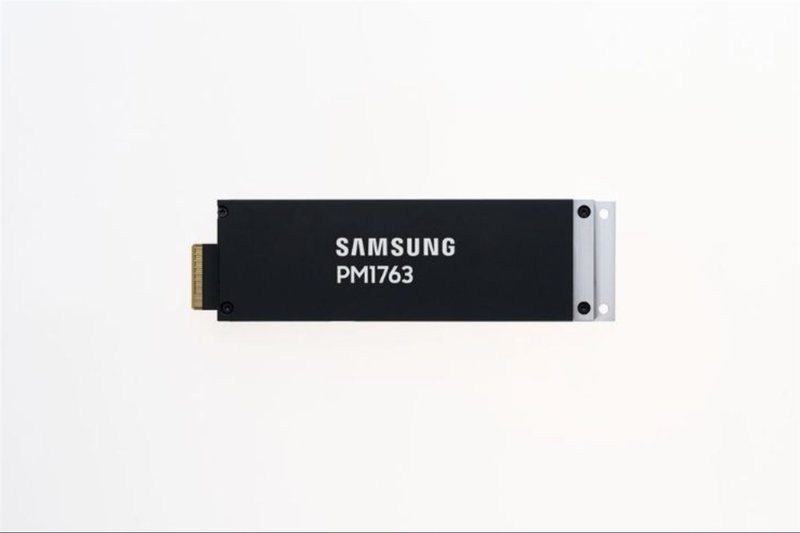
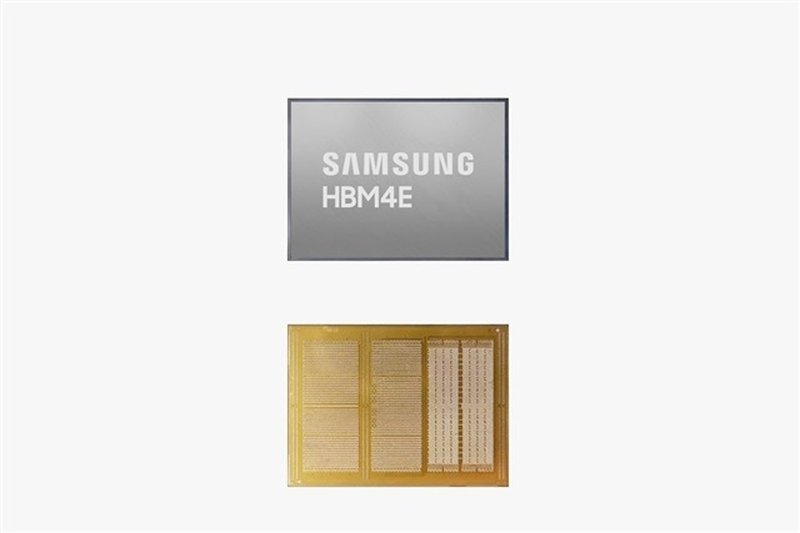
The headline seems dry and insider-ish: Samsung is preparing multi-billion-dollar orders for its P5 memory line. Behind the scenes, it reveals the pressure of an AI market that is hungry for bandwidth and capacity like never before. This is not a technical detail: it's a symptom of how model inference and fine-tuning are reshaping the silicon supply chain.
Few server components matter as much as memory when you push an LLM beyond lab scale. Anyone who has tried to run a 70-billion parameter model on consumer hardware knows: VRAM is the real bottleneck, far more than raw compute power. And today, with the explosion of on-premise workloads – from air-gapped medical chatbots to industrial pipelines that cannot rely on the cloud – the availability of high-bandwidth memory becomes a strategic variable.
The orders announced by Samsung do not point to a single client or a niche segment. The company is committing investments large enough to trigger an alarm in the global supply chain: AI, after straining GPU production, now risks creating a second choke-point on HBM and DDR5 memories, essential to keep models running without latency degradation.
Who wins, who loses
This scenario has no universal winners. Memory manufacturers – Samsung first and foremost, but also SK hynix and Micron – are seeing a cycle of high margins and order visibility not witnessed since the cloud gold rush. On the losing side, cloud providers that built their advantage on scale and resource sharing: if memory becomes the most contested and expensive component, the multi-tenant model loses part of its appeal compared to dedicated on-premise deployments, where every gigabyte of RAM is allocated predictably.
Above all, the surge in memory demand forces a rethink of TCO analyses. Until recently, the calculation for an on-premise infrastructure focused on GPUs; now a heavier line item must be added for memory modules, with supply contracts that risk becoming as critical a competitive factor as accelerator availability.
The structural lesson
This story marks a turning point. AI is not just consuming more transistors: it is shifting the profile of semiconductor demand towards faster, denser, and more vertically integrated memory. It is a second-order change that rewards those who control the entire stack, from silicon to datasets. For companies evaluating a self-hosted deployment, the message is clear: hardware planning must include memory supply security as a non-negotiable variable.
It is no coincidence that supply tensions are mounting just as local inference software (from orchestrators like vLLM to quantization toolkits) allows squeezing more value from every gigabyte. The hardware-software pairing is key: models compressed to INT8 or FP16 can run on machines with less VRAM, but they remain hostage to a memory market that, as Samsung's order demonstrates, is gearing up for sustained demand. For those following this space, AI‑RADAR's analyses of on-premise deployment frameworks offer tools to evaluate how to manage the trade-off between memory cost and real model performance.



💬 Comments (0)
🔒 Log in or register to comment on articles.
No comments yet. Be the first to comment!