
Samsung's Bonus Policy Under Scrutiny
Samsung Electronics, one of the global giants in semiconductor manufacturing, recently announced a bonus plan for its chip sector employees. As reported by Bloomberg, the company plans to pay an average bonus of approximately $340,000 for the current year. This move comes at a time of intense union pressure and growing global demand for chips, which are essential for a wide range of technologies, including Large Language Models (LLM) and artificial intelligence infrastructure.
However, the bonus amounts are not uniform. Leaked transcripts reveal that staff employed in memory chip production lines could receive bonuses of up to 607% of their salary, equivalent to about $477,000. In contrast, employees working on logic chips would see a minimum bonus of 50%. This disparity highlights the different priorities and profitability of various divisions within the South Korean conglomerate.
Union Demands and Strike Threat
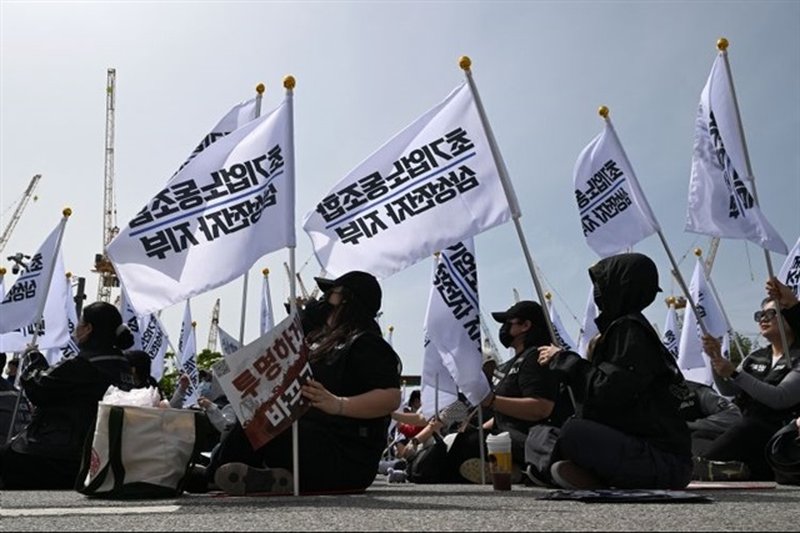
Despite the significant figures offered, Samsung's proposals do not appear to have appeased the union's demands. The union is pushing for an even higher bonus, requesting $1 million for workers, and threatening an 18-day strike. The stakes are high: if the protest materializes, involving approximately 45,000 people, it would be the largest disruption in the history of the semiconductor industry.
Such an action would have significant repercussions across the entire global supply chain. The semiconductor sector is already characterized by a complex production network and constantly growing demand, fueled in particular by the expansion of artificial intelligence and the need for specialized hardware for Inference and training of advanced models. A prolonged shutdown of Samsung factories could create a domino effect, impacting the availability and costs of crucial components.
Implications for the Market and On-Premise Deployments
The potential disruption of Samsung's chip production raises important questions for companies planning or managing artificial intelligence deployments, especially those on-premise. The availability of silicon, particularly high-performance memory chips and processors, is a critical factor for building robust and performant local infrastructures. A prolonged strike could delay deliveries of essential hardware, increasing lead times and potentially costs.
For organizations evaluating self-hosted alternatives to cloud solutions, supply chain stability is paramount. The ability to acquire GPUs with sufficient VRAM and throughput, or to secure the supply of other critical components, is directly influenced by events like what is happening at Samsung. Managing the Total Cost of Ownership (TCO) for an on-premise AI infrastructure depends not only on initial costs but also on the predictability of component availability and price stability.
Future Outlook and Industry Stability
The situation at Samsung highlights the tension between corporate profitability, worker expectations, and global technology demand. In a strategic industry like semiconductors, where production is concentrated in a few hands and demand is constantly growing, the internal dynamics of a key player like Samsung can have worldwide repercussions. The resolution of this wage dispute will be closely watched by the entire industry.
The stability of chip production is crucial not only for tech giants but also for small and medium-sized enterprises that rely on these components for their products and services. Maintaining a resilient and predictable supply chain is an absolute priority for the entire technological ecosystem, especially in an era where AI is redefining business paradigms and requiring increasingly sophisticated and available hardware infrastructure.





💬 Comments (0)
🔒 Log in or register to comment on articles.
No comments yet. Be the first to comment!