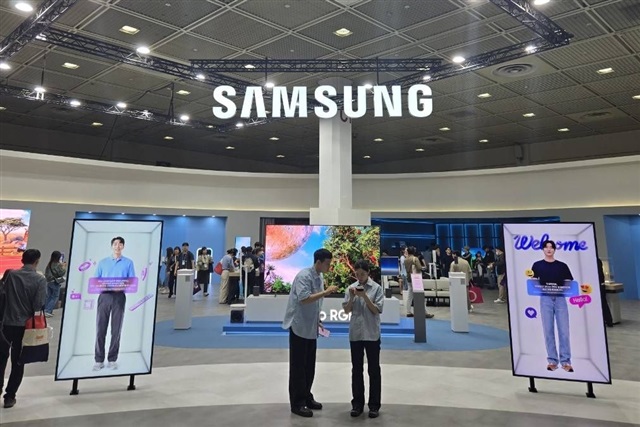
AI as an Innovation Driver for Samsung and LG at WIS 2026
Samsung and LG, two giants in the consumer electronics landscape, have announced their intention to leverage artificial intelligence (AI) as a strategic tool to address a slowing market. This initiative will be central to their presentations at the World IT Show (WIS) 2026, a key event for technological innovation. This move underscores a broader trend in the industry, where AI is increasingly seen as a fundamental differentiator for products and services.
The decision to focus on AI reflects the need to innovate and create new growth opportunities in a segment that, despite its pervasiveness, shows signs of saturation. The integration of advanced AI functionalities aims to redefine the user experience, making devices smarter, more personalized, and proactive in their daily interactions with consumers.
Artificial Intelligence in Consumer Electronics: Beyond the Surface
The application of AI in consumer electronics extends far beyond simple voice assistants. It encompasses content personalization on televisions, optimization of appliance performance, smart energy management, and advanced image and video processing on smartphones and cameras. These capabilities require the development of Large Language Models (LLM) and other machine learning models that can operate both in the cloud and, increasingly, directly on devices (edge AI).
The development and fine-tuning of these AI models represent a significant technical challenge. They demand extensive computational resources for training, often relying on high-performance GPUs, and a robust deployment pipeline to ensure innovations quickly reach the market. The ability to manage large volumes of data for training and inference is crucial for competitiveness in this space.
Infrastructural Implications and Data Sovereignty
For companies of Samsung and LG's stature, the choice of infrastructure for AI development and deployment is strategic. While on-device AI can reduce cloud dependency for inference, model training and updates require powerful data centers. The decision between a self-hosted on-premise infrastructure and cloud-based solutions involves significant trade-offs in terms of TCO, data control, and regulatory compliance.
Data sovereignty, in particular, is a critical factor. Companies must ensure that sensitive consumer data is managed in compliance with local and international regulations, such as GDPR. This can drive adoption of on-premise or hybrid solutions, where direct control over hardware and software ensures greater security and transparency. For those evaluating on-premise deployments, AI-RADAR offers analytical frameworks on /llm-onpremise to assess these trade-offs, considering factors such as latency, throughput, and VRAM requirements for specific workloads.
Future Prospects and Technological Challenges
The 2026 horizon suggests that Samsung and LG are planning long-term strategies, investing in research and development to deeply integrate AI into their product ecosystems. Challenges include not only the development of more sophisticated algorithms but also the design of dedicated AI silicio (AI accelerators) that can efficiently perform inference on devices with power and size constraints. Miniaturization and model optimization through quantization techniques will be essential.
The success of this strategy will depend on the ability to translate AI innovations into tangible benefits for consumers and on the efficient management of complex development and deployment pipelines. AI is not just a technology, but a catalyst for a new growth cycle in the consumer electronics market, pushing the boundaries of what devices can do and how they interact with users.





💬 Comments (0)
🔒 Log in or register to comment on articles.
No comments yet. Be the first to comment!