
The AI Memory Race: A Strategic Imperative
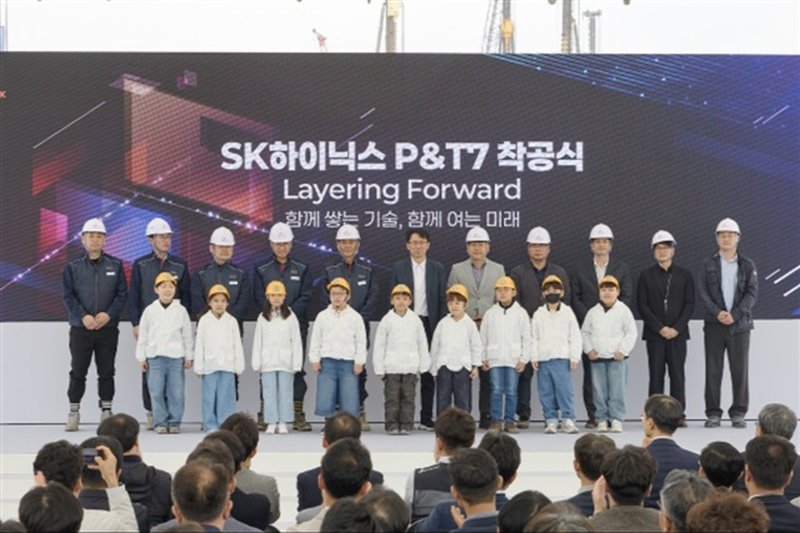
The demand for artificial intelligence computing capacity, particularly for Large Language Models (LLMs), is growing exponentially, putting pressure on the entire technology supply chain. In this context, Samsung and SK Hynix, two of the world's largest semiconductor manufacturers, are accelerating plans to expand their production capacity for AI-dedicated memory. This strategic move responds to a rapidly expanding market where the availability of high-performance components has become a critical factor for the development and deployment of advanced AI solutions.
At the heart of this expansion are High Bandwidth Memory (HBM) modules, essential for modern GPUs used in LLM training and inference. HBM offers significantly higher bandwidth compared to traditional DDR memory, allowing graphics processing units to access data much faster. This characteristic is crucial for handling the massive datasets and complex neural architectures that define LLMs, where data throughput is a common bottleneck.
Production Challenges and Supply Chain Impact
Expanding HBM production capacity is not a simple process. It requires massive investments in research and development, new fabrication plants, and highly sophisticated manufacturing processes. HBM technology involves vertically stacking multiple memory dies on an interposer, a complex process that impacts costs and production times. This complexity, combined with rapidly growing demand, creates significant tension in the global supply chain.
For companies operating in the sector, the limited availability and potentially high costs of HBM translate into concrete challenges. Hardware procurement planning becomes more complex, with lead times that can extend and prices subject to fluctuations. This scenario directly impacts enterprises' ability to scale their AI infrastructures, both for training new models and for deploying solutions into production.
Implications for On-Premise Deployments
For CTOs, DevOps leads, and infrastructure architects evaluating on-premise deployments for LLM workloads, the current state of the AI memory market has direct implications. The choice of a self-hosted or air-gapped infrastructure, often driven by data sovereignty, compliance, or long-term cost control needs, heavily depends on the availability of specific hardware, particularly GPUs with sufficient VRAM and bandwidth.
Limited HBM supply can lead to an increase in the Total Cost of Ownership (TCO) for on-premise solutions, both due to higher purchase prices for GPUs and the need to optimize the use of existing resources, for example, through model quantization techniques. The ability to procure hardware with adequate specifications (e.g., GPUs with 80GB of VRAM or more) becomes a critical factor for supporting large LLMs and handling high batch sizes for inference. For those evaluating these trade-offs, AI-RADAR offers analytical frameworks on /llm-onpremise to support informed decisions.
Future Outlook and Mitigation Strategies
The race to expand capacity by giants like Samsung and SK Hynix is a clear signal that the demand for AI memory will not diminish in the near future. This scenario will likely drive innovation in manufacturing processes and the emergence of new HBM generations, but supply chain pressures will remain a constant for some time.
Companies planning to invest in on-premise AI infrastructures will need to adopt proactive strategies. This includes long-term hardware procurement planning, evaluating flexible system architectures that can adapt to different GPU configurations, and exploring model optimization techniques to reduce memory requirements. The ability to manage these challenges will be crucial for the success of AI projects in a constantly evolving technological landscape.









💬 Comments (0)
🔒 Log in or register to comment on articles.
No comments yet. Be the first to comment!