Internal Discontent Halts Samsung's Production and AI Projects
Samsung Electronics is facing a significant wave of internal discontent that is paralyzing its production operations and, notably, its ambitious artificial intelligence chip projects. Tensions erupted following a stark disparity in company bonuses: while memory sector workers received a $400,000 payout, other divisions were allocated only $4,000. This abysmal difference has generated deep resentment among employees, with direct repercussions on the technological giant's operational efficiency.
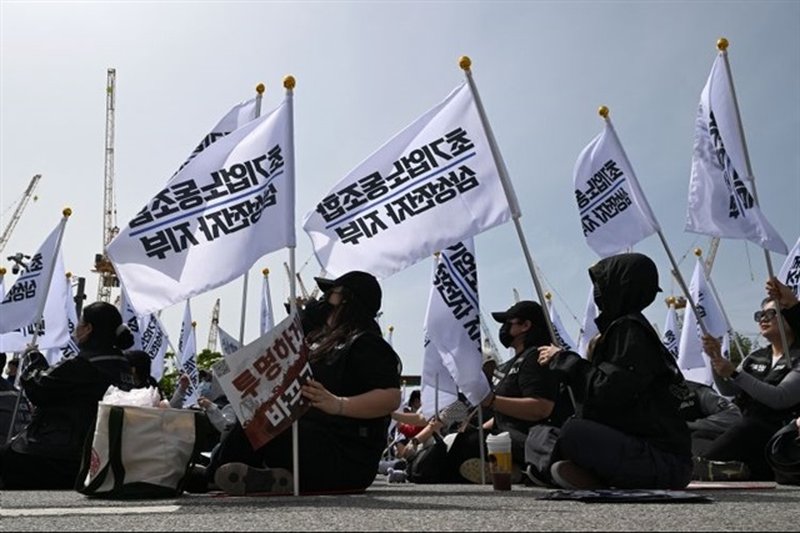
The discontent has not remained confined to internal discussions but has translated into concrete actions. The source indicates that intentional production slowdowns have occurred, a clear sign of protest from the workers. These disruptions are already compromising packaging operations, a crucial link in the supply chain that ensures finished products are ready for global market distribution. The situation highlights how human resource management and compensation policies can have a direct and devastating impact on the production capacity of a company of such magnitude.
The Impact on AI Chip Projects
The most concerning consequence of this internal crisis relates to Samsung's artificial intelligence chip projects. Key decisions concerning these projects have come to a complete halt. In an era where the demand for specialized AI hardware is constantly growing, a stoppage in this strategic sector can have long-term repercussions on Samsung's market position and the availability of critical components for the entire technological ecosystem.
AI chips, such as high-performance GPUs with ample VRAM, are the beating heart of modern Large Language Models (LLM) workloads and other artificial intelligence applications. They are fundamental for both intensive training phases and low-latency inference, especially in on-premise deployment contexts where data sovereignty and Total Cost of Ownership (TCO) are decisive factors. A company's ability to innovate and produce these components is crucial for supporting the global AI infrastructure. A halt in this area not only delays the introduction of new technologies but can also create bottlenecks for companies that rely on these suppliers for their AI strategies.
Implications for the Global Supply Chain
Samsung's production slowdowns and disruptions in packaging operations are not isolated problems but can have a domino effect on the entire global supply chain. Samsung is a key supplier of electronic components, including memory and, potentially, AI chips, for countless companies worldwide. Any significant disruption in its production capacity can cause delays in the delivery of finished products, increase costs, and force other companies to revise their procurement strategies.
In an already strained market characterized by logistical challenges, the stability of major manufacturers is paramount. The ability to maintain consistent throughput and meet deliveries is essential for the planning and execution of technological projects globally. The current situation at Samsung highlights the fragility of complex supply chains and the importance of internal management that prevents disruptions that can extend far beyond company boundaries.
Outlook and Future Challenges
For Samsung, the immediate priority will be to resolve internal discontent and restore full operational capacity. Managing such a vast and diverse workforce requires transparent and equitable compensation and communication strategies. Restoring employee trust will be crucial to overcome production slowdowns and unblock decisions on AI chip projects.
The artificial intelligence sector is rapidly evolving, and competition is fierce. Any delay in innovation or production of critical hardware can be costly in terms of market share and technological leadership. For companies evaluating on-premise LLM deployments, the availability and reliability of silicon suppliers are fundamental aspects. AI-RADAR, for example, offers analytical frameworks on /llm-onpremise to help companies evaluate the trade-offs between different hardware architectures and deployment strategies, emphasizing how supply chain stability is a non-negligible factor. Samsung will need to act quickly to mitigate the effects of this crisis and reassert its position as a key player in the global technological landscape.






💬 Comments (0)
🔒 Log in or register to comment on articles.
No comments yet. Be the first to comment!