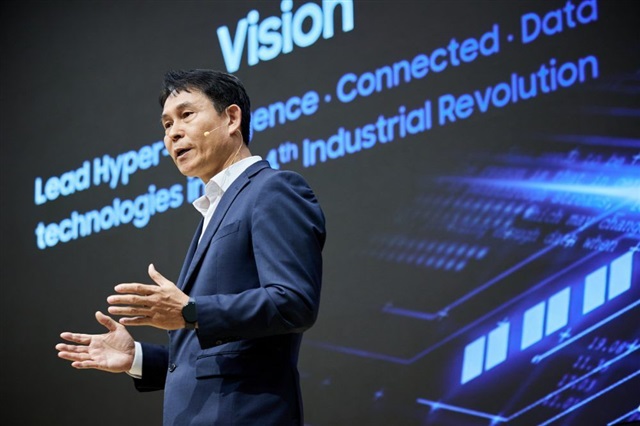
Samsung has a problem that can no longer be hidden behind corporate balance‑sheet footnotes. System LSI, the division responsible for Exynos chips and other SoCs (System-on-Chip), has acknowledged – through president Park Yong-In – that ongoing operating losses are eroding performance, casting a shadow that stretches into 2026. A rare admission that speaks volumes about competitive stress in the semiconductor industry, particularly the mobile segment where Qualcomm and MediaTek have raised the stakes.
Inside System LSI: what’s at stake
System LSI doesn’t just design the brains inside top‑tier Galaxy devices. Its SoCs integrate CPU, GPU, modem and, increasingly, neural processing units (NPUs) to accelerate artificial intelligence directly on the device. We are talking about LLM inference on smartphones, tablets, IoT endpoints and edge gateways: precisely the scenario that enterprises eyeing on‑premise deployment care about. When an Exynos loses ground or arrives late, the alternative is to buy from San Diego (Qualcomm) or to lean on cloud solutions, with all the latency, privacy and Total Cost of Ownership (TCO) constraints that entails.
The persistent losses at System LSI are more than an internal detail. Historically the division also serves third‑party clients, from Chinese phone makers to automotive infotainment systems. A struggling roadmap means fewer resources to experiment with novel unified memory architectures, optimized INT8/FP16 quantization support, and ultimately chips that would struggle to run large language models with generous context windows without draining power and overheating.
Local inference under pressure: what changes for early movers
Anyone currently evaluating on‑premise deployment, even in hybrid form, watches the mobile processor market intently. It’s not just about GPU‑packed servers: a growing number of use cases – factory voice assistants, offline translators, document analysis in air‑gapped settings – demand low‑power chips with credible LLM inference capability. If Samsung slows down, the pressure shifts to a handful of suppliers. Less competition translates into higher prices and slower innovation, two variables that push up the TCO of edge‑AI projects.
The most critical aspect for those following these themes is the effect on VRAM and memory bandwidth. SoCs embed shared memory: when the division suffers, plans for larger caches and wider bandwidth can slip. And without enough bandwidth, even a quantized language model struggles to deliver acceptable throughput. For teams working in regulated environments that cannot send data to the cloud, a delay in an Exynos architecture becomes a waiting window that may force a shift toward self‑hosted solutions using discrete GPUs, which are more expensive and bulky.
A three‑player game: the market’s response
Qualcomm has already answered with the Snapdragon 8 Gen series – sporting increasingly powerful NPUs – and MediaTek is not far behind with the Dimensity line. The flip side is that an oligopolistic market tends to slow the adoption of edge‑optimized fine‑tuning techniques, because vendors prefer to differentiate on proprietary features. On‑premise deployment instead needs open standards, well‑supported frameworks like llama.cpp, and silicon that doesn’t force quantization compromises due to an incomplete driver stack.
The Samsung story is a reminder of how fragile the supply chain for local AI can be. At AI‑RADAR we have long observed that investment decisions at System LSI are not merely financial: they signal the industrial will to continue betting on on‑device capability rather than delegating everything to the cloud. For those building an autonomous inference strategy, monitoring these dynamics helps calibrate adoption timelines and diversify suppliers.
Narrow horizons, but not without light
Park Yong‑In’s admission is not a death knell. Samsung has the resources to absorb losses and has often used its foundry business (building chips for others) to fund its own SoC development. Still, the signal is clear: 2026 will not be the year of edge‑computing redemption, but rather a reality‑check milestone. For anyone selecting hardware for on‑premise inference pipelines today, caution is warranted: wait for more solid roadmaps, test next‑generation Exynos variants early, or consider a multi‑vendor approach to avoid being locked into a single struggling ecosystem.









💬 Comments (0)
🔒 Log in or register to comment on articles.
No comments yet. Be the first to comment!