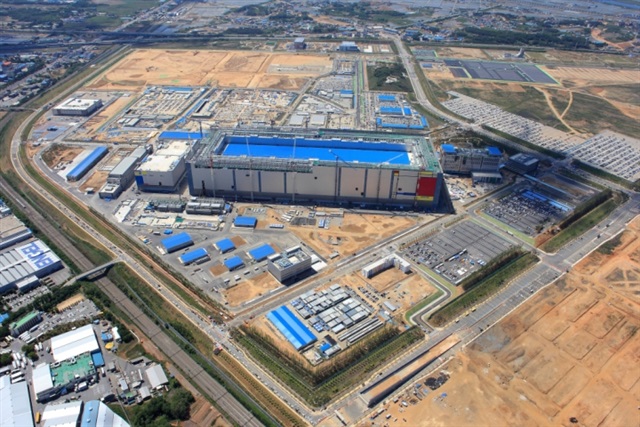
The Search for New Chip Production Sites
Samsung, one of the leading global players in the semiconductor sector, is exploring the possibility of establishing a new chip packaging plant in the city of Gwangju. This strategic evaluation emerges amidst growing difficulties related to energy supply, which are imposing significant constraints on the expansion of its current chip production operations in the Seoul metropolitan area. The decision to consider Gwangju underscores the critical importance of energy infrastructure for the continuity and growth of the semiconductor industry, a fundamental sector for global technological advancement, including infrastructure dedicated to Large Language Models (LLMs).
Chip production, and particularly advanced packaging phases, requires extremely high energy consumption and a stable, reliable supply. Energy challenges in the Seoul area not only complicate the expansion of existing production capacities but also push companies to reconsider their plant location strategies. This scenario highlights how energy availability is not just an operational cost but a primary enabling factor for the scalability and resilience of the technological supply chain.
The Energy Impact on the Supply Chain and AI Infrastructure
The energy difficulties affecting chip production have direct repercussions on the entire technological supply chain, including the availability and cost of essential hardware for LLM inference and training. Silicon fabrication, from wafer production to final packaging, is an intensive process that demands enormous amounts of electrical energy. When key regions for semiconductor manufacturing face energy constraints, this can translate into production delays, increased costs, and ultimately, reduced availability of GPUs and other critical components on the market.
For organizations evaluating on-premise LLM deployment, supply chain stability and the Total Cost of Ownership (TCO) of the infrastructure are decisive factors. Fluctuations in chip production due to energy issues can impact the initial CapEx for hardware acquisition and long-term operational costs, especially for self-hosted data centers. Choosing a production site like Gwangju, with potential access to more stable or abundant energy resources, can help mitigate these risks and ensure greater predictability in the supply of crucial components for AI.
Infrastructure Constraints and On-Premise Deployment Decisions
Samsung's search for alternatives for chip packaging illustrates a broader problem that tech companies must address: infrastructure constraints. The availability of energy, water, and skilled labor are fundamental elements for the construction and expansion of advanced manufacturing facilities. These same factors are also critical for the planning and deployment of large-scale data centers, particularly for intensive workloads such as those required by LLMs. Location decisions for on-premise data centers are increasingly influenced by the ability of local power grids to support the high energy consumption of GPUs and servers dedicated to AI.
For companies opting for self-hosted solutions, evaluating these infrastructure constraints is essential. A thorough TCO analysis must consider not only the cost of hardware and software but also access to reliable and competitively priced energy. The need to ensure data sovereignty and regulatory compliance drives many organizations towards on-premise deployment, but the feasibility of such a choice heavily depends on the availability of adequate physical infrastructure. AI-RADAR offers analytical frameworks on /llm-onpremise to help companies evaluate the trade-offs between costs, performance, and infrastructure constraints in on-premise deployments.
Future Outlook and Supply Chain Resilience
Samsung's move reflects a broader trend in the technology sector: the growing awareness of the need to diversify supply chains and strengthen manufacturing resilience. Disruptions due to geopolitical, climatic, or, as in this case, infrastructural (energy) factors can have a significant impact on companies' ability to innovate and meet global demand. The search for new production sites that can offer better access to critical resources is a key strategy to mitigate these risks.
In an era where the demand for AI computing power continues to grow exponentially, the ability to efficiently and reliably produce and distribute chips becomes a strategic imperative. Investment decisions in new semiconductor factories, such as the one Samsung is considering in Gwangju, not only shape the future of hardware production but directly influence the speed and scale with which LLM-based innovations can be developed and deployed globally, both in cloud and on-premise environments.










💬 Comments (0)
🔒 Log in or register to comment on articles.
No comments yet. Be the first to comment!