
A Strategic Investment for Enterprise Evolution
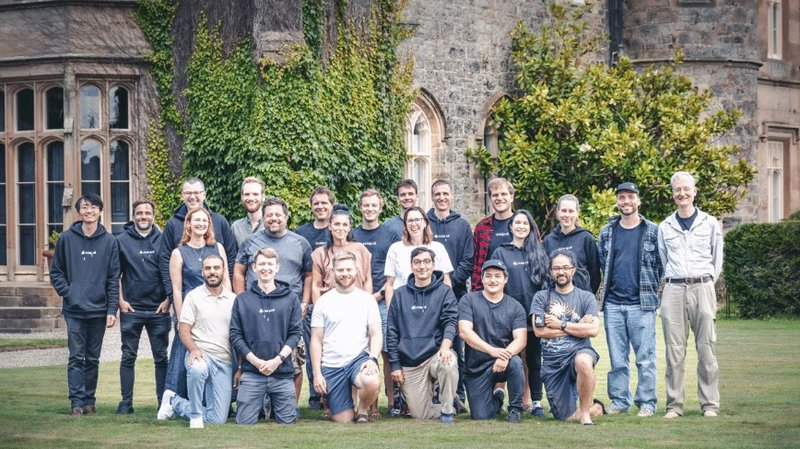
The corporate IT landscape is in constant flux, driven by often "unglamorous" but unavoidable deadlines that necessitate the modernization of infrastructure and processes. In this context, one of London's more interesting AI funding rounds has emerged: Conduct, a 35-person startup founded by three former Palantir engineers, announced a $60 million Series A round. The unique aspect of this investment is that among the co-leads, Index Ventures and ICONIQ, SAP itself is also an investor.
SAP's investment in Conduct is significant because the startup's stated mission is to help SAP's customers "escape" or, more precisely, evolve beyond existing SAP systems. This seemingly counterintuitive move underscores a broader trend in the enterprise market: the need for software vendors to support their customers through complex transformation journeys, which often involve integrating new technologies, including Large Language Models (LLMs), with legacy infrastructures.
Conduct and the Context of IT Modernization
Conduct, with its team of experts from Palantir, positions itself as a key player in this transition process. While specific details of its technology were not disclosed in the source, it is plausible that the startup focuses on AI-powered solutions to facilitate data migration, system integration, or the optimization of business workflows. The goal is likely to unlock value from existing data, often trapped in silos or on-premise systems, making it accessible and usable by new applications and AI models.
For enterprises, IT modernization is not just a matter of technological upgrades but also of deployment strategy. Many enterprise entities, particularly those with stringent data sovereignty or compliance requirements, carefully evaluate self-hosted or hybrid deployment options for their AI workloads. SAP's investment could indicate an awareness that customers need greater flexibility and tools to manage the complexity of heterogeneous IT environments, where cloud-native solutions coexist with bare metal infrastructures and legacy systems.
Implications for AI Deployments and TCO
The drive for modernization, often accelerated by interest in AI, leads companies to reconsider the entire Total Cost of Ownership (TCO) of their infrastructures. Integrating LLMs and other AI capabilities requires significant computational resources, and the choice between on-premise and cloud deployment is not trivial. Factors such as available VRAM on GPUs, desired throughput for inference, and acceptable latency become crucial. Solutions like those Conduct might offer aim to simplify this transition, reducing technical and operational barriers.
For organizations carefully weighing the trade-offs between control, security, and costs, the ability to integrate new AI capabilities without completely abandoning existing investments is fundamental. This hybrid approach, combining the power of AI with the stability of enterprise systems, is a central theme for those involved in infrastructure architectures. AI-RADAR offers analytical frameworks on /llm-onpremise to evaluate these trade-offs, providing tools for informed decisions on on-premise deployments.
Future Prospects: Flexibility and Control
SAP's investment in Conduct is a clear signal that the future of enterprise IT is geared towards greater flexibility and more granular control over data and infrastructure. It is no longer just about choosing a single vendor, but about building ecosystems that allow companies to leverage innovations while maintaining sovereignty over their most critical assets. The ability to integrate advanced AI solutions, whether through fine-tuning existing models or with new frameworks, becomes a competitive differentiator.
This trend highlights the importance of tools and services that facilitate AI adoption in complex enterprise contexts, where security, compliance, and operational efficiency are absolute priorities. The collaboration between a giant like SAP and an innovative startup like Conduct could outline new trajectories for the evolution of enterprise systems, offering customers more agile paths to navigate digital transformation and the era of artificial intelligence.










💬 Comments (0)
🔒 Log in or register to comment on articles.
No comments yet. Be the first to comment!