Samsung Strike: A Wake-Up Call for the Tech Supply Chain
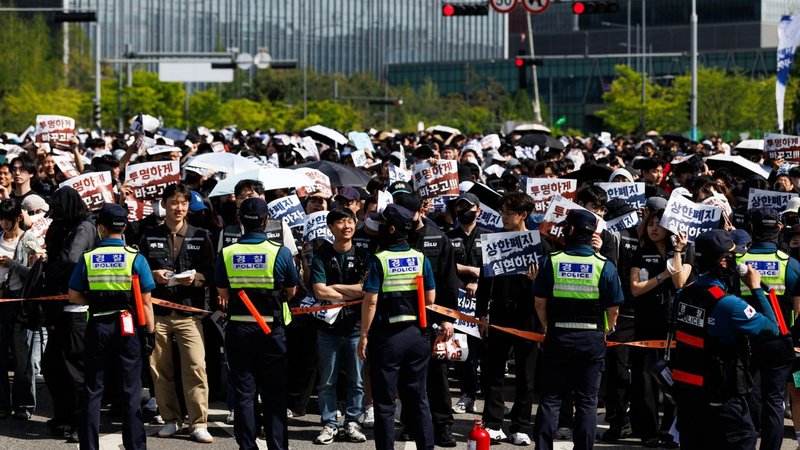
Samsung, a global technology giant, faces a potential significant disruption to its operations. According to reports from DIGITIMES, the latest negotiation attempts between the company and worker representatives have failed, paving the way for an imminent strike. This development not only affects the consumer goods market but also raises crucial questions about the stability of the global supply chain, a vital aspect for the technological infrastructure powering artificial intelligence.
The news of a strike at a company of such magnitude has the potential to send shockwaves throughout the entire tech ecosystem. For enterprises relying on a consistent and predictable supply of advanced hardware for their AI workloads, the situation demands careful risk assessment and mitigation strategies.
Samsung's Role in the AI Supply Chain
Samsung's role in the technology ecosystem extends far beyond the devices we use daily. The company is a key player in the production of semiconductors, DRAM and NAND memory, and provides essential foundry services for numerous industries. These components are the beating heart of AI hardware, from high-performance GPUs with dedicated VRAM, indispensable for Large Language Model (LLM) Inference and training, to high-bandwidth memory (HBM) modules.
A potential production disruption at a company of this scale can have cascading repercussions, affecting the availability and costs of critical components for AI deployments. The complexity and interconnectedness of the global supply chain make every link vulnerable, and a disruption at a key point can generate delays and price increases that propagate throughout the entire value chain.
Implications for On-Premise Deployments
For organizations evaluating or managing on-premise LLM deployments, supply chain stability is a decisive factor. CTOs, DevOps leads, and infrastructure architects must balance the Total Cost of Ownership (TCO) with the need to ensure data sovereignty and control over their infrastructure. Any delays in hardware deliveries, or price increases due to production disruptions, can significantly impact CapEx and OpEx, making planning and expansion of AI computing capabilities more complex.
Reliance on a limited number of suppliers for key components can expose companies to operational and financial risks, especially in contexts requiring air-gapped environments or high compliance standards. The ability to acquire and maintain specific hardware, such as GPUs with high VRAM for large models, is fundamental for the performance and scalability of self-hosted AI systems.
Outlook and Mitigation Strategies
In the face of potential supply chain instability scenarios, mitigation strategies become crucial. Companies might consider adopting more diversified procurement policies, creating buffer stocks of critical components, or exploring more flexible hardware architectures less dependent on a single supplier. Supply chain resilience is an increasingly important element in evaluating the long-term TCO for AI infrastructure.
While the specific impact of this strike remains to be defined, the event underscores the importance of robust strategic planning for AI deployments. For those evaluating on-premise deployments, complex trade-offs exist between costs, performance, and supply chain resilience. AI-RADAR offers analytical frameworks on /llm-onpremise to evaluate these aspects, supporting strategic decisions in a continuously evolving technological landscape.





💬 Comments (0)
🔒 Log in or register to comment on articles.
No comments yet. Be the first to comment!