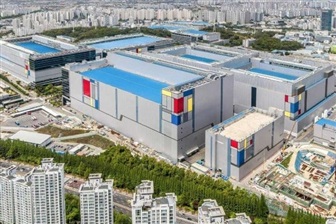
Samsung's Strike Threat and the Risk to Memory Production
Samsung, one of the world's leading giants in semiconductor and memory component manufacturing, is facing a potential significant disruption to its operations. An impending strike, which could last for eighteen days, threatens to halt a portion of its memory production. This event, if it materializes, would have repercussions not only for the company itself but for the entire global technology supply chain, given Samsung's dominant position in the sector.
Memory, particularly DRAM (Dynamic Random-Access Memory) and the more advanced HBM (High Bandwidth Memory), is a fundamental component for a wide range of devices, from servers to mobile devices. A reduction in its availability could cause delays in hardware production and an increase in prices, affecting various industrial sectors that depend on these essential components.
The Impact on the AI Supply Chain and On-Premise Deployments
For organizations investing in artificial intelligence capabilities, and particularly in Large Language Models (LLMs), the availability of high-performance memory is a critical factor. LLM training and inference workloads require massive amounts of VRAM and high bandwidth to handle complex datasets and large models. Latest-generation GPUs, such as the H100 or MI300X series, integrate HBM to meet these extreme demands.
A disruption in memory production can therefore translate into greater difficulty in acquiring the necessary hardware for on-premise deployments. This is particularly relevant for companies that prioritize data sovereignty, regulatory compliance, and direct control over infrastructure, opting for self-hosted or air-gapped solutions rather than relying on the cloud. Component scarcity can extend lead times and drive up capital expenditure (CapEx) for building dedicated AI data centers.
TCO Considerations and Infrastructure Resilience
Uncertainty in the memory component supply chain introduces a significant variable into the calculation of the Total Cost of Ownership (TCO) for AI infrastructures. An increase in memory prices or difficulty in sourcing necessary modules can drastically alter spending projections, making long-term financial planning more complex. For CTOs and infrastructure architects, supply chain resilience becomes a key element in evaluating deployment strategies.
In this context, the ability to optimize the use of existing hardware, for example through quantization techniques to reduce model memory requirements, or to diversify suppliers, takes on strategic importance. Dependence on a single manufacturer or a non-resilient supply chain can expose companies to significant operational and financial risks, compromising the ability to scale their AI operations efficiently and controllably.
Future Outlook and Mitigation Strategies for On-Premise AI
The Samsung situation highlights the inherent fragility of global supply chains and the interconnectedness between seemingly isolated events and the broader technological ecosystem. For companies aiming to build and manage their own on-premise AI infrastructure, it is crucial to adopt a proactive approach to risk management. This includes careful evaluation of lead times, negotiation with multiple suppliers, and consideration of flexible hardware architectures that can adapt to potential component shortages.
AI-RADAR focuses precisely on these aspects, offering analytical frameworks to evaluate the trade-offs between on-premise deployment and cloud solutions, with an emphasis on data sovereignty, TCO, and operational resilience. Events like the Samsung strike reinforce the need for robust strategic planning for anyone looking to maintain control and efficiency over their AI workloads.






💬 Comments (0)
🔒 Log in or register to comment on articles.
No comments yet. Be the first to comment!