Svelato il mistero dei "puntini rossi"
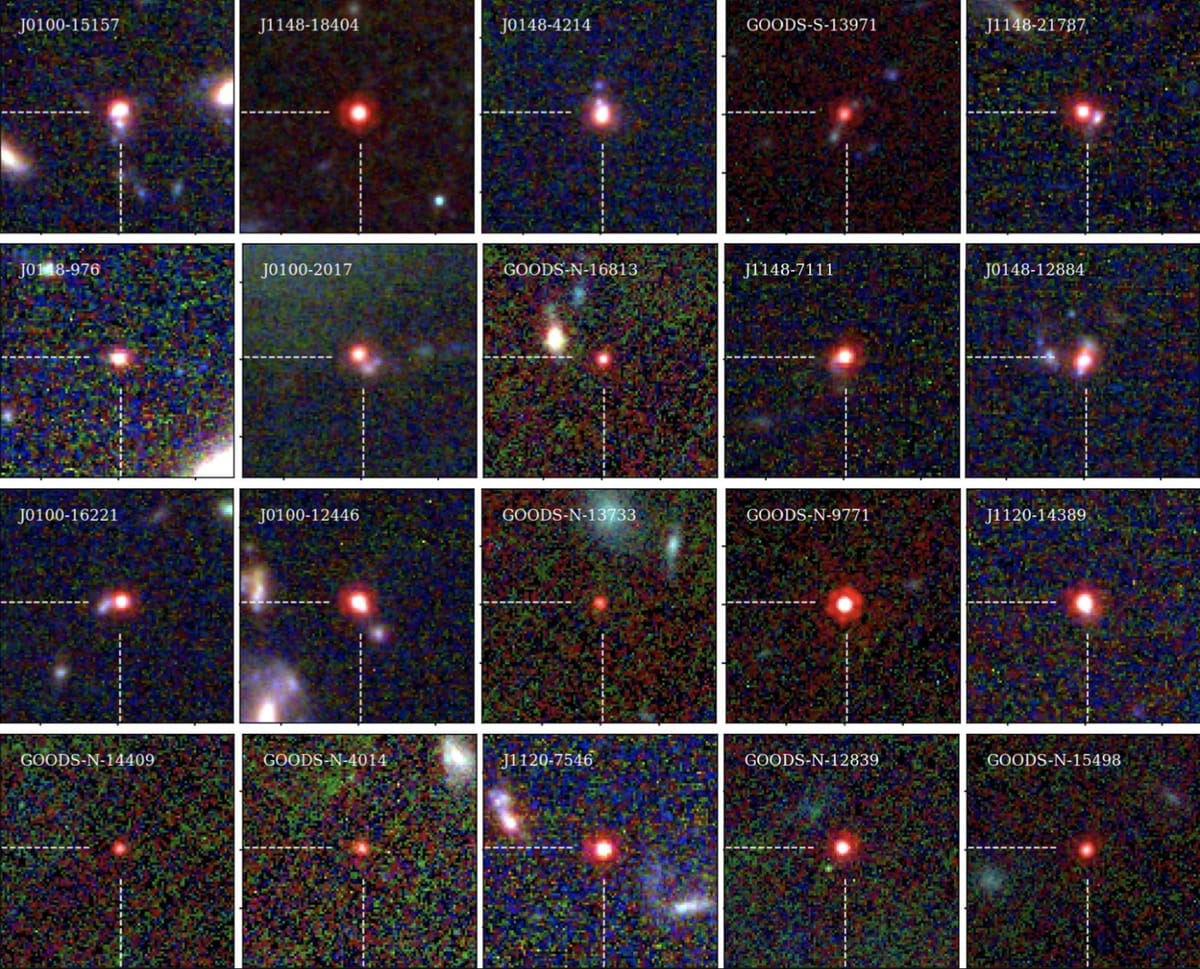
Gli astronomi ritengono di aver risolto l'enigma dei cosiddetti "puntini rossi" nello spazio, una popolazione di oggetti bizzarri ai margini dell'universo osservabile. Un recente studio pubblicato su Nature suggerisce che questi puntini siano in realtà i buchi neri più giovani mai osservati, "avvolti" in un denso gas, un fenomeno mai visto prima che fa luce sulla prima evoluzione dell'universo.
Vadim Rusakov, astronomo dell'Università di Manchester, ha spiegato che i "puntini rossi" sono stati individuati per la prima volta nel 2023 nelle prime immagini del telescopio spaziale James Webb (JWST). Si tratta di oggetti piccoli, luminosi e rossi, osservati quando l'universo aveva solo il 5-15% della sua età attuale. Queste proprietà hanno acceso un vivace dibattito sulla loro natura, con alcune ipotesi che suggerivano galassie esotiche o buchi neri insolitamente massicci.
Giovani buchi neri in fasce
Rusakov e i suoi colleghi hanno analizzato le osservazioni del JWST su oltre una dozzina di questi puntini rossi, confermando che si tratta probabilmente di buchi neri avvolti da un "bozzolo" di gas energetico. Questo spiegherebbe le loro proprietà uniche: il gas blocca le emissioni di raggi X e deforma la luce, facendoli apparire più massicci di quanto non siano in realtà. I calcoli indicano che i buchi neri hanno una massa di pochi milioni di volte quella del Sole, un centinaio di volte inferiore a quanto stimato in precedenza.
Questi risultati si inseriscono in un'ondata di scoperte sull'universo primordiale, rese possibili dalla precisione del JWST. Rusakov ha sottolineato come alcune galassie inizialmente problematiche si siano rivelate essere proprio questi "puntini rossi", interpretati erroneamente come galassie puramente stellari.
Nuove domande sull'evoluzione galattica
La scoperta solleva nuove domande sull'evoluzione galattica. Non è ancora chiaro se questi giovani buchi neri crescano più velocemente delle galassie a cui sono associati e quali implicazioni ciò possa avere per la nostra comprensione dell'universo. I "puntini rossi" ci mostrano come apparivano i buchi neri molto tempo fa e, se saremo fortunati, potrebbero rivelare come si sono formati questi buchi neri supermassicci. Resta da capire se i buchi neri inizino piccoli e crescano, o se nascano già grandi. Queste domande terranno sicuramente occupati gli scienziati per un po' di tempo.








💬 Commenti (0)
🔒 Accedi o registrati per commentare gli articoli.
Nessun commento ancora. Sii il primo a commentare!