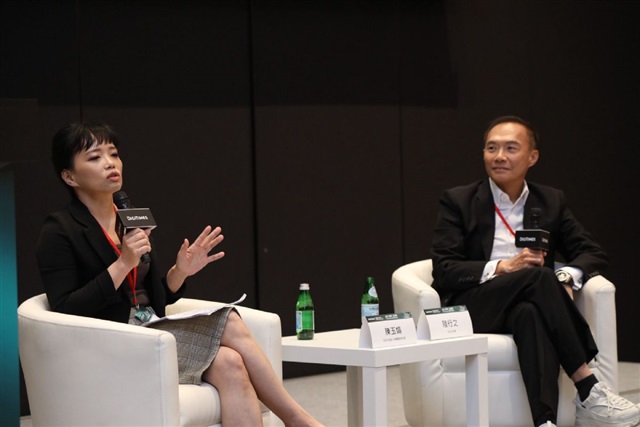
Taiwan's Strategic Role in the Global Semiconductor Landscape
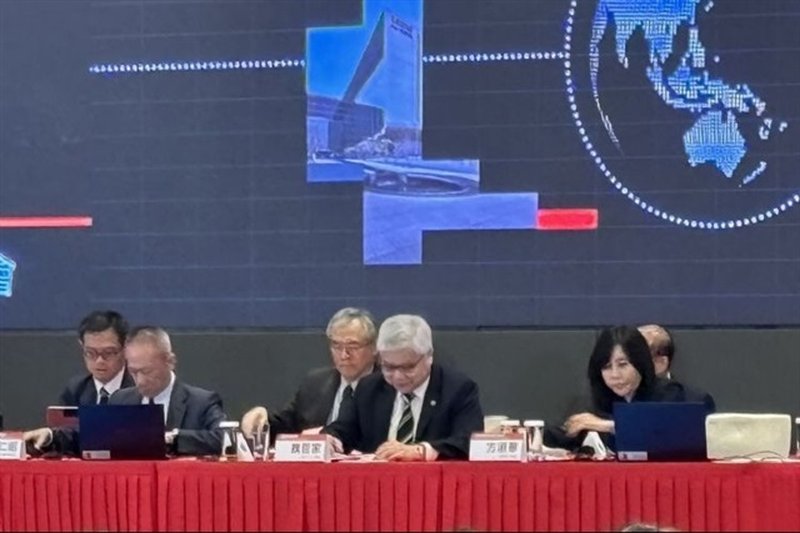
The Tech Forum 2026 is anticipated to be a pivotal event for discussing the future of the semiconductor industry, with a particular focus on its ability to sustain Taiwan's economic and strategic resilience. As reported by DIGITIMES, the central question of the event reflects a growing global concern regarding reliance on a limited number of players in advanced chip production. Taiwan, in fact, holds a dominant position in the manufacturing of cutting-edge semiconductors, which are essential for a wide range of technologies, from consumer electronics to defense systems, and artificial intelligence.
This centrality makes the island a critical node in the global supply chain. The stability of this supply chain is of vital importance to economies worldwide, and any disruption could have significant repercussions across key sectors. The debate at Tech Forum 2026 will not only be an economic analysis but also a reflection on geopolitical implications and the need for long-term strategies to ensure continuity and innovation in this segment.
The Impact of Semiconductors on On-Premise AI Deployments
The semiconductor industry is the beating heart of innovation in artificial intelligence, particularly for Large Language Models (LLM). The availability of high-performance hardware, such as GPUs with ample VRAM (e.g., A100 80GB or H100 SXM5), is a decisive factor for the efficiency of Inference and training of complex models. For companies opting for an on-premise deployment, the stability of the semiconductor supply chain directly translates into planning capability, cost control, and access to the latest technologies.
The decision to implement self-hosted AI solutions is often driven by the need to ensure data sovereignty, comply with stringent regulatory requirements, or operate in air-gapped environments. However, these advantages can be mitigated by uncertainties in silicon supply. A thorough analysis of the Total Cost of Ownership (TCO) for an on-premise AI infrastructure must necessarily consider not only initial and operational costs but also risks related to the future availability of critical components. Reliance on a single region or a few suppliers can introduce vulnerabilities that require proactive mitigation strategies.
Challenges and Opportunities for Supply Chain Resilience
The question raised by the Tech Forum 2026 highlights the complexity of the challenges facing the semiconductor industry. Global demand for chips continues to grow exponentially, driven by advancements in AI, IoT, and 5G. This pressure requires massive investments in research and development, as well as in the construction of new fabrication plants (fabs) that can cost tens of billions of dollars and take years to become operational. The geographical concentration of production, while efficient in terms of cost and specialization, exposes the entire ecosystem to geopolitical risks, natural disasters, and logistical disruptions.
To address these challenges, the industry and governments are exploring various strategies. These include diversifying supply sources, localizing production in different regions, and developing new packaging and design technologies that can optimize the use of existing silicon. These initiatives aim to build a more resilient and distributed supply chain, reducing reliance on single points of failure and ensuring greater stability for all players in the technology sector.
Future Outlook for the AI Ecosystem and Local Deployments
The debate at Tech Forum 2026 serves as a wake-up call for the entire technology ecosystem. The sustainability of Taiwan's position in the semiconductor sector is not merely a local issue but a factor that will directly influence the ability of companies worldwide to innovate and implement AI solutions. For CTOs and infrastructure architects, understanding these dynamics is crucial for making informed deployment decisions.
The choice between cloud and on-premise for AI workloads, for example, cannot disregard a careful evaluation of hardware availability and supply chain resilience. AI-RADAR, for those evaluating on-premise deployments, offers analytical frameworks on /llm-onpremise to examine the trade-offs between control, security, and supply chain dependence. The future will require not only technological innovation but also deep strategic reflection on the governance and distribution of the production of these vital components.





💬 Comments (0)
🔒 Log in or register to comment on articles.
No comments yet. Be the first to comment!