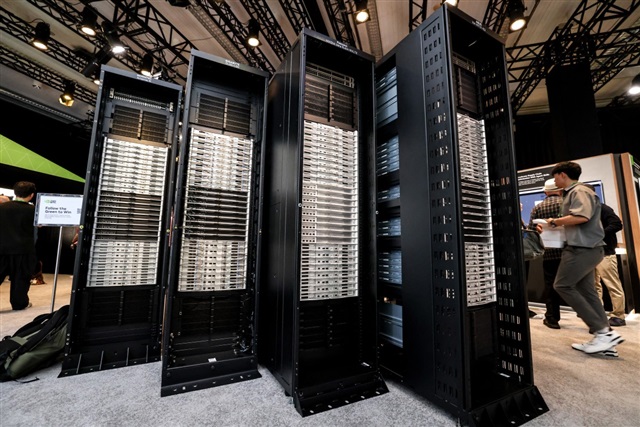
The latest monthly data on AI servers upends the dominant narrative. It isn’t GPUs leading June’s revenue growth, but power supply and cooling system manufacturers. The signal, picked up by an industry tracker, captures an ecosystem in transformation: the debate is no longer just about who builds the most powerful chips, but about who ensures those chips can operate without turning a rack into a furnace.
The reason is obvious to anyone managing clusters for Large Language Models. A server with eight latest-generation GPUs can effortlessly draw over 10 kW; an entire rack, in dense configurations, can exceed 30 kW. In the cloud, heat dissipation is delegated to hyperscalers that design halls with direct liquid cooling. But for those evaluating on-premise deployments — enterprises, financial institutions, air-gapped infrastructure — power and thermal management become the hidden decision variable that sends TCO soaring.
This is not unexpected when looking at the timeline. Two years ago the bottleneck was GPU supply; today, with a more stable production pipeline, the constraint shifts downstream. The revenue growth of power and cooling suppliers is not a side effect but a signal of rebalancing. The wave of on-premise inference, driven by data sovereignty requirements and the spread of quantized models that make self-hosting more accessible, demands datacenters redesigned around power consumption. Traditional architectures, built for sparse workloads, can’t handle the concentrated heat of accelerators.
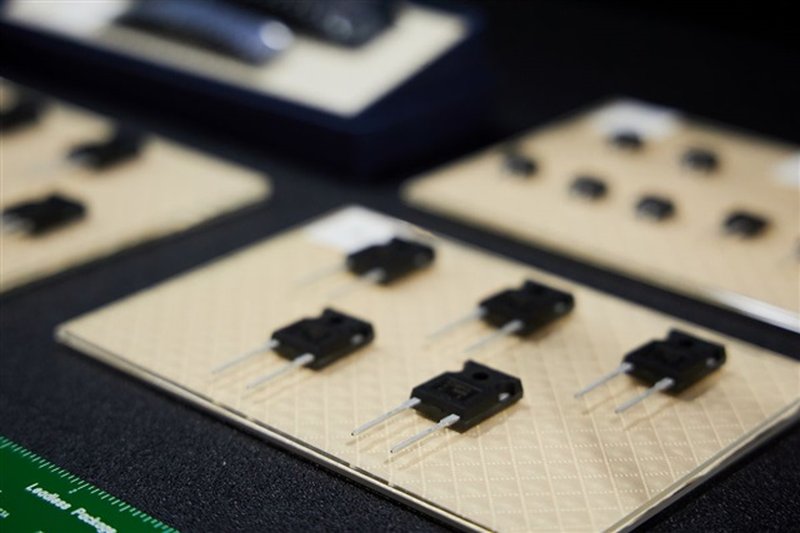
Those benefiting from this realignment are high-efficiency PSU makers, liquid cooling system producers, and companies integrating modular retrofit solutions. In parallel, pressure moves onto utilities: an on-premise mini-datacenter training a 70-billion-parameter LLM requires power commitments that often call for an electrical substation upgrade.
For anyone planning on-site deployments, the lesson is clear. The cost of compute hardware is no longer the only metric, and perhaps not even the most relevant one. TCO hinges on the ability to dissipate heat without compromising reliability and to guarantee power continuity. And June’s data shows the market is already pricing this reality. This is not an isolated technical report, but confirmation that the AI race is entering the mature phase of infrastructure, where the real constraints are physical, not software.
The next step, for those managing AI servers, won’t be choosing between an 8-bit or 4-bit model, but between upgraded air cooling or a liquid system. And the success of the suppliers that grew in June proves that contest has already begun.






💬 Comments (0)
🔒 Log in or register to comment on articles.
No comments yet. Be the first to comment!