
The silent race behind every AI chip
Semiconductor testing isn’t the most glamorous topic in AI discussions. Yet it’s a critical node that directly affects the ability to deploy servers running LLMs locally. Sigurd, a Taiwanese company specializing in testing and packaging services, has decided to expand its AI-dedicated lines – confirming a pressure that, starting from computing demand, reverberates upstream through the entire production chain.
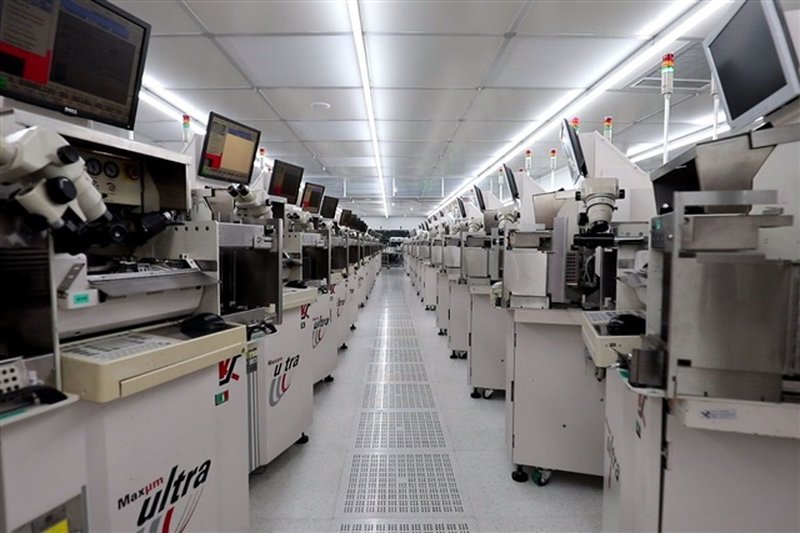
When demand for GPUs, custom accelerators, and ASICs is so high, each industrial step becomes a potential bottleneck. Testing is no exception: it verifies the quality, reliability, and performance of every individual chip before it’s assembled into final modules or servers. For devices destined to operate 24/7 under intense power and thermal loads – like those powering on-premise inference pipelines – this step is crucial.
Why testing isn’t trivial
AI chips, especially high-end ones, run at frequencies and voltages that require aggressive burn-in procedures and extensive parametric testing. An early failure in a corporate cluster isn’t just a nuisance; it’s a direct cost in terms of downtime and TCO. That’s why independent testing service providers (OSATs) like Sigurd have become key players in the AI hardware game.
The announced expansion likely involves increasing capacity to handle higher volumes and possibly new advanced packaging types necessary for HBM memory and chiplets. Even if the original statement doesn’t provide numerical details, the news matters because testing capacity isn’t something you create overnight: facilities, equipment, and skilled personnel take months to ramp up.
Supply chain pressure: what it means for self-hosted deployments
For IT managers evaluating on-premise deployment of language models, any shift in hardware availability translates into real-world trade-offs. Currently, large cloud providers absorb most accelerator production. A broader testing capacity can help reduce lead times and, over the medium term, temper component prices. However, in the short term, the demand growth might simply absorb the added capacity without creating a surplus for the enterprise market.
This kind of analysis fits into the frameworks AI-RADAR curates in its on-premise decision section, where total cost of ownership includes external factors like supply chain health.
The bigger picture: data sovereignty and hardware
Finally, there’s a less obvious but significant link to data sovereignty and compliance. Organizations migrating to on-premise AI infrastructure often do so to retain control over data residency. But the ability to set up such infrastructure depends on the physical availability of suitable chips. A robust and diversified supply chain – where companies like Sigurd play a role – is therefore an indirect but essential element of technological independence strategies.
In essence, capacity expansions along the supply chain signal a demand far from being met. For those planning to purchase servers for on-premise LLMs, monitoring these signals can mean the difference between a project on schedule and one stalled by unexpected bottlenecks.








💬 Comments (0)
🔒 Log in or register to comment on articles.
No comments yet. Be the first to comment!