
A courtroom in Singapore has become the latest stage for global tensions over advanced semiconductor controls. An executive, whose identity has not been disclosed, pleaded not guilty to charges of smuggling Nvidia chips to China in violation of U.S. export restrictions. The story, reported exclusively by Agence France-Presse, raises a question that goes well beyond the legal case: what is driving such intense demand that it spills into illegal channels?
The answer is tied to the industrial obsession with AI hardware. Nvidia GPUs are the de facto compute unit for training and inference of Large Language Models, and their availability dictates an organization’s ability to develop, fine-tune, and serve models internally. For companies evaluating self-hosted architectures — in China and elsewhere — direct access to top-performing GPUs is not a luxury but a prerequisite to maintain data sovereignty and reduce long-term TCO by avoiding dependence on hyperscale clouds under foreign jurisdictions.
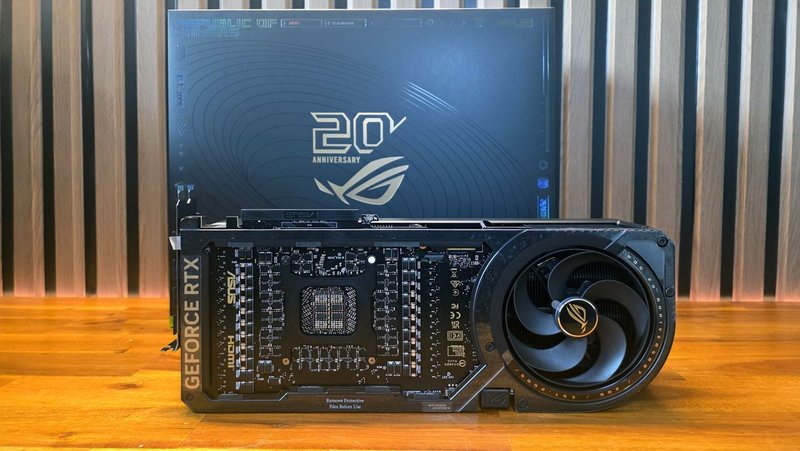
U.S. restrictions, progressively tightened since 2022, have created a dual market. On one side, compliance-adjusted versions like the A800 or H800 with capped memory bandwidth to meet imposed thresholds; on the other, a latent demand for full-spec boards with ample VRAM and intact NVLink interconnects, essential for distributed workloads. The Singapore case shows that even in a highly regulated financial and logistics hub, some deem the legal risk acceptable to satisfy Chinese buyers.
The affair has second-order implications for those operating in the on-premise AI market. First, it signals that the pressure to secure local compute capacity is not slowing down despite the blocks. Chinese companies — and not only them — are stockpiling inventory ahead of possible further tightening, and the existence of active smuggling indicates that official channels cannot cover the hunger for teraflops. For infrastructure managers, this translates into a race against time: those who can get their hands on high-end hardware today guarantee a competitive edge in fine-tuning proprietary LLMs and keeping critical workloads away from prying eyes.
Then there is a third-order effect concerning the supplier ecosystem. If authorities intensify checks — and this case could set a precedent — the transaction cost for procurement will rise further. Distributors will have to strengthen end-use due diligence, stretching delivery timelines even for legitimate clients. For teams planning on-prem clusters, the planning window lengthens and supply risks become a variable to factor into TCO models alongside energy consumption and software licenses.
Singapore, one of the world’s busiest transshipment hubs, is an ideal observation point. Here the tension between global logistics hub and sanctions enforcement materializes in courtrooms, but it is only the tip of an iceberg made of triangulations through third countries, altered customs documents, and shell companies. For those handling on-premise AI deployments, the lesson is clear: geopolitics is now an indispensable layer of architectural decisions, and the resilience of the GPU supply chain weighs as much as memory specifications or model quantization.







💬 Comments (0)
🔒 Log in or register to comment on articles.
No comments yet. Be the first to comment!