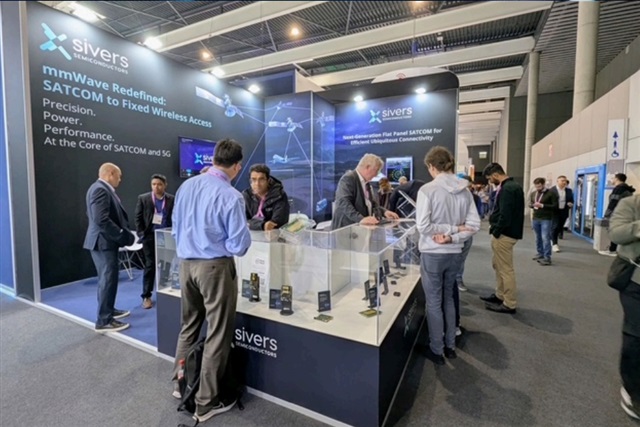
Sivers and Jabil: A Partnership for AI Efficiency
The collaboration between Sivers Semiconductors and Jabil represents a significant step in the AI infrastructure landscape. The two companies have announced a strategic partnership focused on developing 1.6 Terabit optical solutions, with the stated goal of addressing the ever-increasing power demands posed by artificial intelligence workloads. This initiative underscores the importance of efficient hardware components for the sustainability and scalability of AI systems, particularly for those managing self-hosted infrastructures.
The expansion of AI, with the growing complexity of Large Language Models (LLMs) and the need to process increasingly large data volumes, has made power consumption one of the main challenges for modern data centers. Optimizing efficiency at the interconnect level is crucial for mitigating the environmental and economic impact of these technologies.
The Role of 1.6T Optics in AI Infrastructures
1.6 Terabit optical solutions refer to ultra-high-speed interconnects, capable of handling enormous data volumes. In the context of AI, and particularly for Large Language Models (LLMs), the speed and efficiency of communications between Graphics Processing Units (GPUs) and between servers are critical. High throughput and low latency are fundamental requirements for training and inference of complex models, where the rapid transfer of large amounts of data, such as embeddings or model weights, can directly impact the overall system performance.
Managing these data flows requires not only bandwidth but also particular attention to the power consumption of optical modules, which can significantly contribute to the TCO of a data center. Innovation in this field aims to reduce the power dissipated per bit transferred, improving overall efficiency and reducing generated heat, a critical factor for cooling costs.
Implications for On-Premise Deployments
For organizations opting for on-premise or hybrid deployments, managing power consumption is a decisive factor. Unlike cloud solutions, where energy costs are often included in a service fee, in a self-hosted environment, energy efficiency directly translates into a lower TCO and greater operational sustainability. More efficient optics, such as the 1.6T solutions developed by Sivers and Jabil, can reduce the overall energy requirements of the infrastructure, lowering operational costs and carbon footprint.
This aspect is particularly relevant for CTOs and infrastructure architects who must balance performance, costs, and compliance, especially in contexts requiring data sovereignty or air-gapped environments. The choice of efficient hardware becomes a strategic lever to optimize the Total Cost of Ownership and ensure long-term sustainability. For those evaluating the trade-offs between self-hosted and cloud solutions, AI-RADAR offers analytical frameworks on /llm-onpremise to support these decisions with concrete data.
Future Prospects for AI Infrastructure
The partnership between Sivers and Jabil highlights a key trend in the industry: the need for hardware innovations aimed at supporting the exponential growth of AI. With the evolution of Large Language Models and the demand for ever-increasing computing capabilities, energy efficiency and interconnect performance will become even more critical. The ability to move data rapidly and with minimal energy expenditure is a cornerstone for future scalability.
The development of technologies like 1.6T optics not only improves current capabilities but also lays the groundwork for future generations of data centers and AI infrastructures, where scalability, sustainability, and control over operational costs will be fundamental pillars for the widespread adoption of these technologies. Innovation in basic components, such as optical modules, is essential to unlock the full potential of enterprise artificial intelligence.





💬 Comments (0)
🔒 Log in or register to comment on articles.
No comments yet. Be the first to comment!