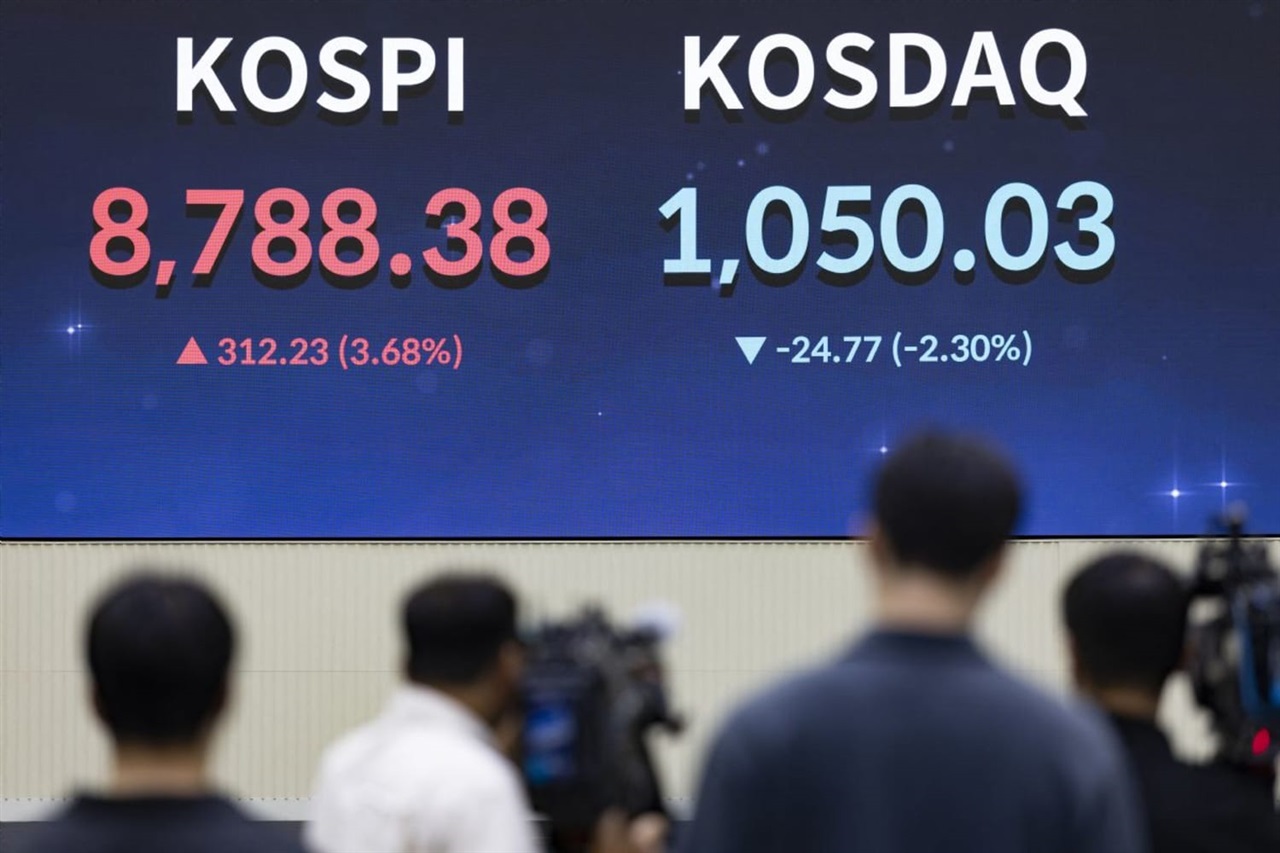
SK Group: AI Memory Demand and Nvidia Visit Drive Valuation Beyond KRW 2,000 Trillion
SK Group's valuation has surpassed the KRW 2,000 trillion mark, a significant achievement reflecting the current boom in the artificial intelligence sector. This increase has been primarily driven by two key factors: the growing demand for AI-dedicated memory and a strategic visit from Nvidia representatives. The event underscores the centrality of specialized hardware in today's technological landscape, particularly for the development and deployment of Large Language Models (LLMs).
This market scenario highlights how the availability and performance of hardware components have become crucial not only for manufacturers but also for companies planning their AI infrastructures. The AI race is redefining investment priorities and supply chain strategies globally, with direct impacts on deployment decisions, whether in the cloud or on-premise.
The Crucial Role of AI Memory in the LLM Era
AI-dedicated memory, particularly High Bandwidth Memory (HBM) used in latest-generation GPUs, is a fundamental component for the efficiency and scalability of artificial intelligence workloads. Increasingly large and complex LLMs require vast amounts of VRAM for training and inference, with extremely high bandwidth requirements to feed the GPU's computing cores. A GPU's ability to rapidly process large data volumes is directly correlated with the speed and size of its memory.
For companies considering an on-premise deployment, selecting the right hardware with sufficient VRAM and throughput is a strategic decision. GPUs like Nvidia's H100 or A100 series, with their advanced memory configurations, are often at the center of these evaluations. The market availability of these components, influenced by dynamics such as those that boosted SK Group's valuation, can directly impact implementation timelines and the Total Cost of Ownership (TCO) of a self-hosted AI infrastructure.
Market Dynamics and Implications for On-Premise Deployment
The surge in valuation for a conglomerate like SK Group, linked to AI memory demand and the interest from a giant like Nvidia, reflects a broader trend in the global market. The semiconductor and hardware component supply chain is under pressure, with demand often outstripping supply. This context has significant implications for organizations aiming to build and manage their AI infrastructures on-premise.
The choice between a cloud infrastructure and a self-hosted deployment is complex and depends on factors such as data sovereignty, compliance requirements, the need for air-gapped environments, and control over operational costs. A volatile hardware market, characterized by demand peaks and potential shortages, can alter TCO projections, making a thorough analysis of available options even more critical. For those evaluating on-premise deployments, AI-RADAR offers analytical frameworks on /llm-onpremise to assess the trade-offs between performance, cost, and control.
Future Outlook and Strategic Challenges
The AI sector continues its rapid evolution, with increasingly powerful models and constantly growing hardware requirements. The demand for AI memory, in particular, is expected to remain high, driving innovation and production. This scenario presents both opportunities and challenges for hardware suppliers and for companies seeking to implement AI solutions.
As technology advances, the ability to procure and manage the necessary hardware will become a distinguishing factor. Strategic decisions regarding AI infrastructure, balancing access to the latest innovations with supply chain stability and TCO management, will be crucial for long-term success. Nvidia's visit to SK Group and the subsequent valuation growth highlight the interconnectedness between chip manufacturers, component suppliers, and the entire artificial intelligence ecosystem.







💬 Comments (0)
🔒 Log in or register to comment on articles.
No comments yet. Be the first to comment!