
SK Hynix Advances in AI Memory Landscape
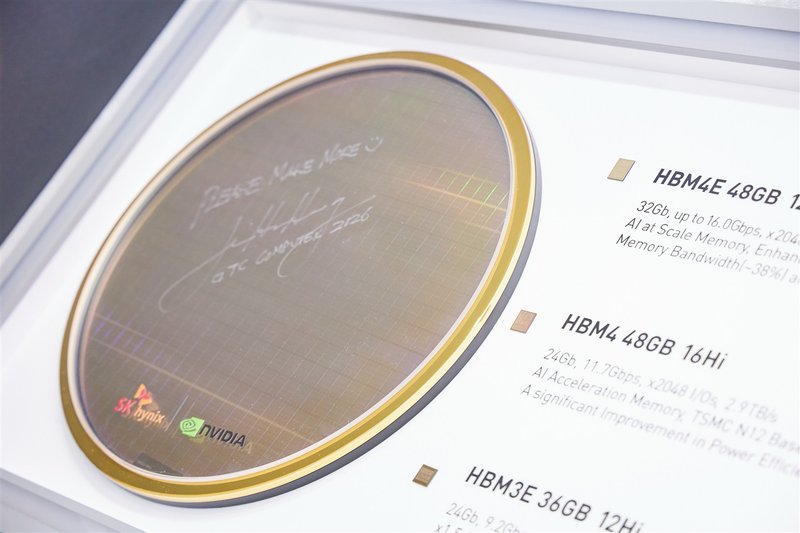
SK Hynix, one of the world's leading semiconductor manufacturers, recently announced a significant milestone in high-bandwidth memory (HBM). The company has begun shipping the first samples of its HBM4E, the next generation of memory specifically designed for the escalating demands of artificial intelligence workloads. These shipments are directed to key customers in the industry, signaling an acceleration in the development and adoption of advanced memory technologies.
HBM has become a critical component for AI accelerators, particularly for GPUs used in training and inference of Large Language Models (LLMs). Its vertically stacked architecture allows for significantly higher memory density and bandwidth compared to traditional GDDR memories, which are fundamental elements for managing the massive datasets and complex models that characterize modern AI.
Technical Specifications: A Leap in Capacity and Speed
The core of HBM4E's innovation lies in its architecture. SK Hynix has highlighted a 12-layer stack, a configuration that enables a total capacity of 48GB per single stack. This increase in capacity is crucial for increasingly larger LLM models, which require enormous amounts of VRAM to be loaded and processed efficiently, both during training and inference phases.
Beyond capacity, speed is another distinguishing factor. HBM4E is capable of operating at speeds up to 16Gbps per pin. This high bandwidth translates into superior data throughput, reducing bottlenecks and improving the overall performance of AI systems. SK Hynix further promises improved power efficiency, an increasingly relevant aspect for data centers and on-premise deployments, where the Total Cost of Ownership (TCO) is heavily influenced by energy consumption.
Implications for On-Premise LLM Deployments
For CTOs, DevOps leads, and infrastructure architects evaluating self-hosted solutions for AI workloads, the arrival of memories like HBM4E is of paramount importance. The availability of denser and faster VRAM allows for the execution of larger and more complex LLMs directly on on-premise infrastructures, ensuring greater data control and compliance with sovereignty requirements. Models with billions of parameters require tens, if not hundreds, of gigabytes of memory to function effectively, making HBM an enabling factor.
The increase in bandwidth and power efficiency contributes to optimizing the TCO of AI systems. Lower energy consumption and higher capacity per GPU mean that more performance can be achieved with less hardware, or more demanding models can be managed with existing infrastructure. This is particularly relevant for air-gapped environments or organizations that need to keep sensitive data within their physical boundaries, where cloud solutions might not be suitable.
Future Prospects and Strategic Considerations
The introduction of HBM4E by SK Hynix marks a step forward in the evolution of AI-dedicated hardware. Although samples are currently being shipped to "major customers," their widespread adoption will influence future generations of AI accelerators. Companies planning their AI infrastructure investments will need to consider these new memory capabilities, evaluating how they will integrate with GPU architectures and the specific requirements of their workloads.
The choice between different HBM generations, such as HBM3E and now HBM4E, will involve trade-offs between cost, availability, and performance. For those evaluating on-premise deployments, it is essential to carefully analyze these factors to balance performance needs with budget and operational constraints. AI-RADAR offers analytical frameworks on /llm-onpremise to help evaluate these trade-offs, providing tools for informed decisions on on-premise LLM deployments.




💬 Comments (0)
🔒 Log in or register to comment on articles.
No comments yet. Be the first to comment!