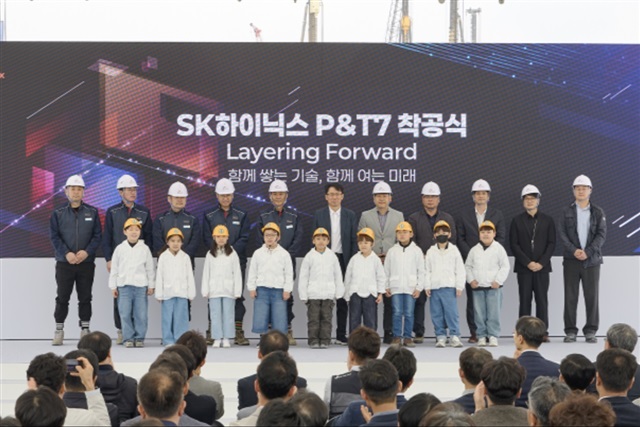
SK Hynix, a leading global semiconductor manufacturer, has announced the construction of a new HBM (High Bandwidth Memory) packaging hub in Cheongju, South Korea. This strategic initiative aims to significantly expand the company's production capacity for HBM, a critical component for advancing artificial intelligence systems.
The investment reflects the escalating demand for high-performance computing solutions required to power the development and deployment of Large Language Models and other complex AI applications. SK Hynix's decision underscores the critical importance of HBM in the current technological landscape. With the explosion of generative AI, the need for memory capable of delivering extremely high bandwidth has become a limiting factor for the performance of GPUs and AI accelerators. This new packaging hub is a direct response to this need, aiming to ensure a more robust and reliable supply of these specialized memories.
The Strategic Role of HBM in the AI Era
HBM is fundamental to modern AI accelerator architectures, particularly for high-end GPUs used in LLM training and inference. Unlike traditional GDDR memory, HBM is stacked vertically and integrated directly onto the same package as the processor, drastically reducing distances and increasing available bandwidth. This architecture allows GPUs to access enormous amounts of data at unprecedented speeds, an indispensable requirement for handling AI models with billions of parameters that demand high throughput.
The packaging process is a complex and delicate technological step in HBM manufacturing. The ability to stack multiple memory dies and integrate them precisely onto the processor substrate is a key factor for final yield and performance. SK Hynix's expansion of its packaging capabilities is therefore a clear signal of the company's commitment to overcoming production bottlenecks and meeting the growing demand for high-density, high-bandwidth VRAM, essential elements for the efficiency of the most demanding AI workloads.
Implications for On-Premise Deployment and TCO
The increase in HBM production capacity has significant implications for organizations evaluating the deployment of on-premise AI infrastructures. Greater availability of HBM memory can help mitigate challenges related to the supply chain of AI accelerators, potentially influencing the overall TCO (Total Cost of Ownership). For companies prioritizing data sovereignty, regulatory compliance, and direct control over hardware, the ability to access HBM-equipped GPUs in sufficient quantities is a crucial enabler.
The choice between cloud and self-hosted solutions for AI workloads depends on a careful analysis of trade-offs between initial costs (CapEx), operational costs (OpEx), performance requirements, and security constraints. A more stable HBM supply can make on-premise options more competitive, allowing companies to build robust and high-performing local stacks. For those evaluating on-premise deployments, analytical frameworks are available on /llm-onpremise to help organizations assess these trade-offs and make informed decisions about their LLM deployments.
Future Prospects in the AI Landscape
SK Hynix's investment in the new Cheongju hub highlights the global race for dominance in the AI memory sector. With the continuous evolution of LLMs and the emergence of new artificial intelligence applications, the demand for HBM is set to grow further. Semiconductor manufacturers are at the forefront of providing the necessary hardware foundations for this technological revolution.
The ability to innovate and scale the production of critical components like HBM will be a determining factor for the pace of adoption and the efficiency of AI solutions globally. This development not only strengthens SK Hynix's position as a key player but also contributes to shaping the future of AI infrastructure, making more powerful technologies accessible for a wide range of enterprise applications.








💬 Comments (0)
🔒 Log in or register to comment on articles.
No comments yet. Be the first to comment!