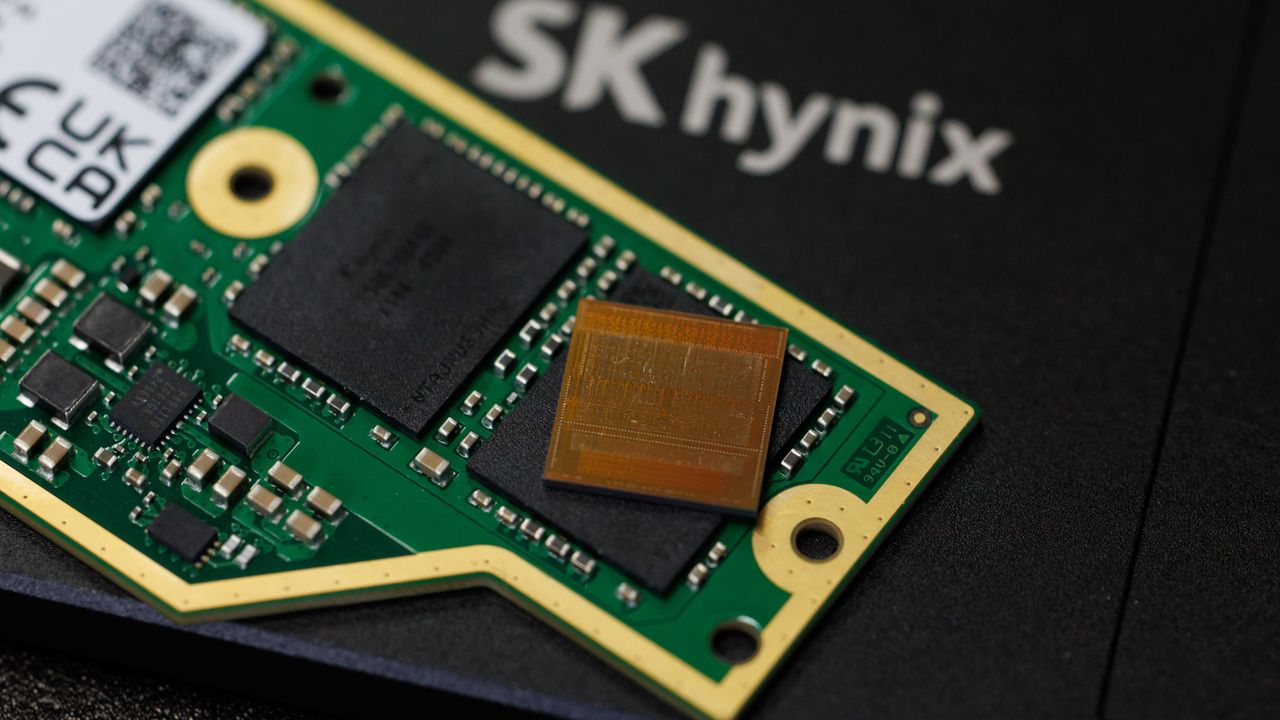
SK Hynix's Innovation for AI Memory Cooling
In the rapidly evolving landscape of artificial intelligence, thermal management represents one of the most significant challenges, especially for the intensive workloads characteristic of Large Language Models (LLMs). SK Hynix, a key player in the memory sector, recently unveiled a new thermal architecture called 'iHBM,' designed to directly address this issue. This innovation focuses on cooling AI memory at the source, an approach that could redefine the efficiency and density of future data centers.
The introduction of iHBM underscores the growing need for more effective cooling solutions as memory performance and density increase. With the expansion of LLM deployments, both in the cloud and on-premise, the ability to dissipate heat efficiently becomes a critical factor in maintaining stability, performance, and ultimately, the Total Cost of Ownership (TCO).
Technical Details of the iHBM Architecture
The iHBM architecture stands out for integrating cooling elements directly within the HBM (High Bandwidth Memory) interface. This strategic placement allows heat to be intercepted and dissipated at the exact point where it is generated, before it can spread and negatively impact chip performance. According to SK Hynix, this solution can reduce thermal resistance by 30%.
Such a significant reduction in thermal resistance is crucial for next-generation accelerators, particularly those that will utilize HBM5 memories. HBM memories are already known for their high density and bandwidth, but also for their tendency to generate considerable heat. The iHBM approach aims to unlock further performance and density gains, making it possible to build even more powerful and compact AI systems.
Implications for Data Centers and On-Premise Deployments
The impact of an architecture like iHBM extends far beyond the single memory chip. For high-density data centers, where space and power consumption are primary constraints, improved thermal management can translate into substantial benefits. The ability to cool HBM memories more effectively means that servers can host more GPUs and accelerators, increasing computing power per rack unit without encountering overheating issues or excessive external cooling requirements.
For organizations evaluating on-premise LLM deployments, solutions like iHBM are particularly relevant. Data sovereignty, compliance, and direct control over infrastructure are often priorities, but they also require careful consideration of TCO and operational efficiency. More efficient cooling can reduce energy costs associated with HVAC systems and extend hardware lifespan, helping to optimize investments in self-hosted AI infrastructures.
Future Outlook and Technological Challenges
The introduction of iHBM by SK Hynix marks an important step in the evolution of memory technologies for artificial intelligence. As we advance towards HBM5 accelerators and beyond, the pressure to manage the heat generated by billions of transistors and ever-increasing data throughput will only grow. Innovations like iHBM are crucial to ensure that hardware development can keep pace with the escalating demands of AI models.
Future challenges will include integrating these cooling technologies into complex hardware stacks and scaling them for distributed computing environments. The ability to keep HBM memories cool and efficient will be a decisive factor for the next generation of AI systems, influencing everything from model training speed to inference latency in production.





💬 Comments (0)
🔒 Log in or register to comment on articles.
No comments yet. Be the first to comment!