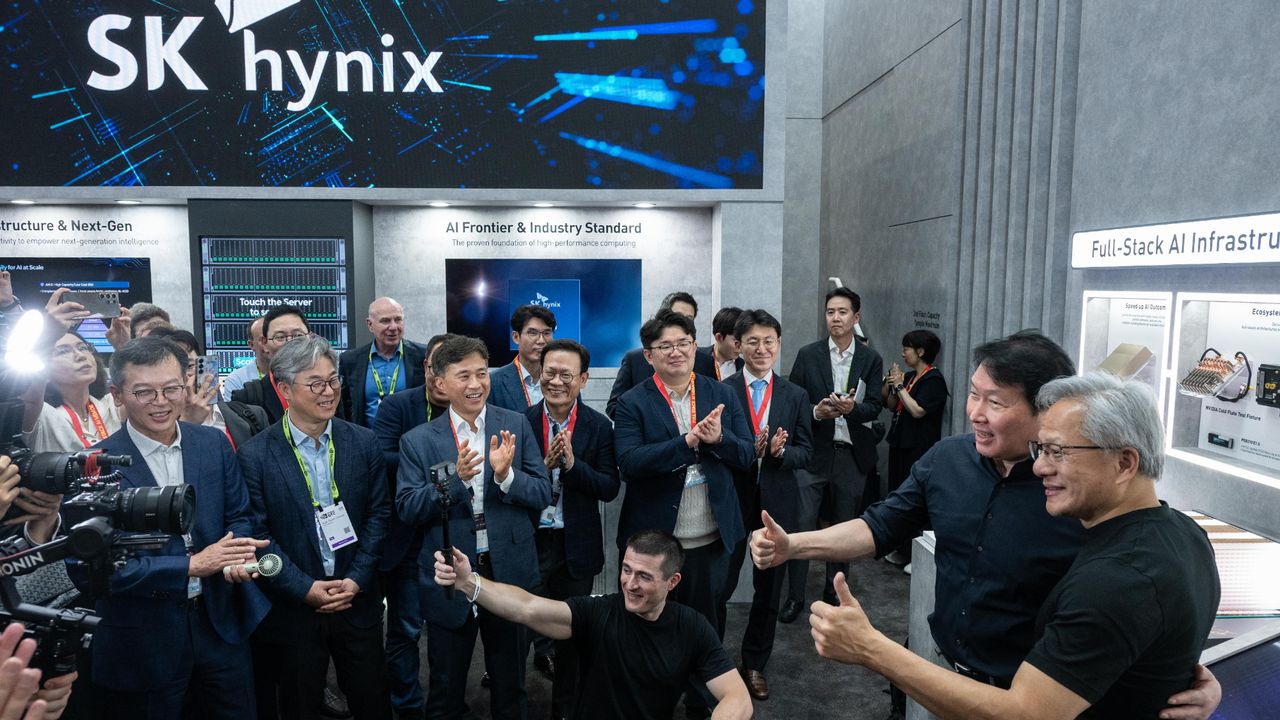
SK hynix Aims to Double AI Memory Production Capacity
SK hynix, a major player in the global semiconductor manufacturing landscape, has outlined an ambitious strategy to address the surging demand for essential artificial intelligence components. The company announced its intention to double its memory wafer production capacity within the next five years. This strategic move responds to a structural shortage that, according to the company's chairman, is expected to persist until at least 2030.
The market for Large Language Models (LLMs) and generative AI is driving unprecedented demand for high-performance memory, particularly High Bandwidth Memory (HBM) and VRAM for GPUs. This pressure directly impacts purchasing decisions and infrastructure planning for companies evaluating on-premise deployments, making hardware availability a critical factor.
The Context of the Shortage and Technical Implications for AI
Memory shortages are not a new phenomenon in the tech industry, but the current surge is almost entirely attributable to the explosion of artificial intelligence. AI workloads, for both inference and training, require massive amounts of VRAM and high bandwidth. Latest-generation GPUs, such as NVIDIA H100 or AMD Instinct MI300X, which are fundamental for AI acceleration, integrate HBM stacks that are complex to produce and require advanced packaging processes and long production lead times.
For organizations implementing LLMs on-premise, the availability and cost of these memories are critical factors. Planning a local AI infrastructure heavily depends on the ability to source hardware with adequate specifications, such as GPUs with 80GB or 128GB of VRAM, and on price stability. A prolonged shortage can lead to longer delivery times and an increase in the Total Cost of Ownership (TCO) for self-hosted projects, directly impacting CapEx and OpEx budgets.
Mitigation Strategies and Prospects for On-Premise Deployments
SK hynix's announcement, while projecting a long-term solution, highlights the need for companies to adopt resilient strategies in the short to medium term. This includes evaluating hardware alternatives, optimizing models through techniques like Quantization to reduce memory requirements, and planning purchases well in advance to secure supplies.
For those considering on-premise deployments, the volatility of the memory market underscores the importance of a thorough TCO and supply chain analysis. Data sovereignty and control over infrastructure remain priorities, but they must be balanced with the reality of a pressured hardware market. AI-RADAR offers analytical frameworks on /llm-onpremise to evaluate these trade-offs, considering aspects such as the availability of critical components and the impact on operational costs.
The Future of the AI Memory Market
The prediction that the shortage will persist until 2030 suggests that the AI memory sector is set to remain a strategic bottleneck for several years. This scenario could accelerate innovation in memory efficiency and alternative chip architectures, as well as stimulate massive investments from other manufacturers to increase production capacity.
SK hynix's commitment to doubling capacity is a positive signal for the market, but its realization will require significant time and investment. Meanwhile, companies will need to navigate a complex environment where the ability to secure necessary hardware resources will be a distinguishing factor for the success of their AI projects, especially those requiring maximum control and performance in self-hosted or air-gapped environments.








💬 Comments (0)
🔒 Log in or register to comment on articles.
No comments yet. Be the first to comment!