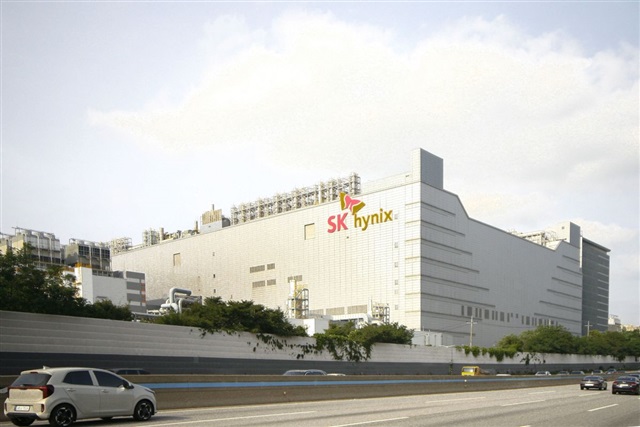
SK Hynix Focuses on Silicon Valley for AI
SK Hynix, one of the world's leading semiconductor manufacturers, has reportedly acquired property in Silicon Valley. This strategic move highlights the company's commitment to strengthening its position within the global supply chain for artificial intelligence. The investment comes at a time of significant expansion in the AI sector, which demands ever-increasing quantities of specialized hardware and high-performance components.
The acquisition of assets in one of the world's most innovative regions underscores SK Hynix's desire to remain at the forefront of developing and producing AI-enabling technologies. Silicon Valley, with its ecosystem of startups, research centers, and tech giants, offers fertile ground for collaborations and innovations that can accelerate the development of new solutions.
The Crucial Role of Memory in the LLM Era
The artificial intelligence market, particularly that of Large Language Models (LLMs), critically depends on the availability of high-bandwidth memory, such as High Bandwidth Memory (HBM) produced by companies like SK Hynix. These memories are fundamental for the latest generation GPUs, which in turn form the backbone of training and inference systems for LLMs. The capacity and speed of VRAM directly influence performance, the size of models that can be run, and overall throughput.
For organizations choosing to implement self-hosted or on-premise AI solutions, access to reliable and high-performing hardware components is a determining factor. The stability of the HBM memory and other chip supply chains is therefore essential to ensure scalability, reduce deployment times, and optimize the Total Cost of Ownership (TCO) of local AI infrastructures. Disruptions or fluctuations in the availability of these components can have a significant impact on enterprise projects.
Consolidation Strategy and Market Implications
SK Hynix's investment in Silicon Valley can be interpreted as a strategy to consolidate its leadership and mitigate supply chain risks. Securing a physical presence in a key technology hub can facilitate research and development, engineering, and relationships with strategic customers and partners. This approach is particularly relevant in a global context where the demand for AI chips often exceeds supply, creating tensions and uncertainties for hardware buyers.
For the broader market, a more robust and resilient AI supply chain can lead to greater stability in component prices and availability. This is a crucial aspect for companies planning long-term investments in AI infrastructure, whether in the cloud or on-premise. A supplier's ability to ensure consistent and innovative deliveries is a significant competitive advantage.
Prospects for On-Premise AI Deployments
SK Hynix's move has direct repercussions for companies evaluating on-premise AI deployments. The availability of next-generation HBM memory is a limiting factor for the adoption of advanced GPUs, such as those needed to run complex LLMs with large context windows or for intensive fine-tuning workloads. Strengthening the supply chain can help unlock bottlenecks and accelerate the implementation of local AI solutions.
For those evaluating on-premise deployments, AI-RADAR offers analytical frameworks on /llm-onpremise to assess the trade-offs between costs, performance, data sovereignty, and infrastructure requirements. A company's ability to secure the necessary hardware, supported by a stable supply chain, is a fundamental element in this analysis, directly influencing the TCO and the feasibility of proprietary AI infrastructure.








💬 Comments (0)
🔒 Log in or register to comment on articles.
No comments yet. Be the first to comment!