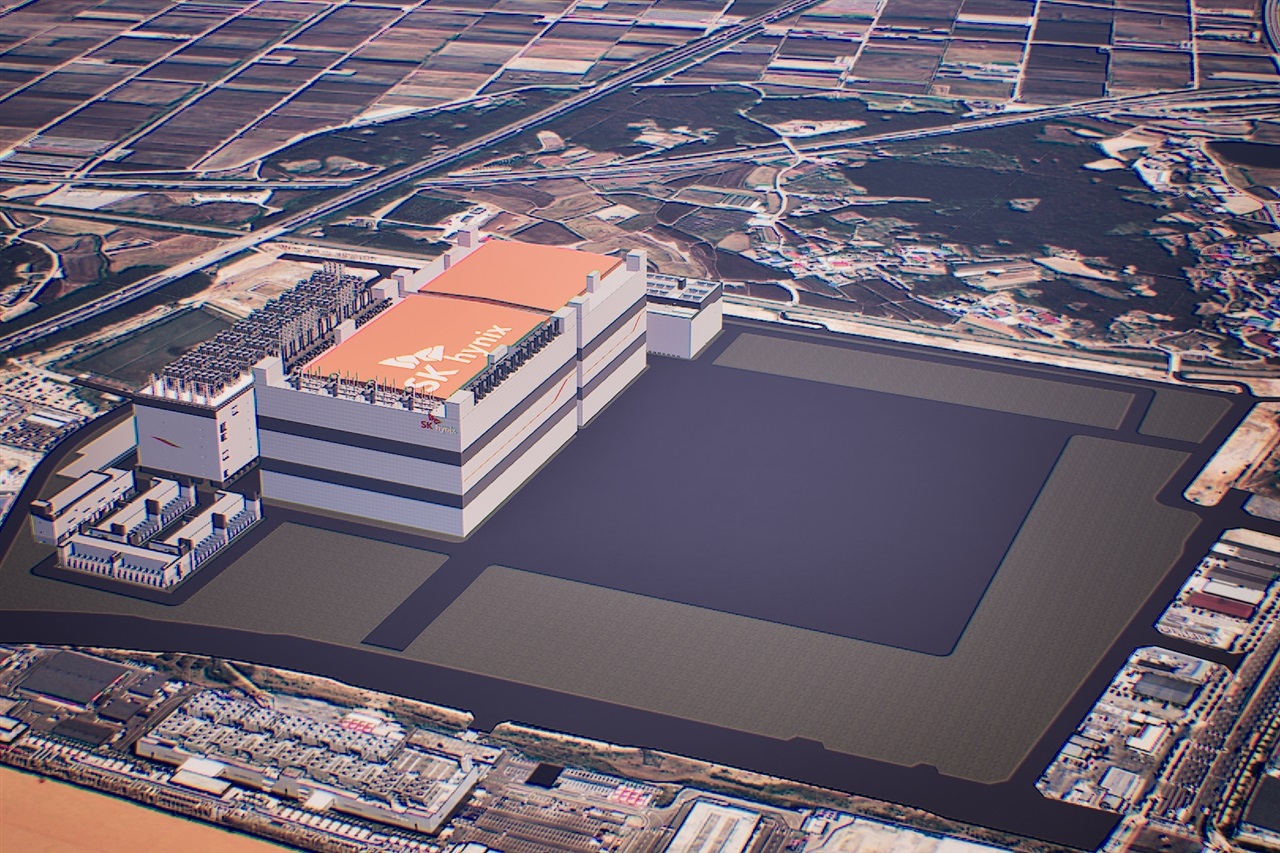
When SK Hynix placed its shares on Wall Street, shattering Alibaba’s record for the largest US listing, the market cheered the Korean semiconductor giant’s financial muscle. But behind the headlines lies a detail that matters enormously to anyone building AI infrastructure: the new High Bandwidth Memory (HBM) production capacity funded by that operation won’t be available before 2028.
HBM is the ultra-wideband memory that powers the most demanding accelerators – from today’s NVIDIA H100 and H200 to the upcoming B200 – and SK Hynix commands a dominant market share. Without it, the bandwidth requirements for large-scale LLM inference and fine-tuning are simply out of reach. The implicit message of this announcement is that the hardware race won’t ease: even when money arrives, the physics of chip manufacturing demands years to set up fabs and advanced packaging lines.
For teams evaluating on-premise deployment, 2028 isn’t a distant point on a timeline; it’s a concrete capacity-planning variable. The HBM3E volumes arriving in the near term are already booked by hyperscalers, and the next wave of wafers will only materialize toward the end of the decade. That means lead times for AI servers will remain tight, and procurement strategies must shift toward multi-year contracts and early allocation options – or toward the technical compromise of running previous-generation chips with aggressive quantization, sacrificing throughput to keep data in-house.
The structural dimension is even more telling: the gap between the speed of financial markets and the inertia of semiconductor supply chains is widening. SK Hynix raised billions in a handful of trading sessions, yet turning that capital into silicon will take four years. That interval leaves room for competitors like Samsung and Micron, themselves grappling with HBM expansion plans, but offers no shortcuts.
Those who have already locked in HBM volumes for 2025 can breathe easier. Everyone else will have to reckon with a reality that finance alone cannot accelerate. It’s why, in the coming years, on-premise compute capacity will be not just a matter of budget, but of industrial patience.








💬 Comments (0)
🔒 Log in or register to comment on articles.
No comments yet. Be the first to comment!