
The Story
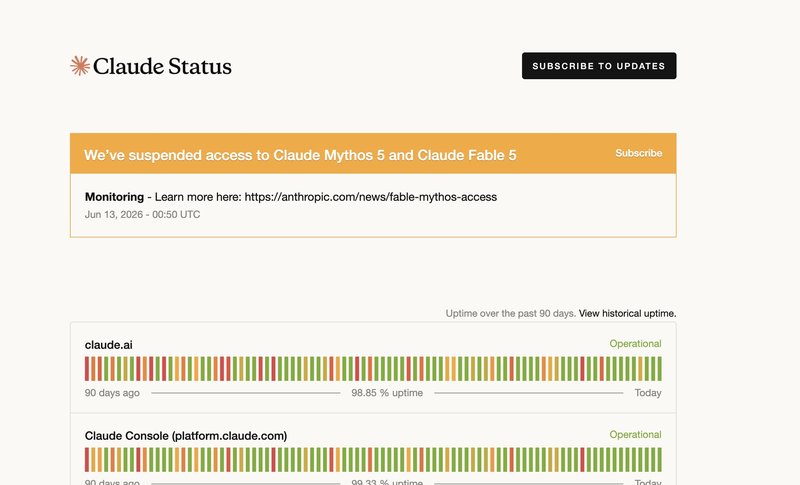
SK Telecom, South Korea’s leading telecom operator, has emerged as a key player in the controversy surrounding export controls on Anthropic’s Mythos system. According to reports, the company had access to Mythos, but that access was revoked just days before the White House ordered the system, along with another project called Fable 5, to be taken offline for all foreign nationals.
The move raises questions about the scope of U.S. export controls on advanced AI models, a regulatory area still in flux. Anthropic, known for its Claude LLM, has partnerships worldwide, but the White House intervention signals a stricter stance on technologies deemed strategic.
What Are Mythos and AI Export Controls?
Mythos is not a commercial product like Claude but likely a research system, possibly focused on advanced reasoning or planning. Technical details are scarce, but the parallel shutdown of Fable 5—another Anthropic project—suggests these are frontier, potentially dual-use technologies.
The U.S. imposes export restrictions on hardware (such as GPUs) and increasingly on software and AI models through the Bureau of Industry and Security (BIS) and Export Administration Regulations (EAR). The goal is to keep sensitive technology away from rival powers. Yet extending these rules to LLMs and research frameworks is still uncharted territory.
The SK Telecom case illustrates how such restrictions can affect even close allies. South Korea is a key U.S. partner, yet access was cut with little warning. This creates uncertainty for businesses looking to integrate U.S.-based models into their infrastructure, particularly in on-premise or hybrid setups.
Why It Matters for On-Premise Deployments
The incident hits a nerve for organizations investing in self-hosted AI infrastructure. If a government can order a cloud-hosted model like Mythos to be blocked, reliance on U.S. providers becomes an operational risk. On-premise deployment, where the model runs on local servers under the user’s control, can mitigate but not eliminate this risk: downloaded models are still subject to licenses and, potentially, export controls. For truly strategic models, companies may need to consider developing or fine-tuning open-source LLMs, keeping the entire stack in-house.
Moreover, the episode highlights how telecom carriers can become critical nodes. SK Telecom was not just a customer but likely a partner for delivering AI services, making network infrastructure another layer of control.
Outlook: Sovereignty and Fragmentation
The White House action on Mythos may be a preview of a future where AI access is segmented by user nationality or corporate jurisdiction. For Europe, already navigating GDPR and the AI Act, this adds another layer of complexity: choosing an AI provider is no longer just a technical or economic decision but also a geopolitical one.
For organizations in regulated industries—defense, telecom, healthcare—evaluating jurisdiction and potential future blocks becomes essential. AI-RADAR regularly explores these issues, offering analytical frameworks on /llm-onpremise to weigh trade-offs between control and flexibility.
The SK Telecom-Anthropic case is a wake-up call: the era of borderless AI may already be over.





💬 Comments (0)
🔒 Log in or register to comment on articles.
No comments yet. Be the first to comment!