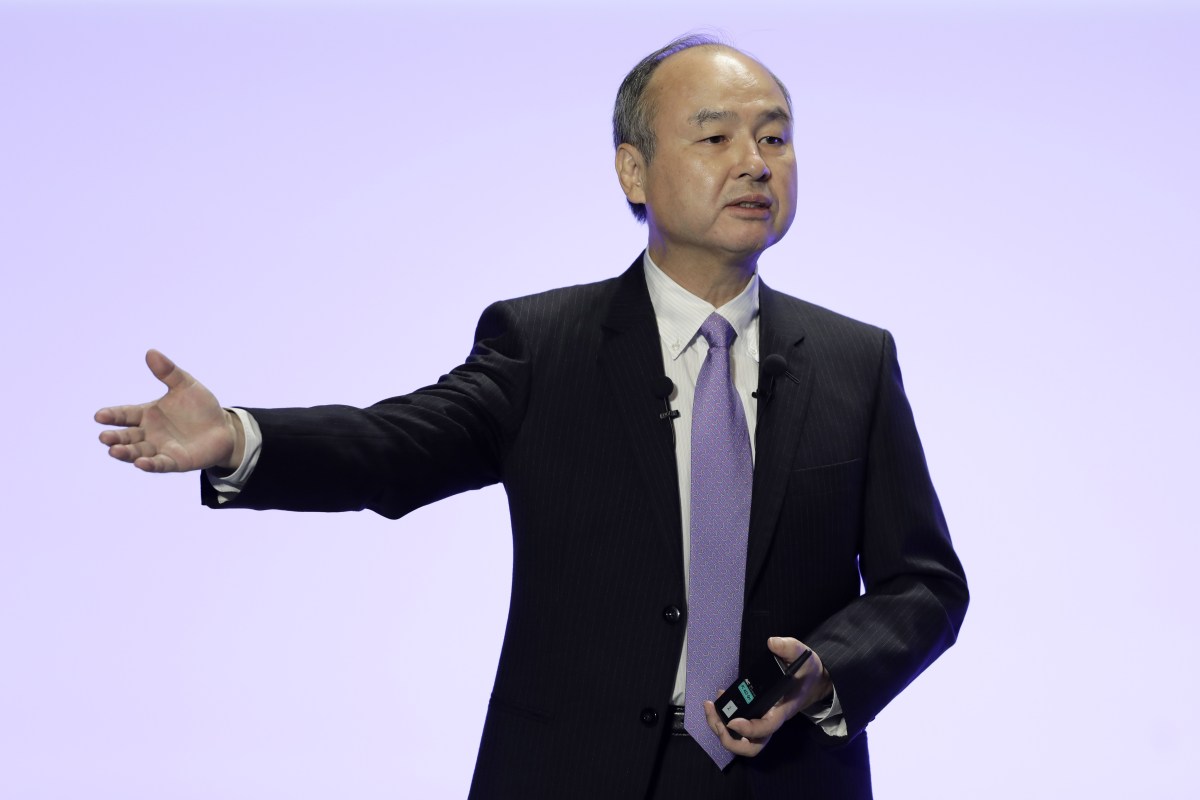
SoftBank and the Robotic Vision for Data Centers
SoftBank has announced the creation of a new company entirely dedicated to robotics, with an ambitious goal: the construction of data centers. This strategic move underscores a vision where artificial intelligence and robots are not only the beneficiaries of infrastructure but also its builders. The project, still in its early stages, is already generating speculation about a potential initial public offering (IPO) that could reach $100 billion, highlighting the enormous perceived value in this synergy between automation and critical infrastructure.
The core idea is that, to build the infrastructure necessary to support advanced AI and robotics, AI and robots themselves must be employed. This virtuous cycle promises to redefine the paradigms of designing, constructing, and managing large-scale computing environments, responding to the exponential demand for computational resources.
Automation in the Service of AI Infrastructure
Building modern data centers, especially those optimized for artificial intelligence workloads, presents significant challenges in terms of complexity, scale, and precision. AI-dedicated infrastructures require high-density GPU clusters, such as NVIDIA H100s or AMD MI300X, with stringent requirements for VRAM, heat dissipation, power supply, and high-speed network connectivity. Deploying these configurations, often on bare metal architectures to maximize LLM inference and training performance, is a laborious process prone to human error.
The use of robotics in this context could lead to unprecedented automation. Robots could manage server assembly, complex cabling installation, cooling system configuration, and predictive maintenance. This would not only accelerate deployment times but also improve the precision and reliability of the infrastructure, crucial elements for ensuring high throughput and low latency in the most demanding AI workloads.
Implications for On-Premise Deployment
For CTOs, DevOps leads, and infrastructure architects evaluating self-hosted and on-premise deployment solutions, SoftBank's approach offers interesting insights. The ability to build data centers more rapidly and efficiently, with advanced automation, could reduce the overall TCO of AI infrastructures. While the initial investment in robotic systems might be high, long-term benefits could include reduced operational costs, greater scalability, and fewer configuration errors.
In an era where data sovereignty and regulatory compliance are top priorities, the ability to have air-gapped data centers or those under strict corporate control becomes fundamental. An automated and standardized construction process could facilitate the creation of secure and compliant environments, reducing reliance on external providers for the most critical installation phases. For those evaluating on-premise deployments, AI-RADAR offers analytical frameworks on /llm-onpremise to assess the trade-offs between cost, performance, and control.
Future Prospects and Challenges
SoftBank's vision of robot-built data centers opens up futuristic scenarios but also new challenges. Integrating complex robotic systems requires specialized skills and an equally sophisticated management and maintenance pipeline. It will be essential to balance automation with the flexibility needed to adapt to the rapid evolution of the AI hardware and software landscape.
Ultimately, SoftBank's initiative reflects a broader trend in the tech industry: the pursuit of efficiency and scalability through advanced automation. While the path to fully autonomous data centers is still long, the commitment of a player like SoftBank suggests that the intersection of robotics and AI infrastructure will be a crucial field of innovation in the coming years, with significant impacts on how companies conceive and implement their computing capabilities.









💬 Comments (0)
🔒 Log in or register to comment on articles.
No comments yet. Be the first to comment!