
GameStop CEO Ryan Cohen brushed off Sony’s decision to launch a disc-less console as ‘totally irrelevant,’ noting that software, including physical games, accounts for just 12% of the company’s business. For a retailer, abandoning optical media isn’t a shock but an acceleration of a trend unfolding for years. Yet treating this as just another step in the digital shift misses a fracture that cuts across every digital sector, AI included.
When Sony decides a DVD or Blu-ray drive is no longer needed, it sends a clear signal: physical ownership becomes a luxury that mass-market numbers no longer justify. The mainstream is moving towards subscriptions, streaming, and downloads tied to ecosystems you can use but never own. It’s a familiar transition, but GameStop’s 12% figure is a wake-up call for AI infrastructure builders: if direct control over physical media or local hardware becomes a niche, what guarantees remain for data sovereignty and deep customization?
For teams running large language models (LLMs) on their own servers, the parallel is immediate. Just as a physical disc ensures offline installation, perpetual backward compatibility, and freedom from remote authentication, an on-premise cluster guarantees that sensitive data never traverses third-party networks and that inference runs within known cost and latency bounds. It’s no accident that regulated industries — from healthcare to finance — insist on self-hosted setups: that 12% may look irrelevant to scale-first players, but it’s the difference between GDPR compliance and exposure to audit risks.
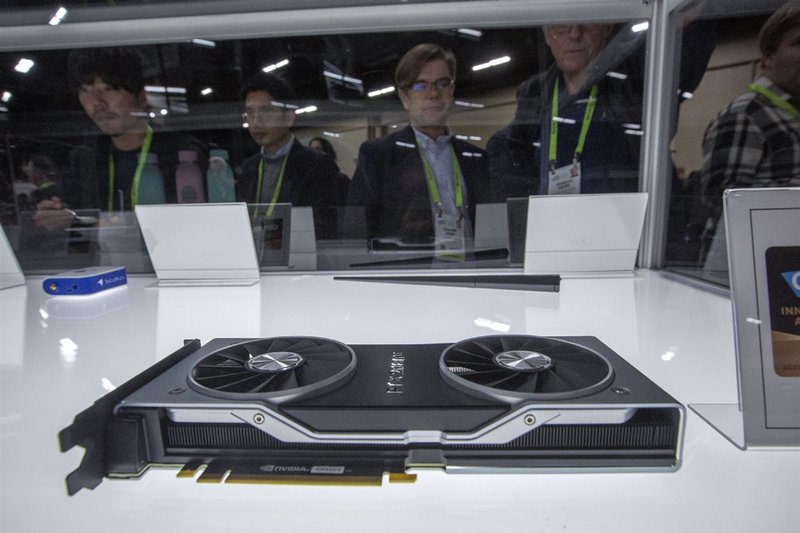
GameStop’s stance also reveals a second-order effect: hardware manufacturers, like GPU and storage vendors for AI, face a fork in the road. If the consumer industry ditches physical formats, demand for optical drives will plummet, economies of scale will vanish, and components will become pricier for the niches that still need them. In AI, something similar is brewing: as cloud offerings standardize configurations, accelerator cards optimized for local-first inference (with INT8 quantization and custom memory layouts) risk becoming marginal, driving less favorable pricing for those who want in-house compute.
The analysis can’t stop at the surface. Cohen’s 12% isn’t proof that discs are dead — it shows a whole consumption model is giving way to another. For anyone weighing on-premise LLM deployment, the message is twofold: ignoring the cloud trend means falling behind, but accepting it without building local alternatives means losing the only lever that can ensure control, predictable costs, and compliance. It’s no coincidence that generative AI adopters are increasingly asking for efficient quantization, lean frameworks, and the ability to fine-tune on proprietary data without ever moving it.
Ultimately, the disc-less console is one tile in a larger mosaic. That 12% — a seemingly small slice — represents choice, ownership, and digital sovereignty. Irrelevant to GameStop’s quarterly numbers, perhaps. But for those building the next generation of AI infrastructure, it’s a reminder: control isn’t measured by majority, but by the ability to decide where and how your code runs.








💬 Comments (0)
🔒 Log in or register to comment on articles.
No comments yet. Be the first to comment!