Chip Sovereignty? The Big Tech Dilemma and the Sovereign Silicon Mirage
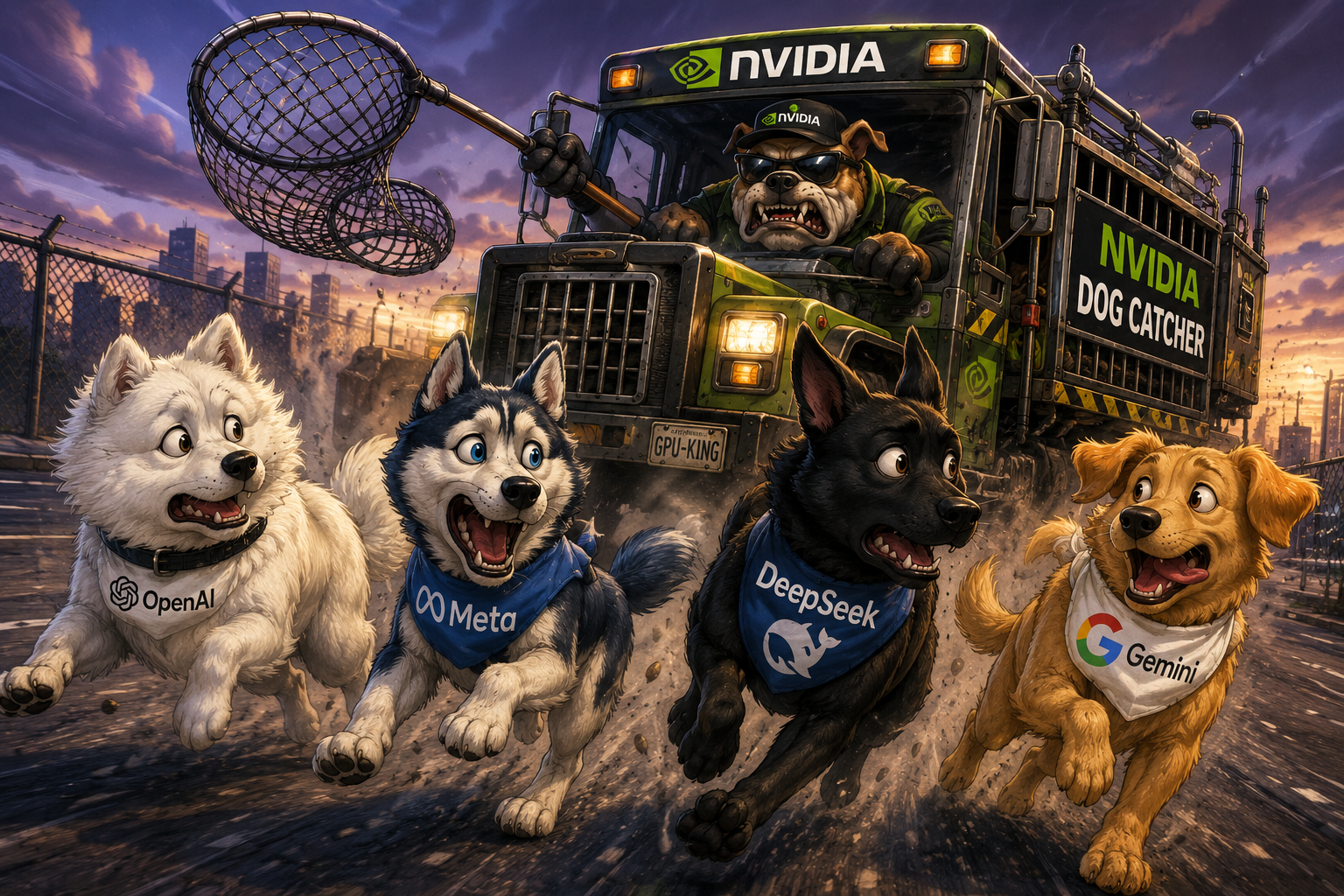
The strategic pursuit of "hardware autonomy" has violently shifted from a long-term corporate aspiration to an urgent operational necessity for the world's leading artificial intelligence laboratories and hyperscale cloud providers. From Microsoft and OpenAI to Chinese trailblazers like DeepSeek, the tech industry's biggest players are desperately racing to design their own custom AI silicon. The objective is clear: break free from the gravitational pull of Nvidia’s pricing, secure an independent supply chain, and drastically lower the operating costs of serving AI to billions of users.
But is true "chip sovereignty" actually a feasible approach? The short answer is no. While designing a proprietary chip architecture is increasingly feasible, achieving true silicon sovereignty remains a structural impossibility.
Let's deeply investigate the realities of the captive silicon rush, the undeniable indispensability of the semiconductor oligopoly, and why the quest for hardware autonomy is fundamentally a mirage.
Part I: The Inference Cost Explosion and the Captive Silicon Rush
To understand the custom silicon boom, you have to follow the money. In the early days of generative AI, training frontier models was the primary cost center, requiring massive clusters of GPUs. Today, that dynamic has inverted. Operational serving—known as inference—has grown to represent approximately 60% to 80% of all production AI hardware expenditures.
When a product reaches hundreds of millions of users, inference becomes a daily utility bill. Every ChatGPT conversation, every Copilot code completion, and every automated agentic workflow pushes compute consumption into continuous industrial demand. For hyperscalers running massive interactive applications, a mere 30% efficiency gain on inference silicon pays for itself in months.
This harsh economic reality has triggered the rise of captive ASICs (Application-Specific Integrated Circuits). These are specialized processors designed to execute specific machine learning workloads with extreme efficiency by discarding the general-purpose flexibility inherent in standard GPUs.
OpenAI’s recent unveiling of Jalapeño, a custom inference chip co-designed with Broadcom and manufactured on TSMC's 3nm node, is the perfect example. Jalapeño is not a generic Nvidia alternative; it is an architecture built from scratch around OpenAI's exact understanding of large language model (LLM) serving, kernels, and memory movement. Early tests indicate it could cut inference serving costs by roughly 50%.
Hyperscalers across the board are deploying their own captive silicon. However, these chips are entirely "captive"—meaning they are deployed inside proprietary data centers to handle internal services, and are rarely available for external commercial rental.
Table 1: The Captive AI Accelerator Landscape vs. Merchant GPUs
| Chip Name | Designer | Process Node | HBM Memory Specs | Primary Focus & Availability |
|---|---|---|---|---|
| Jalapeño | OpenAI / Broadcom | TSMC 3nm | Undisclosed | LLM Inference. Internal OpenAI workloads only. |
| Maia 200 | Microsoft | TSMC 3nm | 216 GB HBM3e (7 TB/s) | Inference (Copilot/OpenAI API). Captive to Azure; no external rental. |
| TPU Ironwood (v7) | TSMC 3nm (est.) | 192 GB HBM3e (7.37 TB/s) | Inference (Gemini). Restricted to GCP managed resources. | |
| Trainium 3 | AWS | TSMC 3nm | 144 GB HBM3E (4.9 TB/s) | Training & Inference. Captive to AWS EC2 instances. |
| MTIA 300/400 | Meta | TSMC N5/N3 Class | Custom Sparsity | Recommendation engines. Internal Facebook/Instagram infrastructure only. |
| B300 / B200 | Nvidia | TSMC 4nm | 288GB / 192GB HBM3e | Training & Inference. Widely available across all cloud providers. |
Part II: The Geopolitical Catalyst and DeepSeek's Desperate Bid
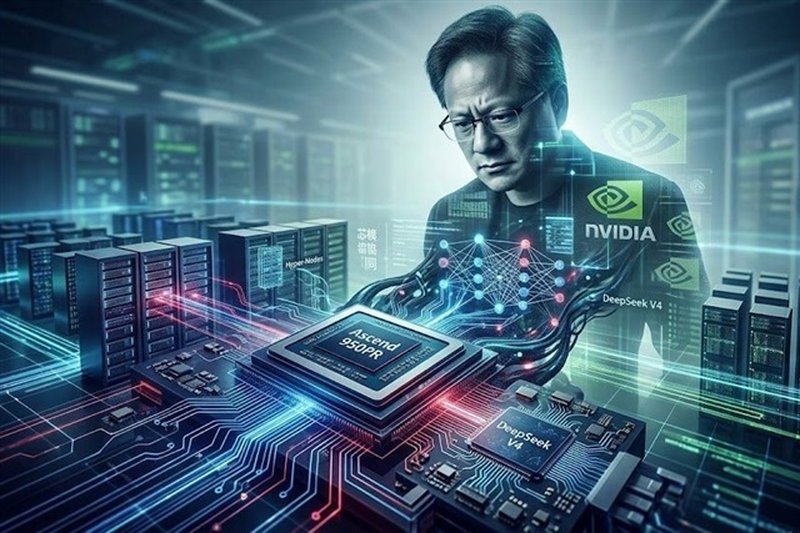
While Western tech giants build custom chips to protect their profit margins, Chinese AI laboratories are building them out of sheer survival. On July 7, 2026, Chinese AI pioneer DeepSeek reportedly initiated an in-house semiconductor design program targeting custom inference accelerators.
Due to stringent Washington export controls, Chinese AI firms are barred from acquiring leading-edge merchant silicon like Nvidia's H100 and B200 platforms, or accessing TSMC’s advanced fabrication nodes. This has forced companies like DeepSeek into a split-infrastructure strategy: utilizing highly restricted stockpiles of Nvidia hardware for model training, while attempting to route inference workloads to domestic Chinese silicon.
Why target inference? Training requires massive, high-bandwidth multi-node clustering where Nvidia’s software and interconnects are virtually irreplaceable. Inference, conversely, is more forgiving of older process nodes and is highly sensitive to per-query operational costs.
However, DeepSeek’s pursuit of sovereignty highlights the physical limits of hardware autonomy. Because DeepSeek cannot fabricate at TSMC, it must rely on China’s domestic champion, SMIC. SMIC is completely blocked from acquiring Extreme Ultraviolet (EUV) lithography machines. To build 7nm chips, SMIC must execute complex multi-patterning workarounds using older DUV equipment, resulting in massive defect rates and production yields hovering at a dismal 20%. DeepSeek may possess the architectural brilliance to design an AI chip, but true autonomy is crushed by the physical inability to manufacture it efficiently.
Part III: The Secret Architects – Broadcom and Marvell
A common misconception is that software giants like Microsoft or OpenAI have suddenly transformed into vertically integrated semiconductor manufacturers. They have not. The entire custom silicon revolution is quietly powered by a highly concentrated design duopoly: Broadcom and Marvell. Together, these two entities enable more than 80% of all hyperscaler custom AI silicon.
Broadcom is the dominant titan of this space, controlling approximately 70% of the custom AI accelerator design services market. Broadcom co-designs Google's TPUs, Meta's MTIA accelerators, and OpenAI's Jalapeño chip. The business model is a masterpiece of capital efficiency: the hyperscaler absorbs the brutal capital expenditures, fabrication risks, and wafer costs, while Broadcom simply licenses out high-value intellectual property (IP), networking switches, and ultra-fast interconnects.
This allows Broadcom to sustain jaw-dropping gross margins of 78.6%—higher even than Nvidia's 73.5%. Backed by long-term supply agreements (such as its Google TPU contract running through 2031) and a $73 billion customer backlog, Broadcom is projecting a staggering $100 billion in AI chip revenue by 2027.
Marvell Technology acts as the structural challenger, commanding 20% to 25% of the market. Marvell anchors the custom silicon ambitions of AWS (Trainium) and Microsoft (Maia). Because hyperscalers demand dual-source options to prevent vendor lock-in, Marvell remains an indispensable counterweight to Broadcom's dominance.
Table 2: The Custom Silicon Design Duopoly
| Metric | Broadcom (AVGO) | Marvell Technology (MRVL) |
|---|---|---|
| Design Market Share | ~70% | 20% - 25% |
| Key Hyperscaler Partners | Google, Meta, OpenAI, Anthropic, Apple | AWS, Microsoft |
| Strategic Position | Dominant platform; locked-in multi-year supply | Structural #2; critical dual-source counterweight |
| AI Revenue Target | $100 Billion by FY2027 | >$10 Billion custom silicon revenue by FY2029 |
| Gross Margins | ~78.6% (Capital-light model) | Standard semiconductor margins |
Part IV: The Nvidia Moat and the Software Agnostics
If hyperscalers are building their own chips, is Nvidia's reign ending? Not quite. Nvidia won the AI war not just by building fast chips, but by selling an entire computing platform: CUDA.
For nearly twenty years, developers have built their workflows entirely around Nvidia’s proprietary programming platform. CUDA’s highly optimized libraries, compiler technologies, and deep framework integrations create what analysts call the "CUDA Gap". The CUDA Gap measures how much Nvidia's software optimizations extract real-world throughput beyond what raw hardware specifications predict.
For example, AMD’s MI300X GPU boasts 1,307 TFLOPS of dense compute—a 32% theoretical advantage over Nvidia's H100 (990 TFLOPS). Yet, under extreme real-world workloads with 512 concurrent users, Nvidia's software orchestration proves so superior that the older H100 actually delivers 67% more throughput than the AMD chip. When scaling up to B200 hardware, Nvidia delivers a massive 105.3% throughput advantage. Software maturity, not raw compute, dictates real-world performance.
Draining the Moat: OpenAI Triton and AMD's Rise
However, Nvidia’s proprietary moat is actively being drained by a new wave of hardware-agnostic software. At the forefront is OpenAI’s Triton, an open-source language that allows developers to write high-performance GPU kernels that compile natively on Nvidia, AMD, or custom ASICs without requiring a single line of code to be rewritten.
By building at the compiler level rather than directly targeting proprietary APIs, AI infrastructure is finally becoming swappable. AMD is the primary beneficiary of this software rebellion. Backed by ROCm 7 software (which drastically improves inference performance) and high-source-code compatibility via HIP, AMD is securing massive non-Nvidia procurement deals. Notably, OpenAI has actively partnered with AMD for 6GW of compute capacity, leveraging Triton to seamlessly port workloads away from Nvidia.
Part V: Apple's Playbook and Arm's Turnkey Disruption
When discussing hardware autonomy, the Apple analogy is inevitable. Apple achieved vertical integration by designing its own M-series and A-series silicon, tightly controlling the device, operating system, and hardware. To do this, Apple licensed the Arm instruction set architecture (ISA).
For decades, Arm Holdings was strictly a neutral IP licensing provider. But in a historic pivot in March 2026, Arm fundamentally altered the semiconductor landscape by launching its own finished, production-ready silicon: the Arm AGI CPU.
Manufactured on TSMC's 3nm process, the AGI CPU features up to 136 Neoverse V3 cores and is specifically designed to manage the orchestration, reasoning, and data movement of AI agents in hyperscale data centers. By co-developing this processor directly with Meta, Arm is now offering a "turnkey" solution. Instead of spending years and hundreds of millions of dollars designing a custom general-purpose CPU, cloud providers can buy Arm's finished silicon off the shelf and focus their R&D budgets entirely on specialized AI accelerators.
Part VI: The Ultimate Reality Check – TSMC and the Physical Bottlenecks
We have discussed architecture, compilers, and design services. But the pursuit of true chip sovereignty shatters the moment it hits physical reality. Every single player in the AI ecosystem—Nvidia, AMD, Broadcom, Marvell, Apple, and Arm—is entirely dependent on one company: Taiwan Semiconductor Manufacturing Company (TSMC).
Fabricating a cutting-edge 3nm chip is an exercise in extreme financial leverage. A single 3nm wafer costs approximately $19,500 (6.5x more expensive than mature 28nm nodes). Designing a 3nm chip requires $500 million to $1 billion in R&D, and producing the initial mask set alone costs upwards of $100 million.
Yet, the raw silicon isn't even the bottleneck. The true stranglehold TSMC possesses is in the final assembly step: Advanced Packaging.
Modern AI chips require immense memory bandwidth, utilizing vertically stacked High Bandwidth Memory (HBM). These memory modules must be bonded to the logic die using an ultra-precise technology called CoWoS (Chip-on-Wafer-on-Substrate). Without this silicon "bridge," a perfectly fabricated 3nm AI chip is entirely useless.
TSMC's advanced CoWoS packaging facilities are completely sold out through 2027, with staggering lead times of 52 to 78 weeks. Nvidia alone has pre-booked roughly 60% of TSMC's total CoWoS capacity for 2026 (around 800,000 to 850,000 wafers), leaving Broadcom, Marvell, AMD, and the hyperscalers to fight over the remaining 40%.
Advanced packaging and expensive memory have fundamentally shifted where the cost of an AI chip originates. The silicon logic is now the cheap part.
Table 3: The 1,000x Cost Explosion (Estimated Manufacturing Bill of Materials)
| Component / Process | Standard 28nm IoT Chip | NVIDIA H100 SXM5 | NVIDIA B200 (Blackwell) | AMD MI300X |
|---|---|---|---|---|
| Logic Die Cost | ~$3.00 | ~$300 (TSMC 4N) | ~$600 (2x TSMC 4NP) | ~$1,500 (Multi-chiplets) |
| HBM Memory Cost | $0 (Not required) | ~$1,350 (80GB HBM3) | ~$2,400 (192GB HBM3e) | ~$1,600 (192GB HBM3) |
| Advanced Packaging | ~$1.00 (Standard) | ~$750 (CoWoS-S) | ~$1,000 (CoWoS-L) | ~$1,200 (SoIC/3D) |
| Test & Assembly | ~$1.00 | ~$920 | ~$2,400 | ~$1,000 |
| Total Mfg BOM Cost | ~$5.00 | ~$3,320 | ~$6,400 | ~$5,300 |
When Big Tech companies claim they are building "custom chips" to achieve autonomy, what they are actually doing is standing in the exact same TSMC CoWoS packaging line as Nvidia, utilizing the exact same Broadcom and Marvell design services, and buying the exact same HBM memory from SK Hynix.
Conclusion: The Renegotiation of an Oligopoly
So, is the pursuit of hardware autonomy a feasible approach? No, it is a brilliantly executed illusion.
The "Sovereign Silicon Mirage" is exactly that—a mirage. Microsoft, OpenAI, Google, AWS, and Meta are not achieving independence. They are simply renegotiating their dependencies. By deploying custom captive ASICs for steady-state inference workloads, they are successfully bypassing Nvidia's 70%+ gross margins, slashing their operating costs, and taking control of their product roadmaps.
However, Nvidia and AMD remain fundamentally indispensable. General-purpose GPUs are still required to train frontier models and manage dynamic workloads where custom ASICs fail to adapt. Furthermore, true hardware autonomy dies at the factory door. Every major technology conglomerate in the world is still completely reliant on TSMC for fabrication and packaging, Broadcom and Marvell for chip design translation, and SK Hynix for memory.
The next wave of the AI infrastructure war won't be defined by a single company achieving total sovereignty. Instead, it will be defined by portfolio management: hyperscalers blending Nvidia GPUs, AMD accelerators, open-source Triton compilers, and their own Broadcom-designed ASICs into one massive, highly complex machine. The tech giants aren't escaping the oligopoly—they are just building a more comfortable cage



💬 Comments (0)
🔒 Log in or register to comment on articles.
No comments yet. Be the first to comment!