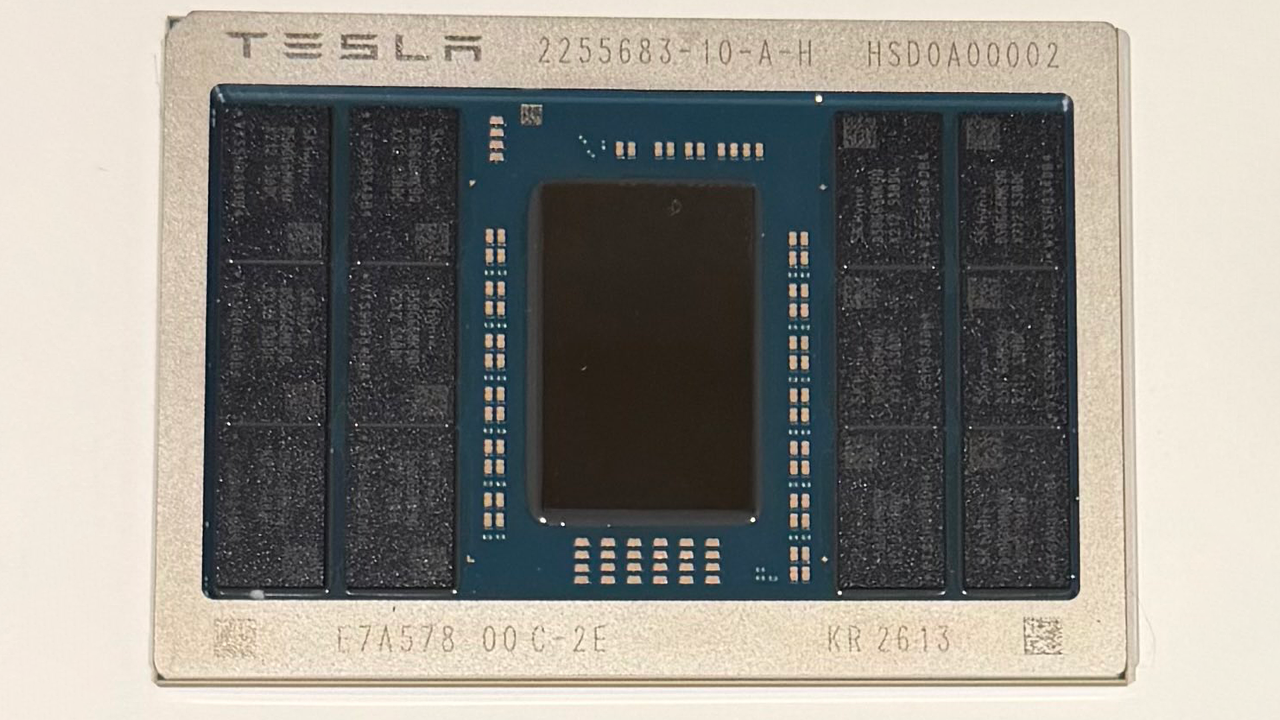
SpaceX Enters GPU Market: A New Player in AI Silicio
SpaceX, Elon Musk's aerospace company, is reportedly poised to make a significant move into the artificial intelligence sector, announcing its intention to begin in-house manufacturing of Graphics Processing Units (GPUs). This strategic step, marking an expansion beyond its primary activities, has been linked to a potential Initial Public Offering (IPO) that, according to reports, could reach a valuation of $1.75 trillion.
Vertical integration in silicio production represents a growing trend among major technology companies, driven by the need to control the supply chain and optimize hardware performance for specific workloads, particularly those related to AI and Large Language Models (LLMs). SpaceX's entry into this segment could have significant implications for the global GPU market, traditionally dominated by a few giants.
Implications for the Silicio Market and On-Premise Deployments
SpaceX's decision to produce its own GPUs highlights the increasing demand for specialized hardware for AI model inference and training. The current market is characterized by strong demand and limited supply of high-performance chips, making a company's ability to produce its own silicio internally a strategic advantage. For companies evaluating on-premise LLM deployments, the availability of new hardware options is a crucial factor for ensuring scalability, efficiency, and control.
In-house GPU production offers SpaceX the potential to optimize chips for its specific needs, ensuring tailored performance and energy efficiency for its own infrastructures and AI workloads. This approach can reduce dependence on external suppliers and mitigate risks associated with supply chain disruptions, an increasingly relevant aspect for operational continuity and data sovereignty in air-gapped environments or those with stringent compliance requirements.
Advantages and Challenges of In-House Chip Production
Adopting an in-house silicio production strategy entails both significant advantages and considerable challenges. Among the benefits is complete control over design and manufacturing, allowing for hardware customization for specific LLM architectures or critical latency and throughput requirements. This can translate into a more favorable Total Cost of Ownership (TCO) in the long term, despite a high initial investment (CapEx) in research and development, as well as manufacturing infrastructure.
However, the chip manufacturing sector is extremely complex and capital-intensive. It requires highly advanced engineering expertise, massive R&D investments, and access to state-of-the-art foundries. The ability to scale production and maintain a competitive edge against industry giants will be critical for the success of such an initiative. Companies considering self-hosted alternatives for AI workloads must balance the appeal of hardware control with the reality of costs and operational complexities.
Future Prospects and AI-RADAR's Perspective
SpaceX's announcement, if confirmed, would mark a further acceleration in the race for proprietary AI hardware. This trend suggests that control over the entire technology stack, from silicio to software, is becoming a distinguishing factor for leading companies. For our audience of CTOs, DevOps leads, and infrastructure architects, the emergence of new players and approaches to GPU production means a broader landscape of choice, but also greater complexity in evaluating trade-offs.
AI-RADAR continues to monitor these developments, providing in-depth analysis on hardware requirements, on-premise deployment strategies, and implications for data sovereignty. Evaluating new hardware options, such as those that might arise from initiatives like SpaceX's, is essential for making informed decisions about LLM deployments, balancing performance, costs, and control. For those evaluating on-premise deployments, analytical frameworks are available on /llm-onpremise to assess specific trade-offs.






💬 Comments (0)
🔒 Log in or register to comment on articles.
No comments yet. Be the first to comment!