
AI Supply Chain Challenges: The SpaceX Case
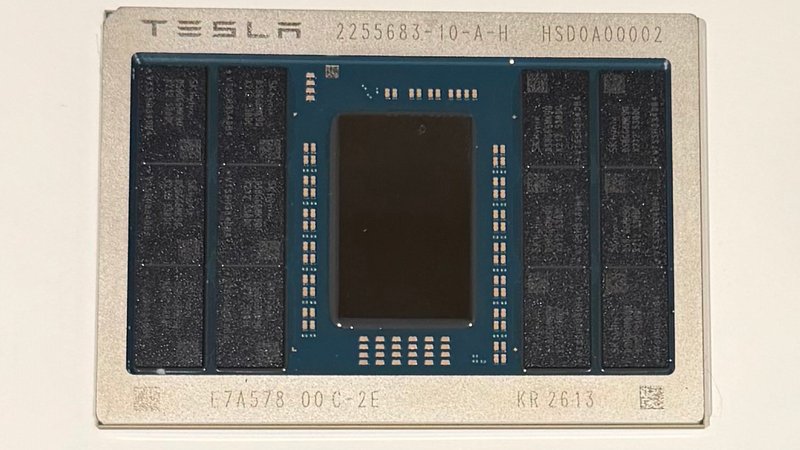
A recent report has highlighted significant delays for SpaceX, specifically related to the production of components utilizing Fan-Out Panel Level Packaging (FOPLP) and Printed Circuit Board (PCB) yield. These issues have prompted company executives to plan a visit to Taiwan in April, a clear indication of the strategic importance of this region for advanced semiconductor and electronic component manufacturing. While the specific context concerns SpaceX's operations, the episode offers a crucial insight into the vulnerabilities of the global supply chain, with direct implications for the artificial intelligence sector.
Semiconductor production is a complex and highly interconnected process, where every stage, from design to fabrication, can influence the final availability of products. Problems with PCB yield or advanced packaging technologies like FOPLP can create bottlenecks that propagate throughout the entire supply chain, delaying the delivery of essential chips and modules for a wide range of applications, including the high-performance computing systems required by Large Language Models (LLMs).
The Impact on On-Premise LLM Deployments
For companies evaluating on-premise LLM deployments, hardware availability and cost are decisive factors. Modern LLM architectures demand GPUs with high amounts of VRAM and specific compute capabilities to handle intensive training and inference workloads. Delays in semiconductor production directly translate into lower availability of these GPUs in the market, leading to increased prices and extended delivery times.
This scenario directly impacts the Total Cost of Ownership (TCO) of self-hosted AI infrastructures. An increase in initial hardware cost (CapEx) can make the on-premise option less attractive compared to cloud solutions, even if the latter involve recurring operational costs (OpEx) and potential compromises on data sovereignty. For CTOs and infrastructure architects, planning becomes more complex, requiring careful assessment of supply chain risks and the search for mitigation strategies.
Data Sovereignty and Infrastructure Resilience
The choice of an on-premise deployment is often motivated by the need to maintain full control over data, ensure regulatory compliance (such as GDPR), and operate in air-gapped environments for security reasons. However, reliance on a global supply chain for hardware introduces an external risk element that must be proactively managed. The resilience of an on-premise AI infrastructure depends not only on the robustness of internal systems but also on the ability to reliably procure necessary components.
Companies must consider how delays in silicio production can affect not only the expansion of their AI capabilities but also the maintenance and upgrade of existing hardware. This drives greater attention to supplier diversification and the evaluation of alternative hardware architectures, or the exploration of hybrid solutions that balance the advantages of on-premise with the flexibility of the cloud for less sensitive workloads.
Outlook and Mitigation Strategies
Facing these uncertainties, organizations investing in on-premise AI capabilities must adopt proactive strategies. This includes entering into long-term supply agreements, building strategic inventories of critical components, and exploring Open Source hardware options or emerging suppliers that might offer greater resilience. A deep understanding of semiconductor manufacturing processes, such as FOPLP and PCB yield, becomes a strategic asset for technical teams.
In a landscape where the demand for AI computing power continues to grow exponentially, the ability to ensure a stable supply of high-performance hardware will be a distinguishing factor. For those evaluating on-premise deployments, AI-RADAR offers analytical frameworks on /llm-onpremise to assess the trade-offs between control, cost, and availability, helping decision-makers navigate these complexities with a clear view of constraints and opportunities.








💬 Comments (0)
🔒 Log in or register to comment on articles.
No comments yet. Be the first to comment!