SpaceX and the Orbital AI Chip Shortage
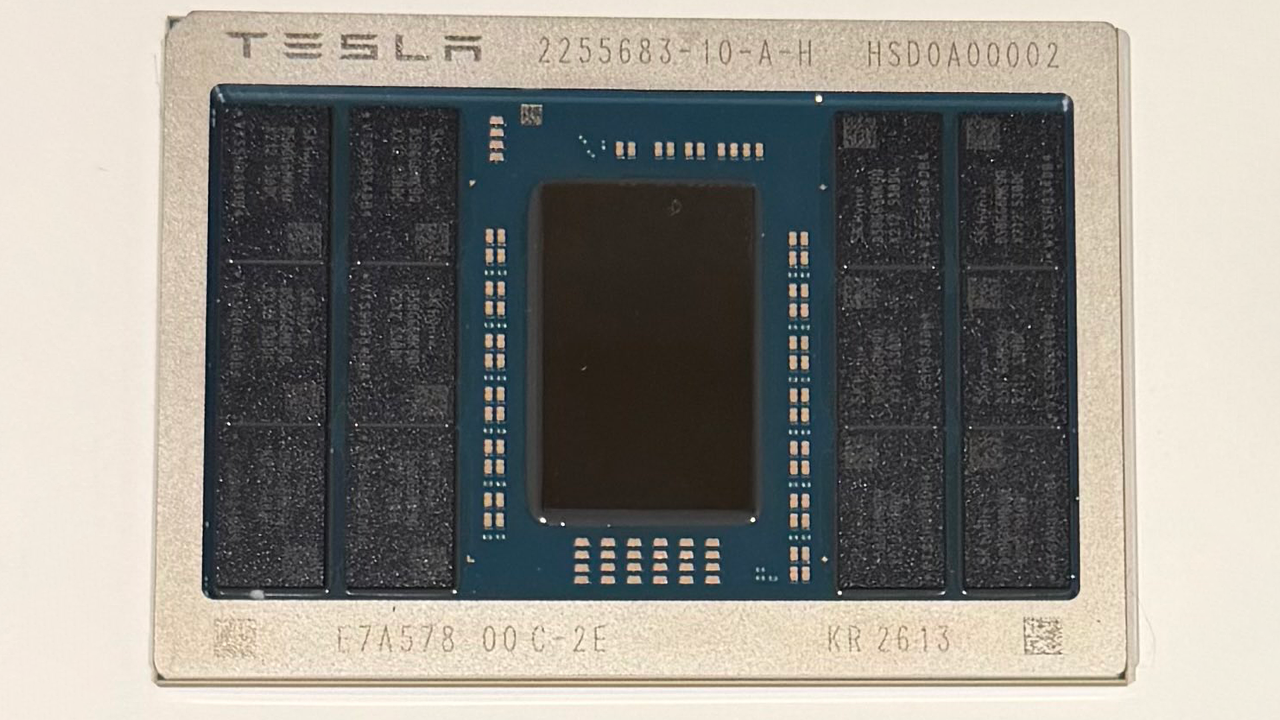
SpaceX, a leader in space exploration and satellite telecommunications, faces a significant hurdle in its ambitious plans for orbital artificial intelligence. According to documents filed in anticipation of a potential Initial Public Offering (IPO), the company is experiencing a shortage of essential chips for its AI operations. SpaceX stated its need for a volume of silicon "significantly more than are currently available to us," an admission that underscores the difficulties even tech giants encounter in securing the necessary hardware for advanced and strategic AI applications.
This revelation positions the chip shortage as a crucial risk factor for the company's future operations and growth. Reliance on an external supply chain for such vital components can have direct repercussions on development timelines, deployment, and the scalability of AI solutions designed to operate in space environments, where hardware reliability and availability are non-negotiable parameters.
The Race for Silicon and AI Implications
The global demand for high-performance chips, particularly GPUs, has surged in recent years, driven by the advancement of Large Language Models (LLM) and the proliferation of increasingly complex artificial intelligence applications. For projects like SpaceX's orbital AI, which presumably requires robust processing capabilities for inference and potentially fine-tuning in remote, power-constrained environments, hardware availability is a fundamental constraint. The silicon scarcity not only impacts development and deployment timelines but can also influence the overall Total Cost of Ownership (TCO), prompting companies to consider long-term procurement strategies and, in some cases, investments in internal production capabilities.
In this context, SpaceX also mentioned its ambitious TeraFab project, a strategic initiative that, according to the filed documents, may not be successful. This detail adds another layer of complexity to the infrastructural challenges the company must address, highlighting how innovation and the realization of futuristic projects are intrinsically linked to the ability to overcome material and production constraints.
Data Sovereignty and On-Premise Deployment
SpaceX's difficulty in sourcing chips highlights a broader challenge for organizations aiming to maintain full control over their AI operations. For critical or sensitive applications, such as those operating in air-gapped environments or with stringent data sovereignty and compliance requirements, on-premise or self-hosted deployment often becomes a mandatory choice. However, this strategy critically depends on the availability of specific hardware, such as GPUs with high VRAM and throughput, and the ability to manage the entire infrastructural pipeline.
Reliance on an external supply chain for key components can introduce significant operational and strategic risks, making accurate planning and the evaluation of trade-offs between cost, performance, and control essential. For those evaluating on-premise deployment, AI-RADAR offers analytical frameworks on /llm-onpremise to evaluate these trade-offs, considering factors such as hardware availability, energy costs, and security and compliance needs.
Future Prospects and the Innovation Challenge
SpaceX's situation reflects a market trend where the ability to innovate and implement cutting-edge AI solutions is increasingly tied to the capacity to access limited hardware resources. As the industry continues to push the boundaries of AI, the availability of advanced silicon will remain a critical factor. Companies will need to balance technological ambition with the reality of global supply chains, exploring alternative solutions, software optimizations like quantization, or investing in research and development to reduce dependence on external components.
The success of projects like TeraFab, and more broadly the advancement of AI in strategic sectors like space, will largely depend on the ability to overcome these infrastructural challenges. Strategic management of hardware procurement and the development of internal capabilities will be distinguishing elements for companies aiming to maintain a competitive advantage in the artificial intelligence landscape.








💬 Comments (0)
🔒 Log in or register to comment on articles.
No comments yet. Be the first to comment!