Class-Action Lawsuit Against SpaceX in Texas
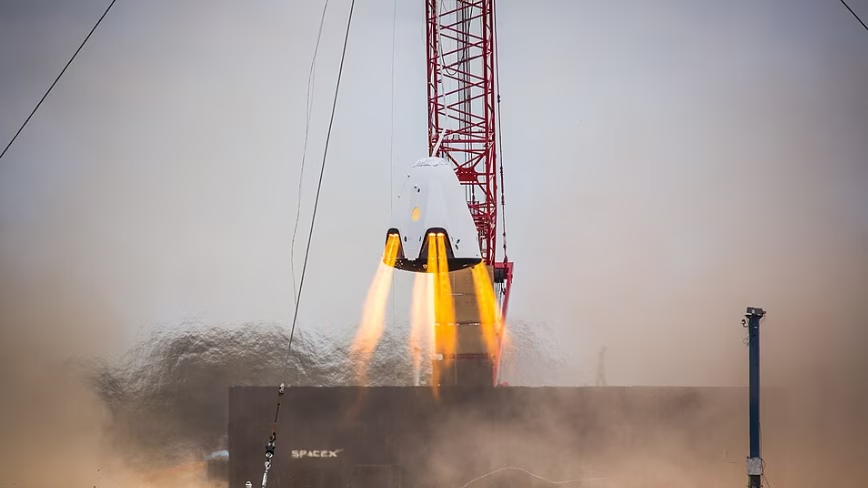
Eighty residents from various towns in South Texas have initiated a class-action lawsuit against SpaceX. The lawsuit is related to the operations of the company's Starbase facility, located in the same region. Plaintiffs allege that frequent rocket launches are causing physical and structural damage to their homes, compromising their integrity and safety.
This legal action highlights the growing tensions between the expansion ambitions of the space industry and the needs of local communities living in proximity to such infrastructures. The case raises important questions about the coexistence of advanced technological development and the safeguarding of citizens' well-being.
The Accusations and Legal Context
The class action accuses SpaceX of negligence, gross negligence, and trespass. The residents base their claims on the Commercial Space Launch Act of 1984, a U.S. federal law that regulates commercial space launch activities. This regulatory framework is crucial for defining the responsibilities of companies operating in the space sector and for protecting the rights of third parties potentially affected by their activities.
A concrete example of the issues raised was provided by one of the plaintiffs, who showed Reuters her home in Port [...], highlighting the alleged structural damage. The lawsuit aims to obtain compensation for the damages incurred and to set a precedent for managing the impact of space operations on inhabited areas.
Implications for Large-Scale Technology Infrastructure
The incident involving SpaceX, while specific to the space industry, raises relevant questions for any large infrastructure project, including on-premise Large Language Model (LLM) deployments. The decision to host AI workloads locally, rather than relying on the cloud, implies the direct management of complex physical infrastructure. This includes not only hardware selection (such as GPUs with adequate VRAM and efficient cooling systems) but also the assessment of the impact on the surrounding area.
For CTOs and infrastructure architects evaluating self-hosted solutions, data sovereignty and direct control are often key motivations. However, these choices come with the responsibility of managing the integration of infrastructure into the local context, including regulatory, environmental, and social aspects. Careful planning and compliance with local regulations are essential to mitigate risks and ensure the long-term sustainability of such investments. AI-RADAR offers analytical frameworks on /llm-onpremise to evaluate these complex trade-offs.
Future Prospects and Operational Trade-offs
The legal dispute between Texas residents and SpaceX highlights a fundamental trade-off: technological innovation and industrial expansion must be balanced with the protection of communities and the environment. For companies operating large-scale infrastructures, such as those required for on-premise LLM training and inference, managing local relations and regulatory compliance become critical components of the Total Cost of Ownership (TCO).
The success of a deployment is not only measured in terms of throughput or latency but also in the ability to operate in harmony with the local context. This case could influence how future large technological infrastructures, from space launch centers to AI data centers, will be planned and integrated, placing greater emphasis on impact mitigation and dialogue with communities.










💬 Comments (0)
🔒 Log in or register to comment on articles.
No comments yet. Be the first to comment!